My First Real Bicycle

1957 Roadmaster Luxury Liner

The prompt for the Chatham Memoir Group was to write about bicycles, or your first bike. Mine was similar to the one pictured above. My memoir follows.

My First Real Bicycle

I was astonished when I realized I have no memory of my first bicycle.  I am assuming I had one with training wheels, but maybe I didn’t.  I know I had a tricycle, only because I’ve seen a few black & white Polaroids of me sitting on it or standing next to it.  At the time, we lived in an apartment on a busy street and I may have ridden it in the driveway of that place.  The photos of me on the trike were taken in my grandparent’s back yard, so I suspect that is where I spent most of my time riding it.  There are also a couple of photos of my brother, Ken, sitting on the trike. Also in my grandparent’s back yard.  I guess that was his first wheeled vehicle as well.  But I don’t remember my beginners two wheeler. There are no photos of me on a bike with training wheels.  I was growing so fast at that time, I may have been too tall for a starter bike.

I do, however, remember my first real bike, an official big kids bike.  My uncle’s good friend Ronnie didn’t ride his bike much anymore.  They were in high school, they were cool. Ronnie, very flashy and charismatic, was the coolest of the cool and was the type of person who would transition from a bike to a Pontiac GTO.  At any rate, through a series of transactions involving Ronnie, his parents, my uncle and my parents, I became the second owner of Ronnie’s bike. 

I may have been a big kid for my age, but this bike was huge!  It stood about 16 hands high, about the size of a Clydesdale, or so it appeared to me.  After all, I was just entering first grade and Ronnie was in high school.  The bike I was gifted was a Roadmaster.  Red and white, the bike boasted chrome fenders, a big chrome and red striped tank which coursed along the frame from handlebars to just under the white seat.  Chrome traps to carry things rested above wide white-wall front and rear tires and a chrome bell with an American flag affixed to the chrome handlebars were the options the bike dealer must have thrown in when it was purchased.  Oh, I am forgetting the red and white streamers that flowed out of the white vinyl handlebar grips.  That was odd, Ronnie didn’t appear to be a “streamers” kind of guy.

As I mentioned earlier, this bike was huge.  So huge, in fact, my feet didn’t reach the pedals.  My dad corrected that by affixing an adapter kit to them.  The adapter kits consisted of blocks of wood of varying sizes that would get clamped to the pedals to close the distance between them and your feet.  I think my dad had to double them up so I could reach the Roadmaster’s pedals.  I had not inserted the word “proud” before owner.  For their first bikes, most of my friends had gotten the sleek and stylish Schwinn models which were the rage at the time.  I had this bright, shiny relic of the most recent past as my first ride. The Roadmaster was the Duesenberg of bicycles.  Did I say there was a lot of chrome?  At any rate, this was my first real bike, the one on which I learned to ride.
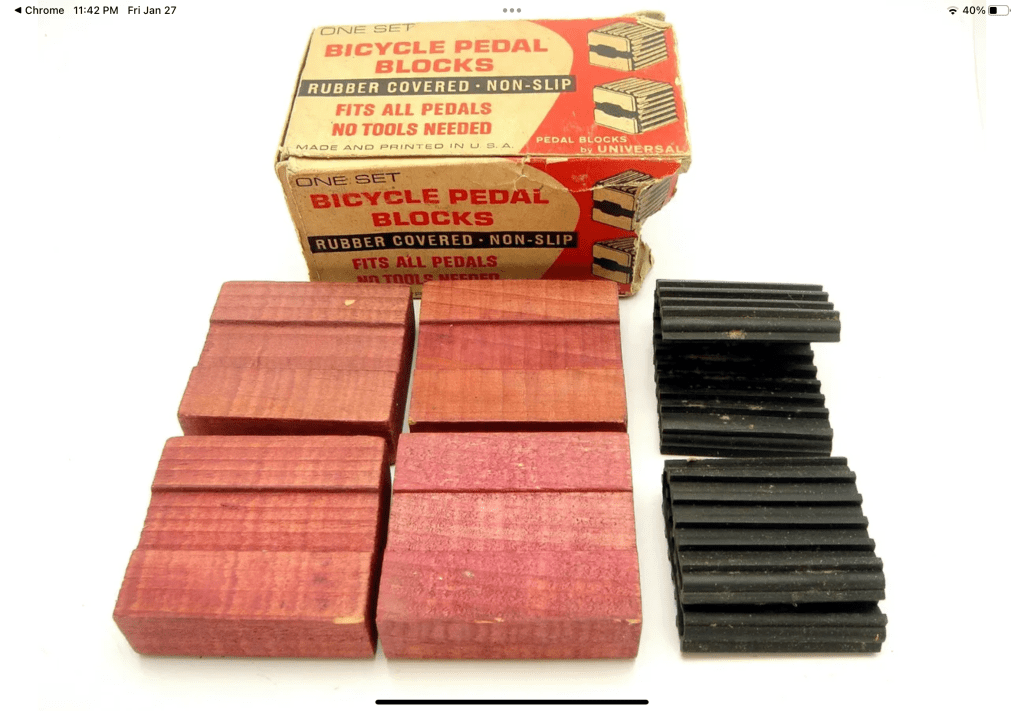
Pedal extender blocks

Before learning to ride, I learned how to fall.  And I fell a lot.  I got to be really good at it.  The bike was so big, so heavy, and with a lumber yard for pedal extenders, it proved to be unwieldy.  With the knowledge that I had to keep some degree of forward momentum to not fall while making a turn, the bike was so heavy, I needed to pedal faster than normal to make a turn.  As one might guess, most of my falls occurred while in mid-turn.  I had to ride with friends because took 2 or 3 kids to lift the Roadmaster from my scraped and bloody body.  If I had to ride alone, I carried a small scissors Jack in the rear trap and used it to lift the bike high enough for me to crawl out from under it.

I remember how proud I was the first time I made a turn without falling.  A crowd had gathered to watch my inaugural cruise.  My parents, my uncle, my grandparents my Godparents, all bade me well.  They watched me climb the slight incline of Echo Place, make the turn – not a smooth turn – but I didn’t fall.  I had a big smile, everyone was waving.  As I started to roll down the hill and gain speed, I tried to brake and slow my momentum.  This bike didn’t have hand brakes, I had to push back on the pedals to slow and stop.  I began to brake, but one of my feet rolled of the stack lumber affixed to the pedal.  It threw my balance off and my front wheel began to wobble.  I was able to stop by crashing into the side of a car and falling to the ground.  I don’t remember how I got out from under the Roadmaster, maybe a passing crane driver took pity and lowered his hook to lift it off, my memory of that is vague.  

This is the guy that lifted my heavy bike from my scuffed up body (😁 not really).

I went through a growth spurt which allowed the stacks of wood to be removed from my pedals.  As I began to grow into the Roadmaster, I removed the streamers from the grips.  To make my battleship of a bike cooler, I clamped baseball cards to the front and rear forks with a clothespin so the spokes would hit the cards.  It made my bike sound like a Harley.  The Pittsburgh Pirates had beaten the New York Yankees in the World Series, so I exacted revenge by using the cards of Pirate players as my noise source.  I mastered the road on a tank of a bike, with streamers and lots of shiny chrome, the Roadmaster, my first real bicycle.

One of the cards that made my bike sound like a Harley.

Ernie Stricsek

The Chatham Memoir Group

January 27, 2023
The Perfect Day

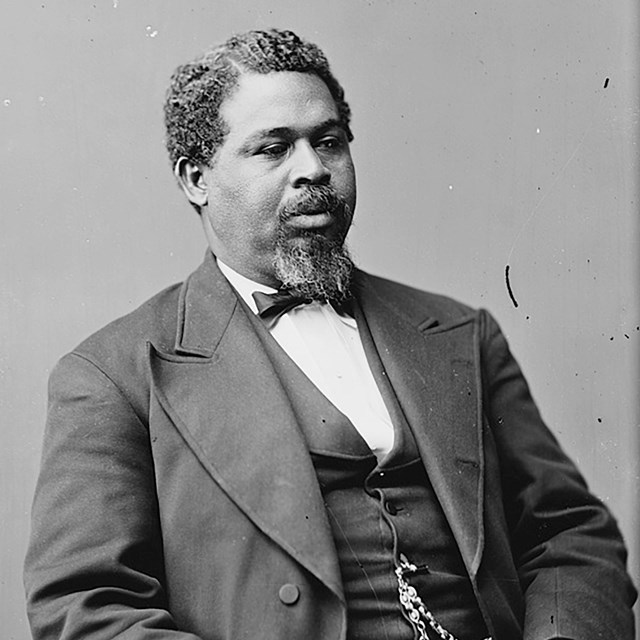
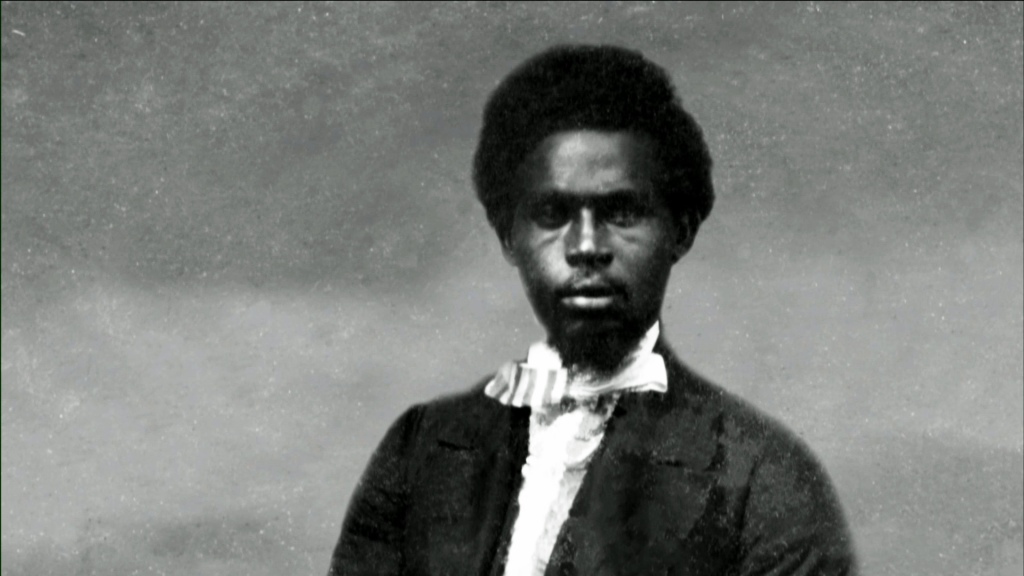
Young Robert Smalls

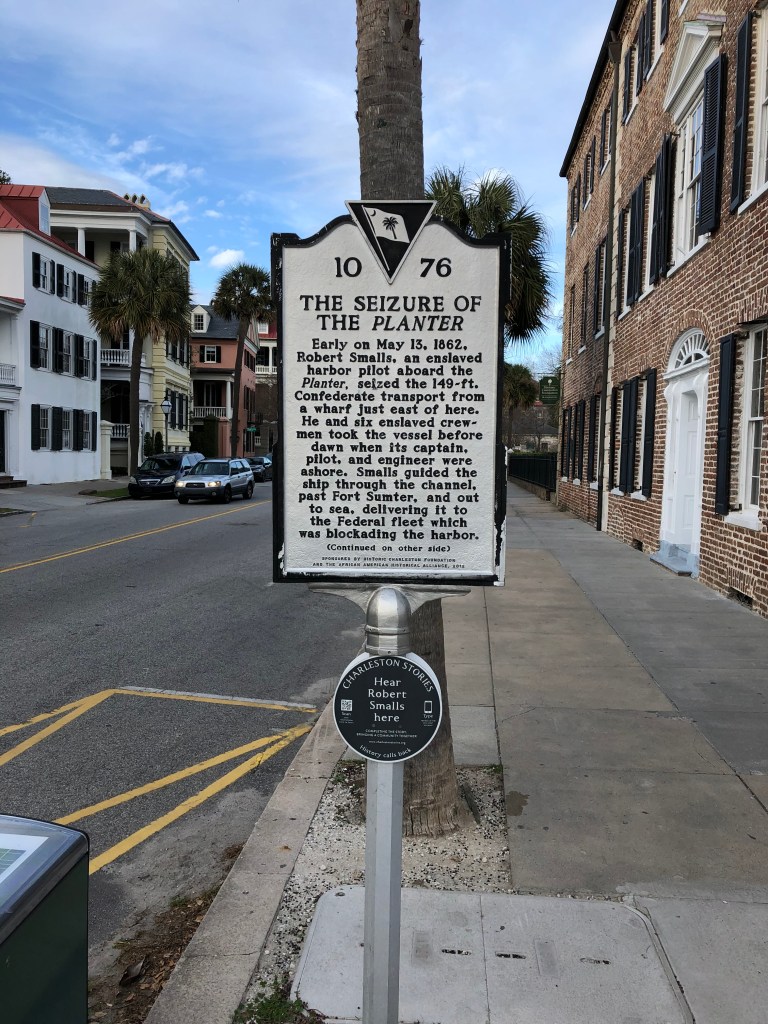
This is third blog entry I have made about Robert Smalls. His story is so truly remarkable, so inspiring, I can’t write enough about him. I recently joined another writing group, meeting at the Sturgis Library in Barnstable Village. The prompt for the meeting this week was “The Perfect Day”. I chose to write about the exhilarating day Robert Smalls, his family, and 13 other brave individuals had. The story itself is 100% true, no names have been changed to protect the innocent. With the exception of one sentence, the dialogue in my story is fabricated. I did this to keep the story moving along and to present factual information in a more interesting manner.

The battered facade of Fort Sumter, shortly after the opening shots of the Civil War on April 12, 1861

The Perfect Day

Charleston, South Carolina. April, 1861

Robert and Hannah Smalls gazed out into Charleston Harbor at the battered ramparts of Fort Sumter.  In the place where the Stars and Stripes of the United States flag once billowed over the fort, was now the new flag of the Confederate States of America.

“Hannah, what is your idea of the perfect day?”

“That’s easy Robert, Christmas Eve 1856, our wedding day.  Nothing tops that.”

Robert laughed softly, “I agree, I agree.  That has been my most perfect day.  Although the arrival of Lizzie and Robert, Jr. were pretty close too.” Then he grew silent, his gaze returning to Fort Sumter and its new flag.

“What’s troubling you, my love?”

Robert turned to face Hannah, “Today I asked Mr. Kingsman if I could purchase yours and the children’s freedom.  He said yes, but it would cost $800.”

All Hannah could say was, “Oh my, oh my.”

Robert said, “Right. Oh my.” Taking Hannah’s hand, they walked slowly home.  As the nation careened towards Civil War, Robert Smalls had grown increasingly anxious that Hannah’s master, Samuel Kingsman, would tear his family apart by selling his wife and children to other plantation owners in the South.  The price of freedom was high.  He and Hannah had managed to save $100.  Raising another $700 was near impossible.  Robert made $16 a month as a wheelman, or pilot, of a steamship delivering goods to ports along the South Carolina and Georgia coastlines.  He had to send $15 a month to his master, Henry McKeein Beaufort, SC.  Hannah made only $5 a month as a hotel maid and had to give three of those dollars to Kingsman each month.  Within a few days, Robert would begin working as a wheelman on a new ship named the Planter.  He planned on asking for extra duties in the hopes of earning more money to purchase his family’s freedom.


As Robert approached his new vessel, moored in Charleston Harbor, he was greeted by a man wearing a wide brimmed hat and a linen coat that hung to his ankles.


The C.S.S. Planter.

“Good morning Mr. Smalls!  Welcome aboard the Planter. I’m Captain Relyea.  I must say, your reputation as an outstanding wheelman and your knowledge of these inter coastal waterways will be highly valued.”

Over the next 12 months, Smalls and Relyea would learn a great deal about each other.  Shortly after the start of the Civil War, President Lincoln had ordered a blockade of all seaports in the newly created Confederate states.  Floating just outside of Charleston’s harbor were huge warships and fast gunboats of the United States Navy, waiting to pounce on any ships attempting to move cargo and supplies into the port.  Captain Relyea watched Robert Smalls closely and admired how he seemed to know every inch of coastline, every shoal, and to know which tidal creek to use to avoid detection by the blockading ships.  For his part, Robert watched everything Captain Relyea did.  From the donning of his big hat and long coat each day, to the signals he used to permit the Planter to safely pass the Confederate occupied forts in Charleston Harbor and along the coast. Robert also noted that Relyea, and the other two ship’s officers, trusted he and the 6 enslaved crew members enough to occasionally spend the night ashore.  This was a direct violation of Confederate Navy regulations specifying at least one white officer remain aboard a vessel with a black crew.  On the evening of May 12, 1862, Captain Relyea and the two officers decide they are going to spend the night ashore with their families.  Robert Smalls offers to remain aboard with the other crew members to prepare the Planter for the next day’s activities.

St. Phillip’s Church in Charleston, South Carolina. From a photo I took while visiting in early 2020.

The bell in St. Phillip’s Church chimes twice.  It is 2:00 AM  and most of the inhabitants of Charleston, South Carolina are sound asleep.  Most, but not all.  At Northern Wharf, the crew of the steamer Planter are making final preparations to cast off.  The ship’s cargo of 4 cannons and 200 missiles for those cannons, are to be delivered to the Confederate garrison on Morris Island.  Casting off, the Planter makes one stop at the West Atlantic Wharf to pick up 11 passengers.  By 3:25 AM, the steamer is slowly maneuvering its way past the 5 forts that protect the harbor from Yankee invaders.  As each fort is approached, the steamer sounds it’s whistle 3 times.  The occupants of each fort wait to verify the Planter’s markings & note the shipping schedule to confirm it’s destination then signals the ship to continue on.  At 4:15 AM, the Planter looms from the early morning mist and approaches the last of the 5 forts, Fort Sumter.  The guards on Sumter’s parapet wave a signal lantern, the Planter responds with the 3 snorts from its whistle.  As the it draws closer to the fort, the guards observe the familiar form of Captain Relyea, leaning against the pilot house, arms folded, his signature wide brimmed straw hat on his head and his long linen coat almost dragging on the deck.  With the ship’s identity and destination verified, Sumter’s guards wave to Relyea.  Relyea waves back and disappears into the pilot house.  The last of the forts being passed, the steamer chugs faster in the direction of Morris Island.

The site in Charleston Harbor where Robert Smalls picked up his passengers before steaming past the forts. My photo from visit in early 2020.

However, something is amiss!  As the earliest blush of dawn appears on the horizon, the guards notice that the Planter has changed course!  Rather than Morris Island, it is heading towards the open sea!  Steaming directly for the Union ships that blockade the harbor!  The Planter is now out of range of Sumter’s cannon and cannot be stopped.  Things are definitely not as they seem.  Upon entering the pilot house, Captain Relyea discards the broad hat and linen cloak to reveal that he is instead, 22 year old Robert Smalls himself, now a runaway slave.  His six crew members are also now runaway slaves.  The 11 passengers include Hannah, their two children, the wives and children of four crew members and 3 additional men – all runaway slaves.  It has been a harrowing trip past the forts.  Smalls, of similar height and stature to Relyea, also spent the past year studying his movements and gestures while planning this escape.  He hoped and prayed that the dim light and early morning mists would help shield his true identity.  As the Planter steams towards the Union naval vessels stalking the harbor entrance, Smalls has the Confederate flag & South Carolina state flag pulled down from its mast.  In their place he runs up the largest white bed sheet his wife has, to indicate his desire to surrender the Planter to the blockading Yankees.  However in the misty morning, the white flag is almost invisible.  As the mystery ship steams through the mists, Union officers on the U.S.S. Onward order the gun ports opened and cannons run out stop the rapidly approaching steamer..  At virtually the last moment, a breeze flips the white sheet sideways, a gunner on the Onward sees it and shouts to his mates that the approaching ship is flying a white flag.  The Onward stands down.  The Captain and the officers of the Onward crowd the deck to observe the approaching ship.  As the Planter pulls alongside and cuts its engines, Robert Smalls steps forward from the pilot house.  He calls up to the Captain of the Onward, “Good morning sir!  I have brought you some of the United State’s guns sir!”  More importantly, Robert Smalls has ferried himself and 17 others from slavery to freedom.

The passengers scurry up the ladder from below the Planter’s deck, tears cascading down their cheeks.

Robert reaches for Hannah, she collapses against him, her pent up tension releasing like the steam from the ship’s whistle.  Looking into her husband’s eyes, Hannah whispers, “We are free.  All of us, and we are together.  What a perfect day.”

Ernie Stricsek

Sturgis Library Writing Group

January 17, 2023

Congressman Robert Smalls, United States House of Representatives.

Robert Smalls house on Prince Street in Beaufort, SC. Photo I took in February, 2022.
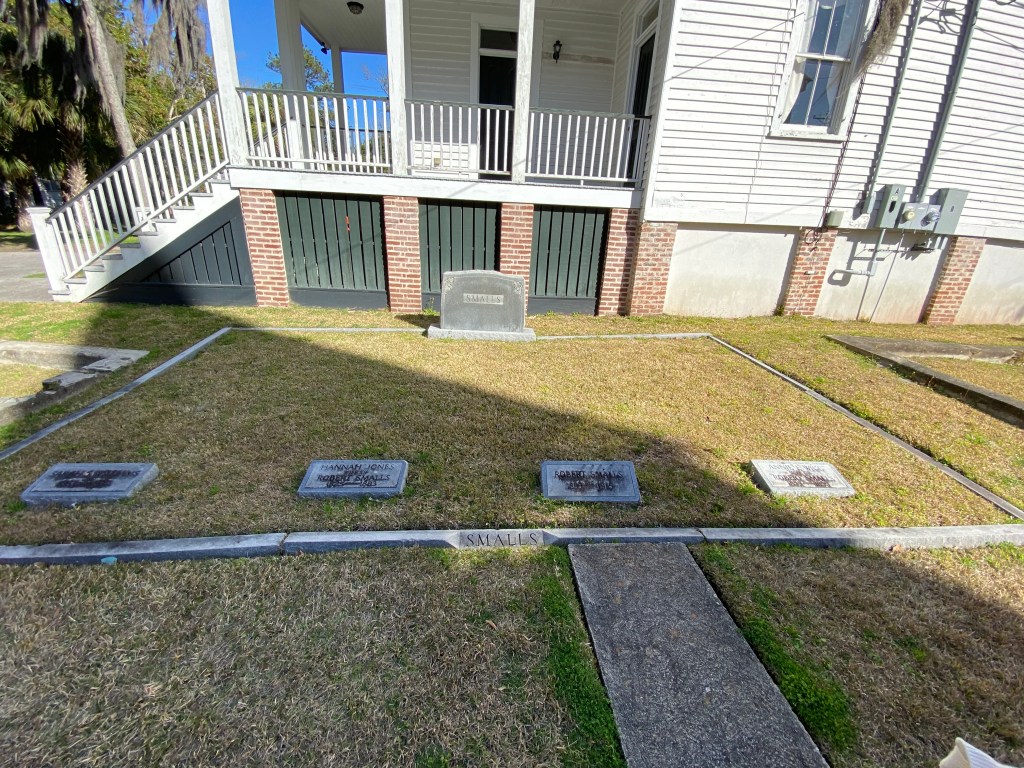
Burial site of Robert Smalls & his family in Tabernacle Baptist Church Cemetery, Beaufort, SC. Photo taken by me in February 2022.
Burial site of the McKee Family in the Baptist Church of Beaufort, SC, cemetery. The McKee’s were slave owners and owned Roberts Smalls and his mother. Photo taken by me from visit in February 2022.
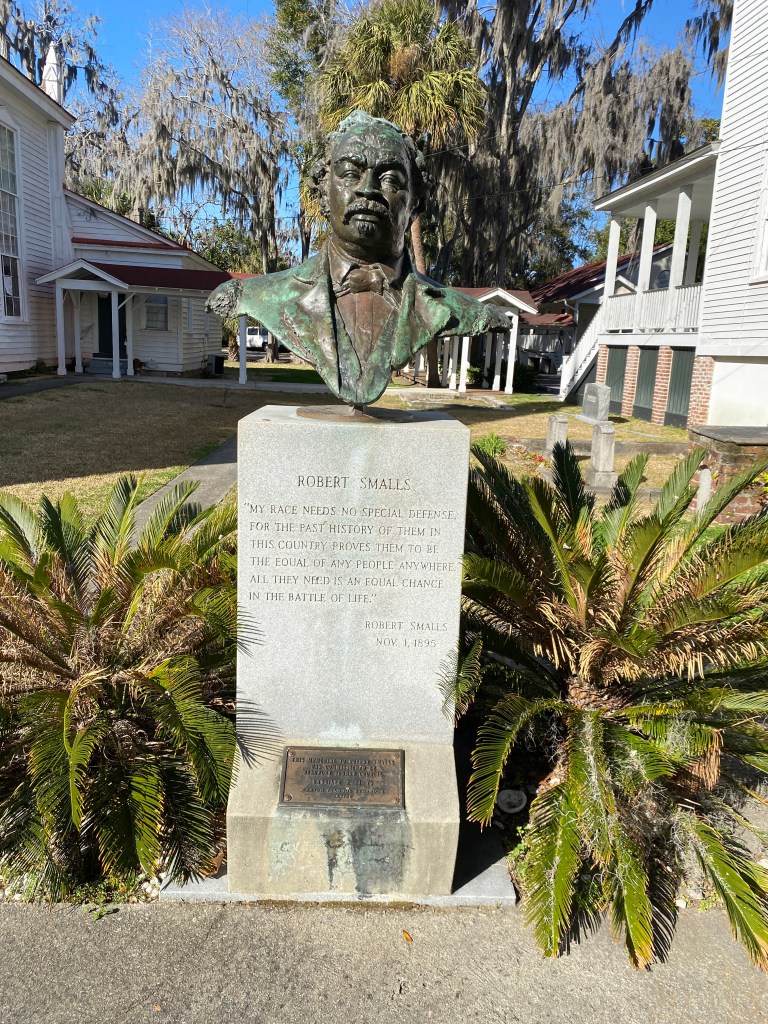
Bust of Robert Smalls in Tabernacle Baptist Church Cemetery, Beaufort, SC. Photo taken by me during visit in February, 2022.

Robert Smalls was, truly, a remarkable man. The sources for my story are from several of my books and periodicals.

Lisa

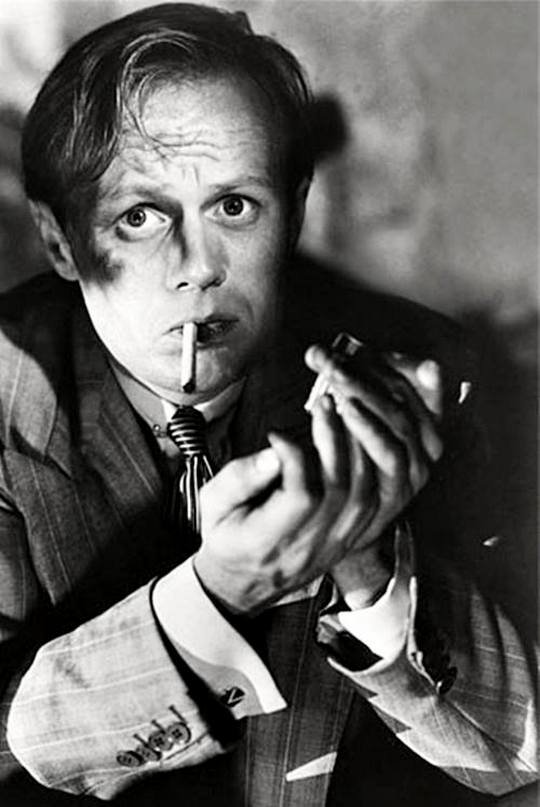
The photo of this tattoo, or body art, displayed above was the prompt for today’s Chatham Writers Group. Inspired by the series of Bernie Gunther novels, and Volker Kutscher’s Babylon Berlin novels, I wrote this fictional story.

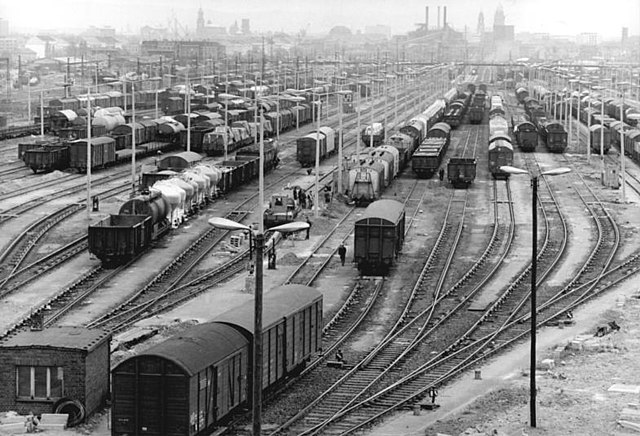
My story opens in the Cologne, Germany freight yard – on a drizzly, misty night

Lisa

Cologne, Germany, 1939

The light, misty rain was falling that evening and it lent an eerie glow to the lights of the freight yard.  Inspectors Guido Mara and Freddie Schubert of the Cologne Krimininalpolezei (criminal police), or Kripo, walked slowly along, straddling a line of box cars, training their flashlight on the doors.  If the doors did not exhibit a padlock,  the detectives were required to slide them open and scan the inside of the car.  Randomly selecting a locked car, Guido hunched over and swept his light from left to right to inspect the undercarriage.  

Reaching a break in the line of cars, Guido said, “Bullshit.  This is bullshit Freddie.”

“Keep your voice down Guido.  You don’t want to anger our esteemed colleagues.” 

Guido lowered his voice, “Sorry Freddie.  But I have spent the last 10 years catching criminals, and some really bad ones at that.  Now here I am, on a crappy night in a rail yard, searching for runaway Jews.  This isn’t right.”

“The Gestapo believe they are criminals.”

“In the eyes of the Gestapo, Freddie, their only crime is that they are Jewish.”

“Go back to being a circus strongman,” teased Freddie, “or hauling freight along the Rhine in your barge.”

“I am going back to the river trade Freddie.  I have to anyway.  To remain a cop, I have to become a Nazi, and I will not.  I am done in seven days.”

A voice, chillier than the night air, spoke from the gloom, “Do you Kripo lads solve crimes by standing around? Get back to searching those cars.”  

“Shithead,” muttered Guido.  Freddie was too stunned to speak.

Most of the cars on the section of track assigned to them were locked, so they gained some distance on their Gestapo counterparts.  With just a few cars remaining in their section, Freddie’s light beam fell on an unlocked door.  It was not completely closed.  He asked Guido if the doors on his side of the car were locked.  They weren’t.  Sliding open the doors, they directed their flashlight on opposite corners of the car.  Startled, Guido almost dropped his light.  “Bloody hell!”, he whispered.  Huddled in one corner, trying to hide behind some potato sacks and shielding their faces from the light beam, were two children.  

Freddie now moved his beam to where the children were.  “Who are you?” he asked.  He and Guido shifted their lights so not to blind the children.  They dropped their hands to reveal the faces of a girl and a boy.  Freddie said, “I know you!  Rachel and Paul Edelman, the baker’s children!  What are you doing here?”

Rachel said, “Police came, Herr Schubert.  Poppa saw them get out of their cars.  He pushed us out into the back alley and told us to run to the rail yard.  He told us to climb into a car on track two.  The train would take us to Rotterdam and our Uncle Rudy.  What does that mean, sir?  Can you tell us where Momma & Poppa are?”  

The same cold voice called from the dark, “Did you Kripo boys find something?”

“Potatoes, some sacks of potatoes sir”, replied Guido, “D’ya want some sir?”

“What? No!  Take them if you want.  Check those last two cars and let’s get out of here.”

Freddie removed his hat and ran his hand through his hair.  “What do we do Guido?”

Guido looked at the children, who were shivering, eyes wide in fright.  “Rachel, Paul, I am Inspector Guido Mara, not of the Gestapo.  Each of you need to crawl into a potato sack.  I’m going to take you to a safe place. My apologies for any discomfort, but think of it as playing hide and seek.”  Freddie was gaping at Guido as though he were insane.

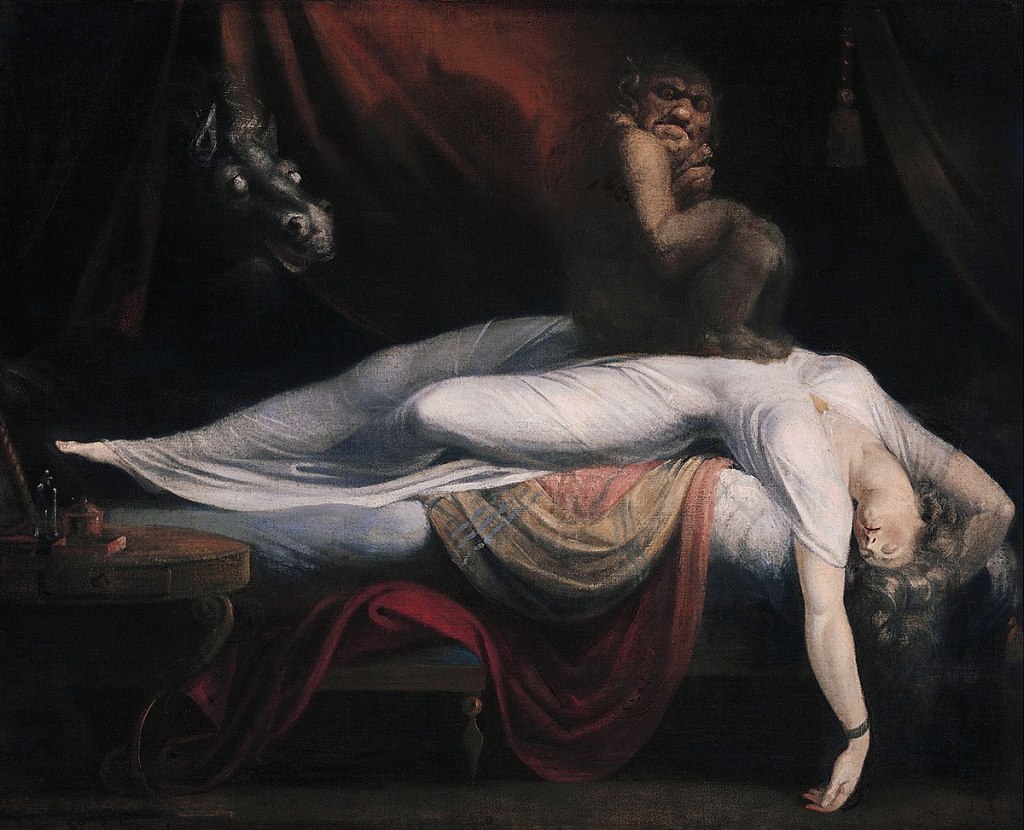
“Mara,” said Paul, “Mara, the demon who sits on people’s chests while they sleep and makes them dream nightmares.”

Guido looked at Freddie with raised eyebrows, then replied to Paul, “Well, I may have caused some people to have sleepless nights, but ,no, I am not the dream demon Mara.  We have to go, NOW!”  

In Germanic lore, the “Mara” or “Mare”, was a gremlin that would sit on a persons chest at night and cause them to have nightmares. A special prayer before bedtime was supposed to ward them off. Young Paul Edelman thought Guido Mara was the gremlin that caused nightmares.

In the dimly lit control room atop the freight yard control tower, the night shift yard attendant took a bite from his bierwurst sandwich, looked up from his newspaper and glanced out into the night.  Through the mist in the distance, he saw a group of six men converge, exchange some words and salutes, then separate.  Four men stalked off towards town, two towards the wharves along the Rhine.  They appeared to have sacks slung over their shoulders.  One of them, a giant of a man, carried two sacks.  “Coppers are potato thieves now, go figure,” he muttered to himself.  He turned his eyes back to the rugby scores.

After leaving their Gestapo counterparts, and again apologizing to Rachel and Paul, Guido outlined his plan to Freddie.  He was taking the children to his small freighter and they would hide in the crew cabin.  In preparation for his departure from the police force, he had moved his personal items from his apartment to the skipper’s cabin already.  In 8 days, he would be taking a cargo of Cologne’s finest Kolsch beer to ports along the Rhine, final stop in Rotterdam.  Freddie had recovered from the shock of his partner leaving the police and finding the Edelman children hiding in the rail car.  “We will talk more tomorrow Guido,” was all he said.

Once safely aboard his freighter, “The Lisa”, Guido washed the dust from the children and ushered them to the crew bunks.  Having rolled up his sleeves while washing them, Rachel noticed the large anchor tattoo on his left forearm.  “Are you a policeman? Or a sailor?  What does the “L” mean, Herr Mara?”

Guido smiled, then a look of sadness clouded his eyes.  “In the Great War, I was in the navy.  Like every sailor, I decided to get an anchor tattoo.  I was newly marriedmissed my wife, so I had the letter “L”, her name was Lisa, put in the middle of the anchor, then our last name across the bottom.”

“You said her name was Lisa.  Where is Lisa, Herr Mara?”

“Please, call me Guido.  Lisa, and my infant son, died in a great influenza pandemic that circled the globe. That was 20 years ago.”

Rachel noticed tears forming in the big man’s eyes.  But he smiled again, “Time to get you to bed, we have some big days ahead of us.”  Looking at Paul he said, “And don’t worry, this “Mara” won’t be giving you nightmares.”  Before tucking them in, Guido implored them not to leave the cabin if he was not around.  And showed them a hiding place should any strangers come aboard.  He then went to his cabin, where he spent a sleepless night.

The morning sun burned away the evening mists.  Guido made sure all was secure on his boat and spoke to the children again about what to do if they heard strange voices.  As he walked off the pier, two men in leather overcoats and grey fedora’s approached.  Behind them loomed the great Cologne Cathedral.  “Gestapo! Bloody hell,” muttered Guido.

 “Good Morning Inspector Mara.  You were observed carrying some large sacks onto your boat last night.  Might we have a look?”

The Cologne, Germany, Rhine River waterfront. The massive Cologne Cathedral looms in the background. In my story, Guido Mara’s small freight craft was docked here.

Ernie Stricsek

The Chatham Writers Group

January 9, 2023

Puzzling to Me

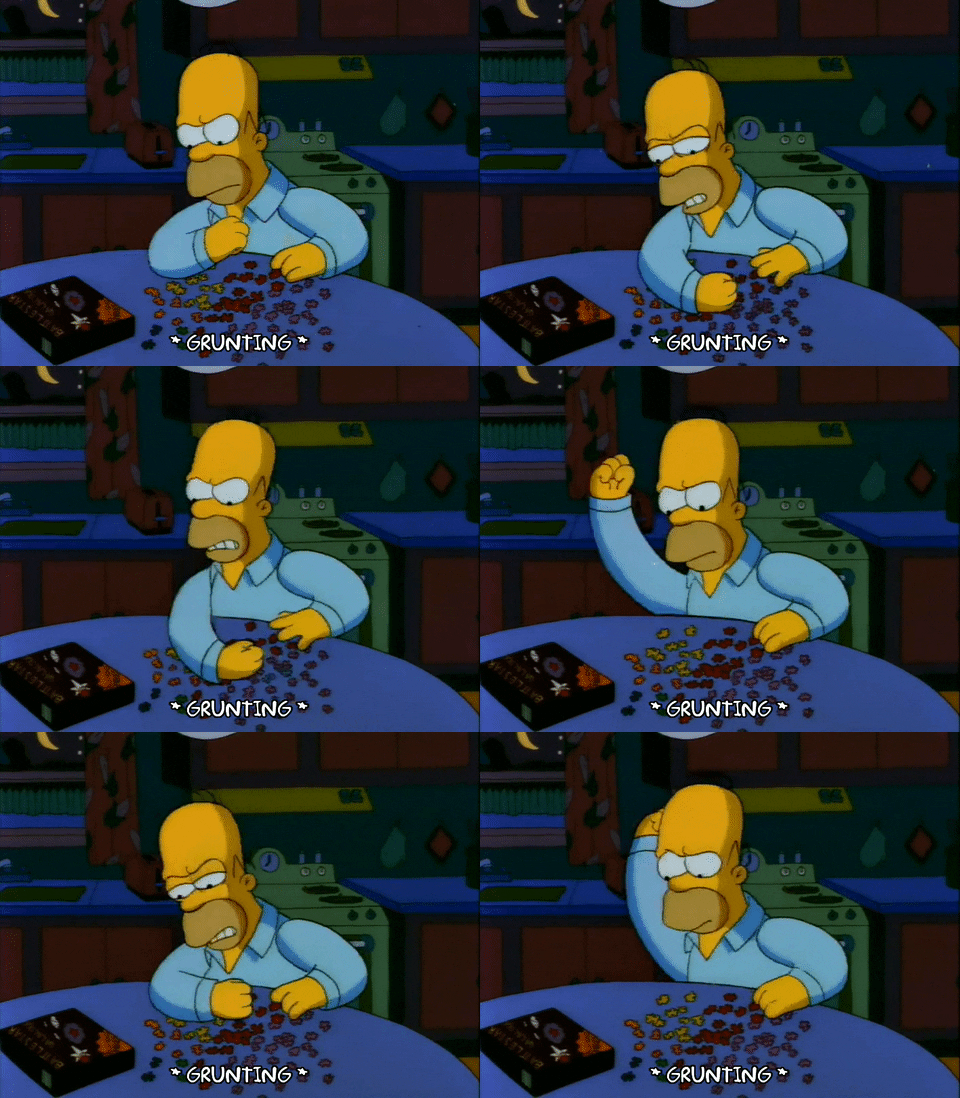
I settle into my chair at the dining room table and reach for the box.  I take a moment to admire its cover, a magnificent panorama painted by noted Civil War artist Mort Kunstler.  The cover and all four sides of the box draws attention to even the most casual observer, that this epic work of art is in 1,000 pieces.  Removing the box cover, I extract the plastic bag holding the minced pieces of Mr. Kunstler’s work. The bag shifts from my right hand to my left, then I gently squeeze it, kind of like Mr. Whipple from those old Charmin toilet paper TV commercials.  Feeling I am up to the challenge, I tear the bag open and dump the pieces onto the table. Exhibiting the eye/hand coordination of a hockey player, I fly as I begin fixing matching pieces together.  Two hours later, I lean back in my chair and admire my handy work.  I am overwhelmed with a great sense of achievement.  However, this euphoric feeling has a half life significantly shorter than the element Francium.  Alas, all I have accomplished is the assembly of the outer framework of the puzzle.  All of those pieces with one flat end.  The puzzler is now puzzled.  Where does this plumed-hat piece go now?  Is this globular shape shape a cloud? Or smoke?  Wait, if I use just enough pressure, I may be able to squeeze this anvil-looking piece into the middle of what appears to be a horse, or maybe a wagon – I don’t know, they’re the same color. Dang, now the horse looks like a boat, that piece doesn’t go where I thought it might.  Elbows on the table,  head resting in my folded hands, my eyes scan the remaining amorphous pieces of cardboard, and there are a lot of them.  To a passerby, I probably resemble statue, because it is now almost an hour since I last moved a muscle, or even blinked.  My son holds a mirror under my nose and announces – “He’s still alive.”

The cavalry has arrived.  In a matter of moments, my wife, my son and his wife have joined me.  Things begin to happen very quickly now.  Smaller, then gradually larger sections of assembled puzzle pieces, are making the dining table to disappear.  The four of us are now pondering and debating placement of the puzzle pieces.  Snacks and drinks appear, despite maintaining focus on the task at hand, we talk about things other than the puzzle.  Discussion sounds like this:

“So what are you binging on Netflix? Oh hey, here’s part of the barn!”

“Ozark, gotta love that Ruth character.  Haystacks!  I found the rest of the haystacks!”

This was great and this is the beauty of puzzles.  They bring people together, working towards achieving a common goal.  Family and friends, of all ages, are engaged with each other, trying to solve a puzzle.  Nobody is texting, or checking social media posts.  They are having a good time, enjoying each other’s company.  

In the early days of the coronavirus, when we were encouraged to avoid intermingling with large crowds, my mother began assembling puzzles.  It helped relieved some of the anxiety of dealing with a previously unknown disease and to avoid feeling isolated.  As things became more relaxed with the advance of vaccines, my mother continues to work on puzzles and as of today she has completed 102 of them since March of 2020.  Social media has played a small role over this time, but only when my sister texts me photos of my mother and siblings, occasionally nieces and nephews, huddled next to her trying to find pieces to fit.  I especially love to see my mother’s beaming smile with a freshly completed puzzle resting in front of her.

I feel word puzzles are part of this mix of bringing people together to achieve an enjoyable goal. We first played Wordle last week, December 26th, while visiting our older son and his family for Christmas.  I know the point of the game is to test your personal skills, but it was fun working together to solve the word.  You can’t totally escape the role of texting in our lives because now there is a daily exchange of messages between Chicago and the Cape with screenshots of solved Wordles.  Puzzles, bringing us together.

Ernie Stricsek

Barnstable Library Writing Group

January 3, 2022

My sister Barb, my Mom, my sister Nancy after completing puzzle #55 in the series.

Fishing Adventures – Dahnert’s Lake

Dahnert’s Lake, Garfield, New Jersey. The wall to the right is the one Robert Swiller catapulted into the lake from.

Fishing Adventures – Dahnert’s Lake, A Memoir

It was via the rumor mill which circulates around young boys that we learned of a potential “hot” fishing spot called Dahnert’s Lake.  This rumor mill spun a story of the lake being stocked with trout, and with large and small mouth bass thriving beneath the Water Lilies in the far corner of the pond. One might even reel in a good sized perch.  Now, to the mind of a more seasoned fisherman, none of this would make any sense.  Dahnert’s Lake was not one of those lakes in the northwestern New Jersey hills noted for containing such desirable sporting fish.  No, Dahnert’s Lake was located in a park in the neighboring town of Garfield, New Jersey.  I admit I have no insight to the system used for classifying standing bodies of water, but someone apparently mis-read their slide rule, or ignored the basic principles of geometry.  Dahnert’s Lake was far from being a lake, rather it was, a small murky pond with tiny island in the center of it, on which stood a single weeping willow tree.  Picnic tables and hibachi style grills dotted its shoreline, however nobody dared swim in the lake.  Dahnert’s was notable for being a prime place to ice skate if the winter’s chill was sufficient to make it freeze over.  People did fish here though, and the rumors of real fish that you could actually boast about catching being present in the lake, filled our young minds with such fantastical thoughts, we had to go there before all the good fish were caught!  Our enthusiasm was so great, our band of anglers grew to a party of eight.  The number being to great to fit in any parent’s car, we decided to hoof the 1.3 miles to Dahnert’s Lake.

Because we wanted to get the jump on the prize fish beneath the surface, we set off early with our fishing rods in one hand, tackle boxes in the other.  Arriving at the lake with the sun sitting low in the morning sky, we were astounded with the view that confronted us.  In the shallows surrounding the lakeshore were what appeared to be thousands of fish. The eight of us had never seen anything like it, I have never seen anything like it since.  However, all of the fish were carp!  In various shades ranging from brown to gold, their sucking mouths were gathering in tiny flying insects that had lit on the lake’s surface.  Remembering the rumor of bass being in the corner of the lake with the Water Lilies, several of us took off on a sprint.  Two of members of this group of runners were the Swiller brothers, whom I’ve referenced in a previous fishing memoir.  In what was becoming his trademark move, Robert Swiller began to lose his balance while running along a retaining wall and basically leapt into the pond.  His brother Cliff, ever so sympathetic, just shouted, “Get outta there now!”   It took him a couple of attempts, but Robert eventually climbed out.  Covered in muck and pond detritus from knees to feet, he sloshed off after us.  He fished in that condition for the balance of the morning.

Braking to a halt at the lilies, we saw the same phenomena we first observed, hundreds of carp scarfing down bugs.  Deciding the real fish were out in the deeper water near the small island at the lake’s center, I strung a heavy one ounce sinker to my line.  Stretching my fishing pole back almost to the ground, I swung my arm forward for a mighty cast.  I released the line and it shot out from the tip of my rod for about 3 feet, further progress stopped by a knot in my reel.  The sinker struck a goldfish near the shore right in its forehead.  A glazed look came to the carp’s eyes and, stunned, it rolled partially on its side and swam slowly in a wide circle.  Clearing the knot, I finally was able to cast my line to a spot where I was certain the prize fish were.  In a few moments, the tip of my rod quivered ever so slightly and I felt a series of light tugs on my line.  I had a hit!  I set the hook and began reeling in my prize.  I was disappointed to see my catch was a small sunfish, I think weighing only slightly more than my sinker.  Carefully extracting my hook, I tossed the little fish back and cast out to the deeper water again.  I noticed the goldfish I brained earlier had regained its composure and resumed sucking insects.  My subsequent casts resulted in catching more sunfish.  The carp began to abandon the shallows, but with bellies full of bugs, showed no interest in our earthworm baited hooks.  One of our party, who had been fishing at another spot on the lake, came trudging dejectedly to where we sat, equally discouraged by the low quality and quantity of fish we caught.  He had asked another fisherman where the trout and bass were.  The guy laughed and said something to the effect of any other lake but this one.  We came to the realization we had fully swallowed; hook, line and sinker, someone’s bait about prize fish swimming in Dahnert’s Lake.

A vintage, Shakespeare push button fishing reel, the reel I was using when I brained a goldfish. Mine was the same model & color as the one in the photo.

Ernie Stricsek

Chatham Memoir Writers Group

November 18, 2022

A day on The Green, a night at Rudy’s – A Memoir

The New Haven Green

The prompt for the Chatham Writers Group today was to write about “a favorite third place”. I did some research into the origin of the phrase created by Professor Ray Oldenburg. Oldenburg is an urban sociologist who has written about the concept of “third places” as being informal gathering places where the general public conduct civic engagement, debating thoughts and ideas. After reading about Oldenberg’s concept, and discussing it with my wife, we both hit on a couple of “third places” when we lived in Connecticut. My memoir follows.

A Day on the Green/A Night At Rudy’s

I sat on a park bench, a 35mm camera with its zoom lens held at the ready in my hands.  Spotting a few possible subjects for my  Psych class project on body language, I began snapping away.  Strangers would greet strangers, sit and talk for a few moments then one or the other would smile and go about their business. A busy bus stop discharged passengers who dispersed to the four winds; to work, to school, to shop.  A few people nodded and greeted me with smiles.  Noticing my camera with the big lens they asked if I worked for the local newspaper.  A guy sat down next to me, lit a cigarette and asked what my thoughts were about the recent capture of the U.S. Embassy in Iran,  and the diplomats being held hostage.  We had differing opinions about what should be done, but he listened thoughtfully to my reasons, agreed with some of my viewpoints, and he had some valid points.  He closed the discussion by asking me if I wanted to buy some weed.  I politely declined.  He smiled, shook my hand and said, “nice talking to you bud.”  This was mid-November 1979, and it’s my first favorite 3rd place, the Green in downtown New Haven, Ct.

The 16 acres that grace the center of downtown district are actually privately owned by descendants of the people who first established the common in 1638.  Since that time, the New Haven Green had been the cultural, spiritual and political hub of the city.  Three historic churches line the Upper Green, while the Green itself is bracketed by Yale University, law offices and the New Haven Public Library, city hall and other government offices, shops, restaurants and trendy bars.  Busses transporting passengers from the New Haven suburbs discharge their fares at the Green bus stop.  My wife enthusiastically still refers to the New Haven Green as having been the gateway to the city.

During the time we lived near New Haven, on any given day, one would encounter peaceful protesters on opposite ends of the Green, buskers playing a variety of instruments, or people just enjoying playing an instrument in a pleasant setting,  political and cultural discussions being conducted respectfully between complete strangers.  In the summer months, the Brian Alden Jazz Festival brought big name jazz musicians to perform on the Green.  Thousands of people would attend, spreading out blankets and lawn chairs on the lush grass.  There would be a great camaraderie felt by those at the jazz fest and, again, strangers would strike up conversations with each other about the performers and sometimes debate the style of play between Maynard Ferguson and Dizzy Gillespie.

One of my visits to the New Haven Library happened to coincide with the birthday of the U.S . Marine Corps.  A city vehicle displaying the American flag and the Marine Corps flag circled the Green playing the Marine Corps hymn over a PA system.  Numerous men and women stopped what they were doing and saluted the flags as the vehicle drove by, several groups formed and sang the hymn, some people wept with pride.  I felt I had to do something to honor the occasion, so I did as I do at baseball games when the National Anthem is played, I removed my hat and placed it over my heart.  A man standing behind me on the library steps asked if I was a jarhead too.  I said I wasn’t, but felt compelled to honor the event.  He patted my shoulder and said “thanks”.  In those years, there was something mystical, or magical, about a 16 acre park in the middle of a city, that inspires complete strangers to greet each other with friendliness and respect. 

Ironically, with all of the activities conducted above ground, beneath the verdant surface lie the remains of between 4,000 – 5,000 late New Haven residents.  Until 1821, the Green had also served as the city’s cemetery.  Although all headstones were moved to the historic Grove Street Cemetery, the remains of Benedict Arnold’s first wife and members President Rutherford B. Hayes family still inhabit the Green.

My second favorite 3rd place was a few blocks northwest of the Green. Located on the corner of Elm & Howe Streets, Rudy’s Bar was a place where scholars and students from Yale, cops and lawyers, postal workers and average Joe’s would gather to enjoy adult beverages and discuss the hot topics of the day.  My friend Kevin and I would pop in for a few ales after Friday night tennis matches, or on a night before a Yale home game.  We would sometimes join the vigorous debates about local and National politics, speculate to the outcome of big court trials, the thoughtful analyses of movies, music and bands.  Perhaps more vigorously debated than politics was which was the better team, the Yankees or the Red Sox?  Rudy’s was always a busy place, but was packed to the rafters on nights tvhe Red Sox were playing the Yankees.  Loud and raucous, the crowd behaved as though they were at the stadiums.

During football season, students from the visiting Ivy teams would go to Rudy’s.  Two outstanding incidents, that Kevin and I witnessed, stand out in my memory.  When Brown University came to play at the Yale Bowl, Rudy’s became the venue for an impromptu barber shop quartet challenge between the two schools.  It was a truly fabulous evening as several different groups of students treated us non-singers to a song list that I did not believe existed.  I thought Lazy River was the only barber shop quartet song.  I believe the challenge ended in a draw as the contestants consumed copious quantities of Ballentine Ale and began to forget or slur words, then giggle.  Some started to hiccup.  The second incident began as a debate between Yale and Dartmouth students about the economic policies of the newly elected Ronald Reagan.  Things really started to roll as an economics professor from each university joined in.  The debate held Rudy’s patrons spellbound.  Each school presented their arguments so passionately and so eloquently, it was truly astounding.  Full disclosure, I had no idea of what they were saying, but it was eloquent.  And it wasn’t baseball.  Patrons applauded when the debate ended, someone bought the debaters a round of drinks.

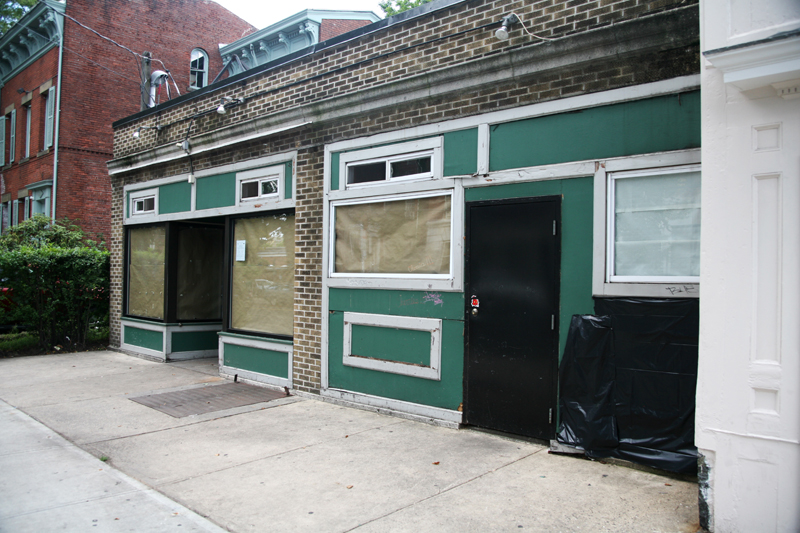
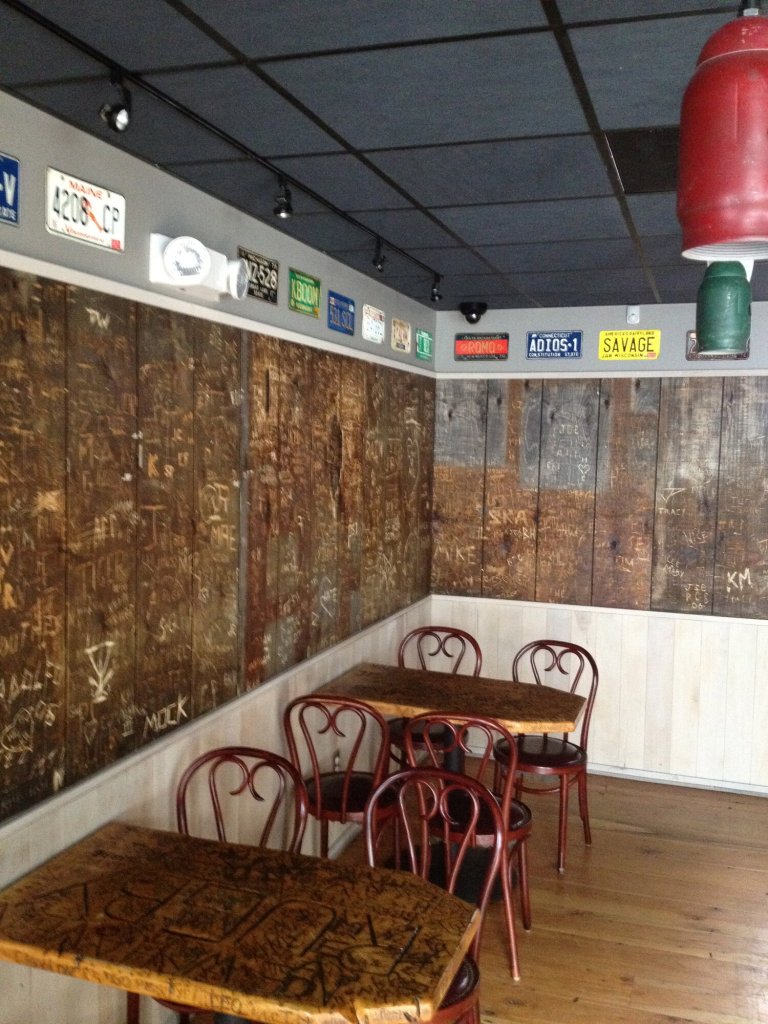
The original Rudy’s on the corner of Elm & Howe Streets, just after the business moved a few blocks to Chapel Street.
Inside the old Rudy’s. Sixty-four years of Yale students carved or scribbled their names into the table tops and walls.

Sadly, New Haven has had more than its share of urban challenges, but I still have fond memories of the allure of its Green.  Equally sad, Rudy’s moved to a more gentrified location a few blocks away about 12 years ago.  It is still in business, but now caters to diners, which stifles lively debate among friends and strangers.

Ernie Stricsek

The Chatham Writers Group

November 6, 2022

A Special Boy, A Special Halloween

There were two prompts for us to choose from for today’s Chatham Writers Group. I chose to write a horror story for Halloween. The setting is Pittsburgh, the time frame is within the last decade. My story follows.

Kaufmann’s Department Store, downtown Pittsburgh. Where my story opens. (Sadly, Kaufmann’s closed several years ago).

A Special Boy, A Special Halloween

KDKA, Channel 2 Pittsburgh, opened with a breaking news story:

“The nine year old son of philanthropists, Peggy and Bill Whitlock, was kidnapped while at Kaufmann’s Department Store.  The Whitlocks had taken their son, Samuel, to have his picture taken at the portrait gallery.  A man claiming to be the photographer’s assistant is the person suspected of taking Samuel, the photographer noted she had no assistant.  A ransom note was discovered in the portrait gallery seeking $5 million dollars for the safe return of the Whitlock’s son.”

The station then shifted to a press conference where the anxious parents indicated they were making every effort to meet the kidnapper’s demands.  But there was no mention in the note of how to transfer the money for the release.  Both Peggy and Bill Whitlock became emotional and begged the kidnapper’s to let their son go.  He was a “very special child” and today, Halloween Day, was his  10th birthday and “He really needed to be home for his birthday.”  Peggy Whitlock recovered her composure, glared coldly glared at the cameras and said, “We don’t want anything bad to happen.”  There was a harsh emphasis on the word “bad”.  The press conference ended.

Frick Park in Pittsburgh, location of kidnapper’s hideout.

In the living room of the caretaker’s cottage in Frick Park, , a man who went by the name of Mr. Gray switched off the TV.   A second man in the living room, known as Mr. Red, was completing the next ransom note by using individual letters cut from different magazines.  Looking up from his task, he said, “Sounds like that Whitlock woman was threatening us, Gray.”

“Nah, she’s just worried about the kid.”

“Come up with the five mil and nothing bad will happen.”

“Mr. Black is outside the county jail now, calling on a burner phone with instructions for the transaction.  Things should move faster.”

“How’s the kid doing?” asked a man named Bud, the Frick Park caretaker.  After three men broke into his cottage, carrying a kicking child with a hood pulled over his head, Bud was clubbed and had his hands zip tied.  The men were each named after a color, like in the movie “Reservoir Dogs”.  Bud sat hunched over on a kitchen chair.

“What do you care?” snapped Mr. Red.

“I saw the news, it’s his birthday, he’s probably upset.”

Mr. Red, menacingly pointing a pair of scissors at Bud barked, “It’s none of your business.  We’re just using this dump of yours until we get our dough, then we’ll be on our way.”  Turning to Mr. Gray he said, “I hope Black is back soon with our food, my stomach’s growling.”

“ Did he get something for the kid?  He’s probably hungry.  Can I check on him?”

Mr. Red leapt out of his chair and gripping the scissors like a knife snarled, “You shut your mouth…”

Mr. Gray spoke sharply, “Sit down Red.  Leave Bud alone.”

Mr. Red sat back down, “Go check on him.  I heard the kid talking.  Just make sure it’s to himself and he doesn’t have a cell phone.”

Bud stood, grabbed a couple of packages of chocolate covered pretzels from his cupboard and walked back to the bedroom where the kid was held.  Mr. Gray accompanied him, unlocked the bedroom door and shoved Bud into the room.  He followed close behind.

The boy looked at Bud and said, “Hello.”

Handing the pretzels to Samuel, Bud said, “Happy Birthday, and Trick or Treat.”

“Thank you,” replied Samuel, “But I only say treat on Halloween, bad stuff happens if somebody says trick.”

“Who you talking to kid,” snapped Mr. Gray.

“There is a monster under my bed.  I was trying to keep him calm.  There’s one in the closet too.”

Mr. Gray’s eyes widened in surprise and he took a couple of steps closer to the bed Samuel was sitting on.  He began to chuckle, “Monsters, eh?  Under the bed and in the closet?  You gotta cell phone kid?  Is this some kind of trick?”

At the word trick, tentacles snaked out from under Samuel’s bed and curled around Mr. Gray’s legs.  A tentacle shot into his open mouth and cut his scream short.  The tentacles dragged his struggling body under the bed.  A loud crunching noise, similar to the sound of a person biting into an apple, came from under the bed.  A slurping sound and a burp followed.

A Boris Karloff voice came from the closet, “Bad manners Octoman, excuse yourself.”  

From beneath the bed, a phlegmy voice replied, “Sorry Mum.  Excuse me.”

Bud stood motionless in shock at what he just witnessed.  From out of the closet shuffled The Mummy.  Bud passed out.

The thud of Bud hitting the floor roused Mr. Red from his ransom note work.  Gripping the scissors in his left hand and a pistol in his right hand he strode down the hall to the bedroom.  “You alright in there Gray?  What’s all that banging?”  

Barging into the room, he saw Bud‘s limp body sprawled on the floor and Samuel sitting on the bed.  A movement to his right caught his eye and he turned to see a dude who looked like he was wrapped in masking tape shuffling towards him with his hand extended.  The dude’s eyes glowed.  Mr. Red suddenly felt sluggish.  The masking tape guy grabbed him by the throat and effortlessly threw his body toward the bed.  

“Open wide Octoman, got you another,” said the Boris Karloff voice.  The Apple crunching and slurping sounds followed.  No burp this time.

Hearing the jingle of keys in the cottage door lock, the Mummy shuffled and hid behind the open bedroom door.  From the living room, Mr. Black called out his associates names.  There was no reply.  Glancing down the hall, he noticed the open bedroom door and called Mr. Gray and Mr. Red again.  Still no reply.  He crept stealthily down the hall towards the bedroom, now gripping his pistol.  Entering the room, the same scenario caught his eyes.  The passed out Bud and the kid sitting on the bed.  

Black’s last words were “What the..” as the Mummy grabbed him by the throat and threw him down next to the bed.

“Last morsel Octoman!”  More crunches and slurps.

The daylight was fading when Bud the caretaker came to.  Shaking the cobwebs from his head, he heard a child’s voice ask, “Are you okay Mr. Bud?”

He saw young Samuel Whitlock sitting on the bed, holding his backpack.  “I think so, Sammy.  Where is everybody.”  

“They went away.  Can you call my Dad & Mom to come get me?  Thank you for rescuing me from those bad men.”  Samuel got up and cut the zip ties from Bud’s hands.  He had no memory of chasing bad men away, his last memory was of them watching the news of the kidnapping in his living room.

“Yeah, sure, Sammy, I’ll call them right now.”

As Bud left the bedroom to get his cell phone, Samuel Whitlock slid two small action figures into his backpack, a mummy and one with tentacles called Octoman.  “Thank you he whispered, Happy Halloween.”

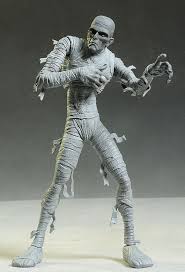
Samuel Whitlock’s Mummy action figure.
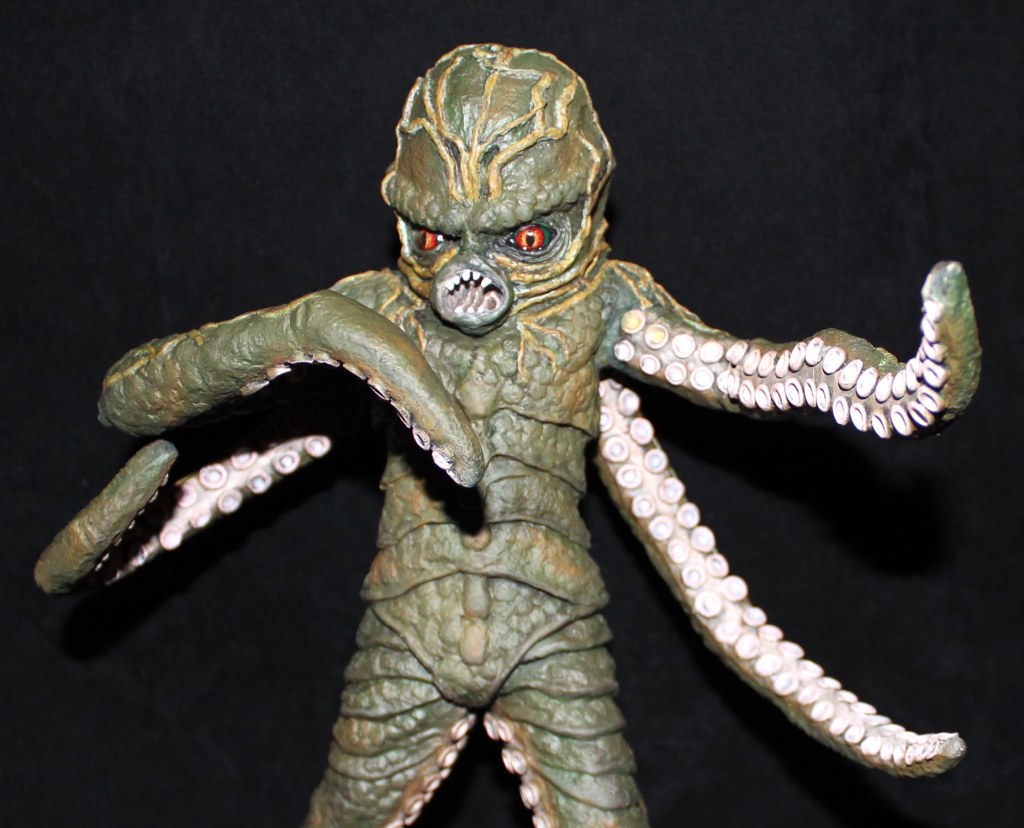
Samuel Whitlock’s Octoman action figure.

Ernie Stricsek

The Chatham Writers Group

October 31, 2022

The Best Halloween

The Chatham Memoir Writing Group prompt for today was “My Favorite/Best Halloween”. It was real easy to write to. My story follows.

My Best Halloween – A Memoir

I remember so many fun Halloween’s from when I was a kid.  Parties in school, parties at either my house or my friend’s houses, costume parades, followed by Trick or Treating itself on Halloween night.  We lived in one of those densely populated boroughs in northeastern New Jersey and given that it was also the era of the post-war baby boom, it always seemed there hundreds of kids scrambling about on Halloween night.   There were so many houses to visit in our immediate area, we would sometimes stop back at home two or three times to empty our sacks.  It was more like Freight Night than Fright Night.  I remember the caramel apples we would get when we stopped at the home of the town‘s police chief.  At Mr. & Mrs. Georgi’s house, we would be asked to  sing a song before receiving our treats.  Mr. Janus was a department manager at Wonder Bread, so we would get a small bag of popcorn as well as a small loaf of white bread – helps build strong bodies 12 ways – Wonder Bread.  The last stop on my Halloween night of largesse, the turning point for me to head home was my classmate Billy Stewart’s house.  I could have gone one more house, but after an unfortunate incident rocketing through the front yard of that house at breakneck speed while a passenger on my brother’s bicycle, leaving the homeowners swearing and shaking their fists in our wake, I was fearful of being recognized. So I wouldn’t go there.  But I digress. From Billy Stewart’s house, I would trudge up the hill know to the locals as Cherry Hill.  From the crest of Cherry Hill, I would always pause for a moment to gaze in awe of the clear view I would have of the New York City skyline, all those sparkling lights less than 20 miles away.  The Empire State Building standing the tallest, pre World Trade Center.  I also remember, just before Halloween, our school teachers handing out these pint size milk cartons with a UNICEF label.  Taking the with us in Halloween night, we would shout “Trick or Treat for UNICEF” when we knocked on a door.  In addition to a treat, the family would drop a few pennies into the milk carton.  Then there was the Halloween I missed because I was laid low with mono.  Those were all fun times, but the best was yet to come.

Pint milk container used to collect for UNICEF
New York City Skyline – Circa 1961

Halloween Day, 1984, was a beautiful fall day.  The morning air was crisp with only a few clouds in the sky.  My wife and I were up and out of the house early, we had had an appointment with destiny.  Our son was displaying a reluctance to being born so now, two weeks late, the good doctors at Yale-New Haven Hospital were going to invite him out into this world.  Once we were settled into the birthing room, the drugs were administered and we began to count down the time until delivery.  The bright sun filled the room and we passed that the time playing Trivial Pursuit.  This activity drew the attention of the nurses and doctors working on the floor and several joined us to play while they were on break.  It being Halloween, our game playing was interrupted from time to time by howling and other spooky sounds coming from the rooms that surrounded us.  These were not sounds coming from trick or treaters mind you, no they were the sounds of women giving birth.  However, with all the babies being born around us, their first cries didn’t seem to resound with our son as he still was displaying a reluctance to meet us.

That reluctance continued through what would prove to be a really long day for my wife.  As the sunlight faded to gray and darkness descended on the day, I would take occasional glances out the window of the birthing room and see kids in their costumes, visiting houses outside the perimeter of the hospital.  With our son still displaying great reticence to meet his parents, the decision was made to perform a C-section, and we were soon being transported to the OR.  It had been my great desir ge that our son arrive in the world to the comforting accompaniment of classical music, so I made a tape of favorite pieces.  My wife’s doctor popped the tape into a player that was in an observation room looking into the OR.  During the procedure, I sat behind my wife’s head and could see a steady progression of medical people stepping into the observation room to listen to the music.  Despite the fact a surgery was underway, there was an almost party-like atmosphere.

At approximately 7:45 PM on October 31, 1984, Dr. Mary Jane Minkin announced we had a little cone head, we named him Geoff.  Coincidentally, the at the moment Geoff was delivered, the “The Ode To Joy” from Beethoven’s Ninth Symphony from my tape was playing over the ER speakers. It was the best treat anyone could ever hope to get.  It was the best Halloween ever.  At this point in my story, I need to circle back to the series of Trivial Pursuit games that were played that day.  My wife was in labor while we played, I did the unkind thing of winning every game.  The medical staff looked upon me with a raised eyebrow.  On each of the subsequent Halloween’s since 1984, my miscreant behavior is recalled.

Ode To Joy from Beethoven’s Ninth Symphony

Ernie Stricsek

The Chatham Memoir Group

10/28/22

My Most Unfortunate Expense

After writing a story for the Chatham Memoir Writers group two weeks ago, I was unable to attend the meeting to read it. The prompt was “My Most Unfortunate Expense”. My tale of that follows.

1981 Buick Skylark. I don’t remember ours looking as nice as this one in the photo.

My Most Unfortunate Expense

To the casual observer, it would appear my most unfortunate expense was the time I used our lottery winnings to purchase lifetime supplies of elderberry wine and silk boxer shorts, and whatever money was left over, I spent foolishly.  Nah, that is all made up, we never won more than $2 on a scratch off.  My most unfortunate expense was the purchase of a 1981 Buick Skylark.  

We were in the market for a new, more fuel efficient car.  As much as we liked the Honda Accord, in 1981 it was a bit beyond what we could afford and due to its popularity, there was no wiggle room for dealing.  My father-in-law had purchased a Buick Skylark in 1980 and seemed to love it, espousing it’s handling, fuel efficiency, comfort, etc.  He let me drive it while he sat next to me in the passenger seat, talking up the car as though he were the Buick salesman.  It did drive like he described. It was less expensive than a Honda Accord and after looking at a couple of other car models, we ended up choosing the Skylark.  My father-in-law beamed.  All of the cars on the lot had a number of bells & whistles we felt we didn’t need and we wanted one with a standard transmission so we had to wait for our bare bones, special order car to be delivered.

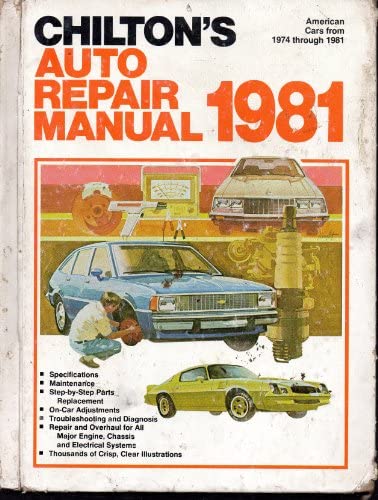
After taking delivery, I noticed immediately leaving the dealership, that the car did not handle as crisply as my father-in-law’s Skylark, it felt a little sluggish.  My father-in-law said, “Oh, mine felt that way too at first, but as the car breaks in, it will handle better, you will see big differences after a thousand miles or so.”  Fifteen hundred miles later, the car still seemed sluggish to me.  It was about 8 months after getting the car that I did begin to notice changes, but not for the better.  Running errands one day, we noticed a line of fog on the inside of the windshield close to the dashboard.  Going to work a couple of days later, the windshield really began to fog up.  I discovered the car’s thermostat had ceased to function, an easy fix, but this kind of stuff should not happen to a car less than a year old.  This incident served as the inspiration for me to purchase a Chilton’s Manual for troubleshooting and repairing a Buick Skylark, the internet and Google were more than a decade away from being created.  

About a year after buying the car, we were driving back from visiting my wife’s family in Vermont when my wife suddenly declared, “My feet are wet!”.  I had no idea what the cause could be, and we were still an hour from home so I couldn’t consult the book that became my bible – The Chilton’s Manual for Buick autos.  Within a few minutes after the foot bath, the windshield began to fog up.  I suspected the thermostat again.  My hopes for a simple fix were dashed when my research disclosed the cause to be a corroded heater core.  The Chilton’s provided step by step instructions how to change the heater core, but the cover was not easy to access.  However, I should not be doing this type of stuff to a 13 month old car.  

My Bible

Our decision to go with a bare-bones vehicle bit us on the rump the time we visited Colonial Williamsburg and Richmond, Virginia.  We made our trip in mid-June because it was not supposed to be quite as warm as later in the summer.  As luck would have it, an early heat wave invaded the area.  The banks with digital displays broadcast, along with the time, temperatures as high as 102 degrees!  Bare-bones car meant no AC.  With air vent fan on full blast and windows wide open, the atmosphere inside the car was comparable to that of a steel mill melt shop.  Oh, I forgot to mention that, due to a minor fender bender that had not yet been repaired, the passenger door couldn’t open.  To exit the car, my wife had to crawl over the center console then out through the driver’s door.  Oh, I also forgot to mention my wife was five months pregnant, which somewhat hindered her ability to exit the car.

The Skylark evolved into an albatross.  One small thing after another would crap out.  Nothing was easy to fix or perform routine maintenance on,  largely because of things being difficult to access.  To me it seemed this car was designed to vex those that tried to fix it.     

By the time our son was two, we had owned this Skylark for 5 years.  My car repair skills had advanced over this time.  With the Chilton Manual resting on the engine, I was able to fix most of the things that crapped out on this car.  I became very adept at this, so much so our neighbors thought fixing cars was a hobby.  Another skill that had strengthened over this time was my ability curse.  It was not long after I opened the hood of the car, or laid on my back to change the oil, that I would begin to swear.  I had to tone it down so the neighbors could stop gasping at my fluency as I “enjoyed my hobby”.  Worse yet, our son would watch me fix the car.  We had gotten him a battery operated Jeep and he would drive it around in the backyard.  It became apparent that he paid attention to closely to me working on the car because, while driving his jeep, he would stop frequently, lift the hood where the batteries were, shake his head and with his sweet three year old voice say, “Son of a bitch.”  I guess he thought, because of the Skylark, that cars needed to be worked on every 10 feet.

Another scene in the play called “The Horror of the Skylark”,  occurred while on my way to work.  I was less than a mile from my office when the car bucked, lurched and belched a cloud of steam from the exhaust.  I immediately scrunched my nose at the smell of anti freeze.  I had the car towed to a repair shop near our home and was told that a gasket had blown and the valve cover cracked, it would be a week to 10 days before the car could be repaired.  Six weeks later, the car was still at the repair shop.  I stopped there on my way home to see what the deal was.  A very nervous repair shop owner told me that someone had tried to steal the Skylark, the thieves had broken the steering wheel cover trying to start a car which couldn’t start.  He would replace the cover at his cost – gee, thanks.  I looked at him, now I was shaking with anger, and said, “I don’t know what makes me angrier, the fact that my car is still not fixed, or the fact that if it had been fixed, these jerks could have stolen it and I would be rid of the biggest piece of junk ever.”  He just gaped.  A week later the Buick was repaired.  Great.  

There is an epilogue to this play.  When I first began to experience issues with the Buick, my wife’s parents were slated to visit us for a weekend.  A car that I didn’t recognize pulled into our driveway, a red station wagon.  You could imagine my surprise when I noticed the guy behind the wheel was my father-in-law!  “What happened to your Skylark?” I exclaimed.  

“Ah, it was junk,” said the guy who, a little over a year earlier, told me it was the best car ever, “How about making us some coffee.”

Ernie Stricsek

The Chatham Memoir Group

September 30, 2022

Cigarettes Vignettes

The prompt for today’s Chatham Writers Group was “Cigarettes”. I never smoked cigarettes, but I cobbled together a memoir of my experiences with others who smoked.

Cigarettes Vignettes 

I never smoked a cigarette.  I smoked a cigar once, handed to me by a co-worker back in the day when that was the method of celebrating the arrival of a baby.  It was a White Owl with a blue “It’s A Boy” label.  It gave me a headache and I was nauseous for awhile afterwards.  I smoked a pipe for about 3 days once, a corncob model that I won at one of those Jersey shore boardwalk game of chance entities.  I tried a chaw of tobacco for 20 seconds, I can’t say anymore about it without gagging.  I have no personal first hand smoking experiences to call on, but there are plenty of second hand smoke stories for me to relate.   These are from a time before work places and restaurants became smoke free.

Pencil Shavings

My boss, whose name was Roy, poked his head into the office I shared with my colleague Jeff and extended his hand towards us, gripping two quarters between his thumb and forefinger.  “Hi guys,” he said, “grab yourselves a couple of drinks and meet me in my office in five, I’d like to run a couple of ideas past you.”  

Roy was dumping pencil shavings into his waste basket when Jeff and I shuffled into his office, cups of Coke sweating condensation in our hands.  Motioning for us to sit down, he seated himself behind his desk, took a sip from his coffee cup and lit up a Benson & Hedges 100.  He began to about his project ideas.  With a freshly sharpened pencil in his right hand, he scratched out a couple of formulas for alloying additions.  In his left hand he gripped both his cigarette and coffee, occasionally putting his cup down and leaning to flick ash into the waste basket.  Roy had a habit of tilting back in his chair to gaze at the ceiling while trying to flesh out his theories.  Deep in thought, appearing to be counting the holes in the ceiling tiles, he failed to notice the thin tendril of smoke that began to drift from his waste basket.  Jeff and I spotted it and tried to get Roy’s attention.  He held up a palm and said, “Hear me out on this..” and started to talk while concentrating on the ceiling tile.  The smoke from the waste basket grew in density, and started to smell like burning wood – the pencil shavings.  

Roy was still talking when Jeff and I, with great urgency, declared, “Roy, smoke is coming from your waste basket.”  

Roy tilted his chair forward and looked at us with furrowed brow and simply asked, “What?”  In answer to his query, a flame shot up from the center of the basket.  Roy did see that.  His eyes got big and he uttered “hmmm.”  He tossed the remainder of his coffee into the basket.  His effort did not adequately extinguish the flames, and in short order, Jeff and I added our Cokes to the wild fire.  Disaster was averted.  Roy excused himself while he carried the waste basket, which still had some wisps of smoking trailing from it, to some undisclosed location outside of the office area.  He returned, sat down behind his desk, lit another cigarette and said, “Now, we were discussing adding more carbon to see if we can improve the material toughness.” Roy never spoke of The Great Pencil Shaving Conflagration of 1975.  Nor did he offer to refresh our fire suppressing Cokes.

What toppings would you like…

I had begun new job in Rockford, IL.  Trying to be helpful, my new co-workers talked, at great length, about the many restaurants in the area that offered the legendary Chicago style, deep dish and stuffed crust pizza.  These pizzas were too huge, even the 4 slice size, for just me to consume.  However, I was in the mood for a good meatball sub and was provided the name of Gerry’s Pizza, right next to the hotel I was staying in.  Just across the parking lot, you couldn’t beat it for convenience.  My co-workers had talked it up so much, I spent most of my day at work salivating about the meatball sub.  Quitting time came and I made a quick stop at the grocery store to get a 6 pack of beer, then to my hotel to put the beer in the fridge.  I hustled across the parking lot to Gerry’s to order a meatball sub.  I was a little put off when I entered the pizza place, the smell of cigarettes hung heavy in the air and there was even a thin cloud of smoke, clinging to the ceiling of the hall that led to the dining room and order counter.  But my sandwich was takeout, I wasn’t eating there.  Putting aside my initial misgiving, I boldly strode down the hall, turned  to where orders were placed and skidded to a halt.  Gerry and Mrs. Gerry were working on a pizza, adding toppings – which is not unusual.  But it was the cigarette dangling from the corner of Mrs. Gerry’s mouth, as she hovered over the pizza, that gave me pause.  Smoke drifted up from a long ash that curved perilously in the direction of the pizza.  When Mrs. Gerry noticed I was at the counter, she lifted her head to look at me.  Her right eye was red, and runny from attracting the line of smoke from her thin cigarette.  Mrs. Gerry deftly removed the cigarette from her mouth just before the ash tumbled to the floor.  It made me ponder how many pizzas and sandwiches were made with that one special topping.

“What can I get ya?” Croaked Mrs. Gerry.

“Ummm, do you have a pay phone?” I asked.

“In the hall,” she pointed the direction with the remainder of her cigarette, “you walked right past it.”

“Thank you,” was all I said.  I went back the way I came, past the pay phone and left Gerry’s Pizza quicker than  I had entered.

Ernie Stricsek

The Chatham Writers Group

September 18, 2022