Scars

It has been a busy summer. Friends and family visits, the arrival of a grandson, the first birthday of a granddaughter, there did not seem to be enough time to write. After a summer break, The Chatham Writers Group resumed activities with a flourish this past Monday. The prompt was to write about a scar, or scars, in any genre. I chose a work of fiction. This is the 3rd story I have written about slavery and the Underground Railroad with Alexandria, Virginia and Fairfax County, Virginia as the backdrop. The central character is the enslaved young man, Galileo Washburn, who first appeared in my post “Freedom”. For clarification, I added a few more lines to my story.
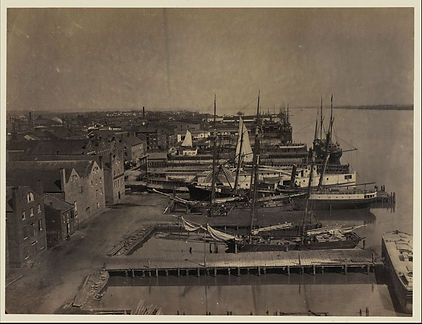
Alexandria, Virginia waterfront in the 1850’s. The backdrop of my story.

Scars

Alexandria, Virginia. April, 1855

“Your skills at handling mule teams never ceases to amaze me Galileo,” drawled Philo Washburn, “this wagon weighs nearly a ton and yet these mules are pulling as though it weighs two pounds, there’s no struggle a’tall.”

“Thank you sir,” replied Galileo Washburn. 

“Come on Galileo, you can drop the formality.  It’s just us, you can call me Philo.  I would like that.  We’re practically brothers.”

“Just the same sir, it don’t feel right, I am sorry.”

“Alright, suit yourself, maybe one of these days you’ll feel comfortable enough to say my name in general conversation.”

Galileo lapsed into silence as he thought, “We are brothers, Philo, or half-brothers.  Your Daddy, Asa, is my Daddy too.   You know it, but won’t fully accept it.”  And Galileo was anything but comfortable.  Asa Washburn was supposed to accompany him on the trip to Alexandria, but he was so hungover after a night of bourbon swilling and card playing, he directed Philo to go in his place.  The Harvard educated Philo was the real brains and drive to the Washburn & Sons business endeavors, the polar opposite of his father & brother, both foolhardy winesops.  Galileo was in a heightened state of anxiety because the tobacco laden wagon had a false bottom, where two men, two women and four children lay, seeking freedom from the bonds of slavery. He hoped & prayed the keen Philo would not detect anything amiss and that the human cargo would maintain their silence.

Galileo entered Alexandria and guided the wagon down Prince Street toward the docks lining the Potomac River.  Once at the wharf, conductors from the Underground Railroad were to assist with the escape of the 8 fugitives in the false bottom.  He didn’t now the identity of the conductors, nor their plan.  The only thing he knew was someone would tell him which wharf to bring his wagon.  He also knew Philo Washburn had to jump off at the junction with Pitt Street to conduct business at a nearby bank.  

After Philo disembarked, the wagon continued on to the wharf.  Galileo had just begun to breathe a little easier when a voice barked, “You, boy! Stop!”

Yanking gently on the reins, Galileo turned to the source of the voice and saw four rough looking characters sauntering to the wagon.  They were garbed in the unofficial uniform of the slave catcher; jackets hanging to their ankles, a whip coiled on one hip and a Colt’s Dragoon revolver on the other.  He knew there was a Bowie knife concealed somewhere as well.  The leader of the group was the most striking in appearance.  Unblinking, hard eyes as blue as crystal burned beneath the shade of his hat brim.  His most distinctive feature was a scar on the left side of his cheek, coursing from the corner of his lip to his ear lobe.  

“What you got in the wagon, boy.”  The scarred man’s voice was a hoarse rasp.

“A hogshead of tobacco sir.  I have to deliver it to the wharf.” 

“What ship?” Asked the scarred one.

“Don’t yet know sir, someone’s supposed to direct me when they see the Washburn name on the wagon.”

Those blue eyes stared with such intensity, Galileo had the sensation the man could read every thought swirling in his mind.

The other three men had been slowly walking around the wagon, banging on the tobacco barrel, checking the wagon gate.  One spoke to the scarred man, “Let ‘em go Slash, ain’t nothin’ out a sorts here.”

The man named Slash gave Galileo one more long, intense stare, then spun around and walked away. Watching the men vdisappear into a tavern, he let out a big sigh, uttered, “Sweet Jesus,” snapped the reins and led the team to the river.  Whispering to his passengers in their native Krio, he said, “Almost there folks, almost there.  Be steady now.”

Slave catchers searching for fugitive slaves

Arriving at the row of wharves, he turned the team to  where the tobacco freighters were moored.  Galileo moved slowly along the row of ships, allowing time for the unknown parties to spot the Washburn name on the wagon side.  Because he was looking to his left, he was startled enough to nearly leap from his seat when he heard the now familiar rasp of the scarred man’s voice coming to him from his right, “Yo, boy, stop!”

Galileo’s heart pounded hard, his throat so tight the words “Yes sir” sounded like a frog croak.  The man appeared from the side of a sail repair shop and stalked towards him, the intense blue eyes burning holes in his soul. Pulling the coiled whip from his hip, the man called Slash pointed the handle at Galileo.  But his voice got softer.

“Are you the one they call Galileo?” He asked.

“Yes sir.” 

“I apologize for my harshness, I have to maintain a certain persona. I hope you understand. Take your cargo to The Schuyler, four wharves down.  Don’t wait on your wagon, dismount and go to the shipping office. Stay there until someone hands you your documents.  Your wagon will be empty and you can be on your way.”

The scarred man began to walk away, but stopped, turned and said, “You are a very brave man, young Galileo.  Godspeed.” Then he was gone.

Reining in at The Schuyler, Galileo jumped down from the wagon and went to the shipping office as instructed.  In a matter of minutes, a man wearing the uniform of a ship’s captain entered the office with a packet of documents.  As he handed them over, Galileo was startled to see the deep outline of a scar in the shape of the letter “S” on the man’s palm.  Was there a second “S” on his palm?  The packet of documents covered half of the hand.  Galileo looked up at The Schuyler’s Captain, eyes wide and brow furrowed with surprise.  Could this man be carrying the brand of a slave stealer?  Galileo had heard rumors of some people caught transporting fugutive slaves had the double S brand burned into the palm of our hand. 

The Captain smiled and reached to grasp Galileo’s shoulder.  “Your cargo was delivered in good order and is safely stored below.  I hope we meet again, young man.”  
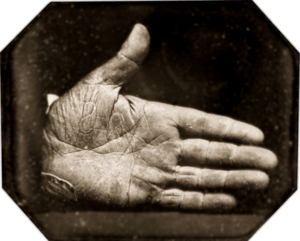
The Double “S” Slave Stealer Brand. Note: Palm of Captain Jonathan Walker of Harwich, MA. Was imprisoned and branded after being caught transporting fugitive slaves to freedom.

Guiding the mule team back up Prince Street, Galileo stopped at the junction with Pitt Street to let Philo Washburn climb onto the empty wagon.  As he passed the packet of shipping documents over, Philo asked how the transfer of cargo went.

“Uneventful sir, as easy as pie,” answered Galileo.

Ernie Stricsek

Chatham Writers Group

September 12, 2022

Lime & Scurvy

One of the things I have discovered since I began writing for fun three years ago, was the diamond mine of story ideas originating from my work experiences.  The number of characters I have encountered over the years, from my paperboy job at 9 years old until now, are worthy of a series of Dickens’ novels.  Experiences with champions and chumps, saints and scalawags, have provided the basis for several fiction stories and for some of the tales I have related to the memoir group.  This story is of an incident that occurred in the late 1970’s.

The company I worked for had devised a new technology for improving the quality of steels used for pipe and tubing applications.  Word of its benefits spread quickly throughout the steel industry and soon demand was exceeding the capacity to make the material, a wire product with a calcium metal core.  To keep up, extra work shifts were necessary and people to staff these shifts were needed.  Help wanted ads were put in the paper and within a week, candidates were being interviewed.  Now, sometimes, well many times, the image a candidate presents during the interview belies the real nature of the individual.  Such was the case of one of the people hired.  I just happened to see this person sitting in the lobby, awaiting his turn with the hiring team.  Thinking I was one of his interviewers, he stood up eagerly and said “Hi”.  I nodded and said “Hi” and noted he was wearing a button down casual shirt and crisp new blue jeans.  I sensed he was expecting me to take him somewhere, but I just said someone would be with him shortly and went on my way. 

I saw this person again about a week later.  Now an employee, he presented an entirely different appearance than the one at his interview.  His oxford shirt and new jeans were replaced by a leather jacket with the colors of his motorcycle “club” on its back, a black Harley Davidson t-shirt and not so blue jeans.  Within a few days, stories began to filter through the factory of the new guy being a “real piece of work”, and a “scurvy dog”.   A quick inventory of his personality revealed a surliness and arrogance, and a propensity to intimidate people.  His frequent mention of his affiliation in the motorcycle “club”, a well known one of notorious repute, would cow some of his co-workers.  If an associate called him out for his unsavory behavior, he would invade the personal space of his antagonist, glare in their face, and roll back his upper lip to reveal the words “f*** you” tattooed across his gum line.  He was shrewd enough to display congeniality when his supervisor was present, however be as scurvy a dog as ever was when nobody of authority was around.  I believe his name was Steve.

Steve’s gum tattoo was far more outrageous than this one

After a probationary period, Steve was assigned to a material handling position because he was familiar with driving a forklift – albeit recklessly when his bosses were away.  One of his tasks was to perform a “calcium reclamation” process.  It involved placing sections of scrapped calcium metal wire and calcium metal pellets into 55 gallon drums of water.  Within a few seconds of being placed in water, calcium metal reacts violently.  The water bubbles as though boiling and a steam cloud develops over the open top of the drum.  The calcium reduces to lime, which settles to the bottom of the drum and can be used to make more calcium metal. The 2nd byproduct is hydrogen gas present in the steam cloud which makes it explosive, and flammable – think of The Hindenburg.  To prevent a violent reaction, the calcium metal had to be placed in the drum of water in very measured, small quantities.  There were scales and measuring devices that were to be used to ensure that an overload of calcium metal was not applied.  And absolutely, positively no smoking or open flames were allowed near this reclamation process.  I apologize for the brief chemistry lecture, but it makes what happened a bit clearer..  

Lab experiment with Calcium metal in water. Hydrogen gas is present in the steam.

About a month after Steve was hired, my boss and I were in the company cafeteria drinking cups of coffee.  The cafeteria was on the second floor of the factory and had windows offering a panoramic view of the facility.  Sipping our coffees, gazing out the windows, we noticed Steve performing his calcium reclamation task.  It became readily apparent that he was not following protocol because he was bypassing the weighing scale and just dumping large amounts of calcium metal scrap in the 55 gallon drums.  A fairly sizable steam cloud was billowing above one of the drums.  Becoming very concerned about what we were witnessing, my boss hastily left the break room to call Steve’s supervisor to alert him to the potential hazard.  Leaving the cafeteria and going outdoors, I began the walk to my office which was in another building.  I looked over at the reclamation station and noticed the steam cloud had grown considerably.  I was shocked when I saw Steve pop a cigarette into his mouth and pull his zippo lighter out of his pocket.  I shouted “NO!”, but it was too late.  A quick flame, followed by a loud WHOOMP, and a geyser of white, foamy water shot skyward.  The explosion made Steve stagger back a few steps. Fortunately, for him, the energy of the explosion was directed upwards toward the sky and not sideways.  Stunned, he was staring wide eyed at the geyser, his cigarette dangling from his mouth, his lighter had fallen to the ground.  Still looking up in disbelief, a the geyser of water and lime now came back to earth and landed squarely on him.  I had been running over to see if he was okay and shouted his name.  He turned to look at me and I had to stop.  He resembled the Stay Puft Marshmallow Man.  Steve was coated in white slime from head to toe, with the exception of his eyes which had been shielded by safety glasses, lime slime even dripped from the bent cigarette still in his mouth.  I again asked if he was ok.  Others now arrived on the scene, I heard some snickering as people saw how he looked.  Spitting out his cigarette, the only words Steve uttered were, “I quit”, and he squished off to the locker room, refusing any offers of help.  Back in my office, I heard the loud roar of a Harley and caught a glimpse of Surly Steve as he sped past my window.  Lime had tamed the Scurvy Dog.

Ernie Stricsek

Chatham Memoir Group

7/29/22

Family Reunions

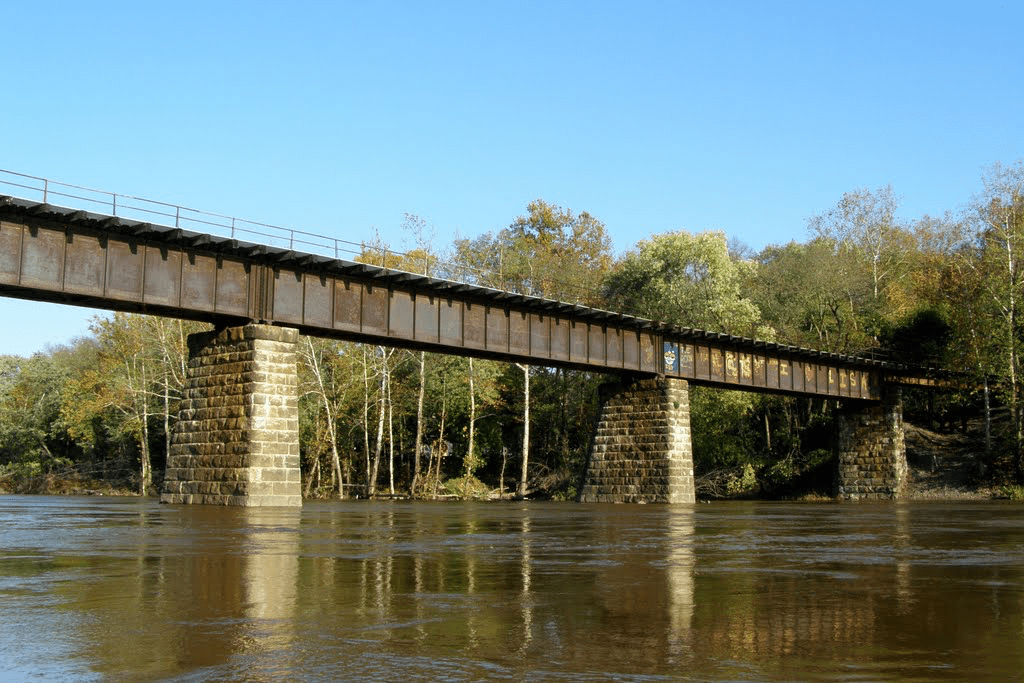
Norfolk Southern Railroad Bridge crossing the Delaware River near my Grandmother’s childhood home. The Pennsylvania shore is on right side of photo, the quarry I mention in my memoir is just past the trees at the end of the bridge.

There was an open prompt for the Memoir Group this week. I had been reminiscing about my grandmother’s family reunions when I was growing up and decided on a memoir about them. I believe the last one I attended was almost 50 years ago. Although there were photos of the town on the internet, they are copyrighted so I did not include them in my story.

Family Reunions

I remember when I was a kid how much my grandmother, my Dad’s mother, looked forward to her family reunions.  To accommodate the vacation schedules of most of the attendees, the reunions were held every August at her childhood home in Harmony Township, New Jersey.  Well, they were actually held in an unincorporated part of Harmony Township called Brainards.  A name that, for me anyway, conjured images of gothic horror or of zombies feasting on the craniums of those unsuspecting travelers who happened to stop to fill their gas tank or quench their thirst with a Coke or orange soda from a vending machine.

Preparing for these reunions was quite the task for my grandmother, but it was one she embraced with love and enthusiasm.  Her contribution to the reunion menu was fried chicken – wings, drumsticks and breasts – and she would make enough to feed a small village. But her signature contributions were her pastries – Hungarian Kifle cookies filled with either Lekvar or apricot pastry fillings, or ground walnuts and the light as a feather forgacsfank, fried dough ribbons dusted with powdered sugar.  These were also produced in a quantity that would fill the shelves of a pastry shop.  Her childhood home was perched on a high bluff overlooking the Delaware River.  But as a testament to the power of Mother Nature, it was not high enough to avoid raging floodwaters on several occasions.  So with those experiences ever present in her mind, the preparation for a trip to Brainards also included admonitions to my sister, my brothers and I to not stray too far from the house because there was quicksand that would swallow us up, or a passing train could crush us under its wheels, or the currents and whirlpools in the Delaware River would sweep us away without a sound. When pressed about the location of the quicksand, the replies were vague, it could be in the woods in the middle of a path, or near the railroad tracks, and any number of locations along the shore of the Delaware River.  Apparently quicksand cropped up anywhere she thought kids didn’t belong.  The admonishments would be presented each year.

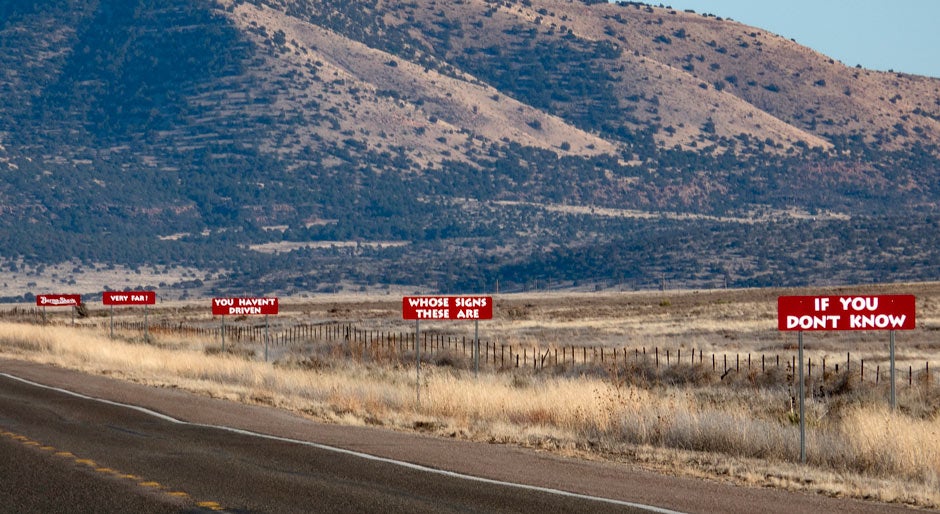
Traveling to Brainards was interesting in itself.  We would typically make the journey in two cars.  My grandparents, uncle and food in one car.  My parents, brothers – later sisters – me, and more food in the second car.  Our home was in a highly populated, congested area only a stone’s throw from Manhattan.  As we drove West to Brainards, the populated areas would get thinner, we would drive past lakes and forests and finally into rural farm country. The Interstate highway was not completed yet so our backroads threaded through cornfields, dairy and poultry farms.  Sprouting along the roadside in farm country were the famous Burma Shave signs entertaining us with little ditties like:

If you

Don’t know

Whose signs

These are

You couldn’t have 

Driven very far

Burma Shave 

Or:

No lady likes

To snuggle 

Or dine

Accompanied by

A porcupine

Burma Shave

Burma Shave signs along highway
Another set of Burma Shave signs. There were approximately 600 different verses.

Soon, our two cars would trundle into town, population about 200.  It still is 200 to this day.  I was always surprised to see the town’s residents out and about.  My grandmother’s harrowing tales about those she personally knew who had run afoul of quicksand, freight trains and whirlpools had given me the impression that Brainards was a ghost town.

Arriving at the reunion site was always chaotic.  The town’s population would significantly increase on reunion day because there would typically be 70 family and extended family members in attendance, so emerging from our cars would result in us facing an onslaught of hugs, kisses, handshakes, back slaps, warnings to kids to watch out for quicksand… you know the drill.  I would initially feel a bit anxious at the start of these reunions.  I was from east New Jersey, my cousins from the western part of the state.  I dressed differently and talked differently, they dressed and talked differently than I did.  However, these differences would soon be overlooked as we immersed ourselves in a day of fun and games.  The activities ranged from horseshoes, quoits, beanbag toss, badminton, baseball, croquet, all of these events highly competitive.  Oh and lawn darts – but watch out for quicksand, freight trains…. If the Delaware River was slow and sluggish and posed no threat of sucking us down in a whirlpool, we went swimming.  Sometimes my Dad’s uncle took us for a ride on the river in his boat.  Playing baseball was fun, my cousin Barry always reminded me of Mickey Mantle and he could hit a ball a country mile.  Occasionally we would hike across the railroad bridge spanning the Delaware to visit a limestone quarry on the Pennsylvania side.  In the crystal clear water you could see huge fish floating just below the surface.  They appeared to be looking back at us.  

The most magnificent sight at these reunions were how the picnic tables bowed from the mounds of food heaped on them.  The quantity and variety was astounding.  Tense moments would ensue as people would compare my grandmother’s kiffles to those of her sister and sister-in-law.  Her sister claimed her forgacsfank were lighter, but her husband declared my grandmother’s were so light, they could float away like bubbles.  One of the cousins would bring kegs of root beer.  I was not a big fan of root beer, but jeez, right out of the keg was like no root beer I ever tasted before.  Stories would be told, jokes would be told, in my early years some I didn’t understand.  We would eat, then play, then eat some more – but be careful not to swim until our food was fully digested.  

As the light of day began to dim, those of us who had a long ride home would soon have to load our overstuffed bodies back into our cars to make the return journey to civilization.  There would be parting hugs, kisses, backslaps and handshakes and declarations of “see you next year”.  In the descending darkness, we would read the Burma Shave signs going in the opposite direction, farmland to forest to houses and businesses and more lights.  We knew we were home when my mother woke us up to get out of the car.  Thinking about these reunions, I wistfully wondered if my grandmother were alive today, and I was to tell her that I was thinking of taking a trip to see how much Brainards has changed through the years, would she tell me to be careful of the quicksand?

Ernie Stricsek

Chatham Memoir Writers Group

July 7, 2022

Wordsmithy

The prompt for the Chatham Writers Group today was to select three words you recently had to look up in a dictionary and use them in a story. There are six words in my story that required a definition check, one that my wife said was fitting for me, the others I had seen in Civil War non-fiction books. Two of the words were used by William Howard Russell, a reporter for The Times of London, when he was covering the opening scenes of the American Civil War. I had fun writing this story, and I resorted to using the character of the young Manchester Press & Journal reporter to tell the story. Oh, and it takes place in Pittsburgh. My story takes place in 1970.

Pittsburgh’s long departed Three Rivers Stadium. ”Dahn tahn” in the background, and the junction of the Allegheny & Monongahela Rivers to create the Ohio River.

Wordsmithing

I stood at the window gazing wistfully at the rise of Three Rivers Stadium over the roof tops of the homes and businesses on Pittsburgh’s North Shore.  The stadium was framed nicely by the taller downtown buildings behind it and the Monongahela and Ohio Rivers flowing to its right.  I was entering my third year at the Manchester Press & Journal, moving up from reporting on crazy bird races and bizarre industrial accidents, to crime stories involving severed body parts & missing people.  But I was still seeking the elusive sports writer job.  I longed to be sitting in the press box of yonder stadium with my binoculars, scorecard and notepad summarizing the exploits of the Steelers and Pirates.  I was startled from my reverie by the long blast of a foghorn, actually jumping about 6 inches straight up, spilling my coffee and dropping my jelly donut.  The foghorn was my boss spouting, “I’ve been looking for you!” Disgustedly surveying my calamity, he continued, “Damn you’re jumpy, clean that mess up and come to my office, there’s a story I need you to cover.”

“Good idea to wear black pants, if you’re gonna spill coffee on yourself every time anybody talks to you,” said my boss as I entered his office.  Motioning with a cigar for me to sit, he described the assignment.  A guy named Solomon Wigfall, from the hinterlands of the county, was seeking to unseat the incumbent U.S. representative for our district. He was giving a speech at the Point Park Hilton in two days and I was to summarize his appearance in 1,000 words or less.  I did some research on Wigfall in preparation for my assignment.  Highly polarizing and controversial, his platform seemed to consist largely of grievances.  Wigfall’s campaign issued a press release indicating his speech was going to focus on economic development in Pittsburgh’s Hill District and the Bloomfield and Polish Hill neighborhoods. 

Pittsburgh’s Polish Hill Neighborhood
Pittsburgh’s Little Italy, the Bloomfield neighborhood.
Pittsburgh Hilton, now a Wyndham Hotel

Sitting in the press pool at the Hilton, I found Wigfall’s speech to be a mix of contemptible statements, sprinkled with unintended humor.  The members of the public in attendance hated it.  Twenty minutes after Wigfall finished, I was back at the Press & Journal, pounding my Smith-Corona to get the story to my boss before close of business.  Walking into his office, I stretched to drop it in his in-box, but he yanked it from my hand.

“Sit”, he barked.  Then he proceeded to read it aloud while I slouched in the chair.

“A large crowd of community organizers, members of the city government, business owners and residents from all three neighborhoods referenced in Wigfall’s press release had gathered at the Hilton to hear the candidate speak.  The attendees were greatly concerned about Wigfall’s economic development plans.  The master of ceremonies struggled to get the crowd excited about the candidate, but there was no applause, no shouting, just a low unsettling murmur, like the rumble of a lion getting ready to pounce.  The Emcee closed by telling the crowd that they were about to hear the speech of their life, candidate Wigfall was a master of the English language, as evidenced by his being nationally recognized as a crossword puzzle champion. With that Wigfall strode confidently, nay arrogantly, onto the stage.  It would be an understatement to describe his display as astonishing.  Looking rather unremarkable in all of his press photos and prior appearances, Wigfall now resembled a younger version of Colonel Sanders – the white 3 piece suit, but the goatee and waxed handle bar moustaches jet black, his hair slicked back and hanging below his collar.  He was a throwback to the 19th century.”

 “Handlebar is one word,” said my boss, then he resumed reading aloud.

“Although he fancied himself a cruciverbalist, the farrago of words Solomon Wigfall belched during the course of his speech demonstrated his inability to use them in their proper context.  He maundered through leveling the Hill District to turn it into a shopping mall to rival that in suburban Monroeville – this drew shouts of anger from the residents of that community, notably from one August Wilson, who introduced himself as a playwright, looking to present his community to the world.  Undeterred by the outburst, Wigfall moved on to his plans for the Polish Hill and Bloomfield neighborhoods.  He claimed it was time to move these neighborhoods to more traditional, mainstream American communities.  Doing away with such businesses as pierogi pubs and ethnic Italian restaurants would create an atmosphere more appealing to people like him, people from more “humongous” neighborhoods, businesses and restaurants that served steak and meatloaf – true American delicacies. Wigfall would resort to dogberryism through much of the speech I was able to hear – saying humongous when he meant to say homogeneous.”

“You know what he meant,” said my boss, “take this dogberry stuff out and just use homogeneous.  But it is funny.”  He continued to read.

“The crowd erupted.  The audience shouted blackguard, spalpeen, scoundrel, and other epithets which I am not allowed to write in this column.  The uproar made it almost impossible to hear the rest of Wigfall’s speech.  But, like a Lake Superior icebreaker, he plowed on through to its completion.  The only indication his speech ended was when he raised both hands to the sky, lowered them and strode offstage with the same arrogance that accompanied his appearance.  Booing, hissing, attendees calling Wigfall “caitiff”, “varmint” and “louse” reverberated through the hall.  I tried to buttonhole Wigfall for his thoughts about the reaction to his speech, but his handlers would not let me, or any other members of the press near him.  I watched him in his white suit strut down the hall and push on the door marked “Pull” three times before he realized his error.  He seemed to deflate a bit, pulled on the door and was gone from sight.”

His reading completed my boss said, “Wigfall is from a town of less than 1,500 people, yet he espouses the desires of the few far outweigh those of the many.  Some of your words are anachronistic, but they are suitable in this case.  Wigfall is a crackpot, but he does have his supporters. Take out that stuff about the push or pull door too.”

Waving me out of his office his parting words were “You have five minutes to get it to the printers.” I sprinted to the shop.

Wigfall Campaign Portrait

Words:

Cruciverbalist:  someone good at crossword puzzles.

Farrago: confused mixture

Maunder: talk in a rambling manner

Dogberry: another word for malaprop, based on Shakespeare character in Much Ado About Nothing.

Spalpeen: rascal

Caitiff: scoundrel

Ernie Stricsek

Chatham Writers Group

6/19/22

Surviving Cape Cod


The prompt for the Chatham Memoir Writers Group this week was to write a memoir about surviving an incident in your life, or surviving Cape Cod. My story follows.

Cape Survival

Before hearing the suggested prompt last Friday, I don’t believe I had ever given much thought to surviving Cape Cod.  I came to the Cape for the first time in September of 1976 to spend a long weekend with friends who had a home in Chatham.  My wife and I honeymooned in Provincetown in 1980.  We made a couple of long weekend trips after that, then spent a week when our sons were in high school.  On all of those trips, I remember us having a wonderful time, I have no memory of having “survived” a visit to the Cape.  After purchasing a home on the Cape, we have gained a greater appreciation of what it means to survive it.

Surviving the Drive to the Cape

When we purchased our home in Chatham in May of 2014, my wife and I were still working and living northeast of Philadelphia.  Long weekends and vacations would be spent in Chatham.  The drive, under the best conditions, should take 7 hours from door to door.  We almost achieved that target once when we made it to our vacation home in 7.5 hours.  Just once.  The closest we would get after that one time, was a journey of 10 hours.  There were a couple of trips around holidays that took from 12 to 13 hours to complete.  Arriving at our house in the wee hours of the morning, after a grueling drive through Connecticut, would leave us about as energetic as a discarded and flattened nip bottle.  After recovering and enjoying our time on the Cape, the drive back to Pennsylvania seemed to go faster.  Much to our dismay.  

A job transfer to Alabama presented even more of a challenge and required pinpoint logistical planning.  Long weekends were out of the question, it was an 18 hour drive from Huntsville to Chatham – 12 hours alone getting through Connecticut.  My wife and cats would spend the summers in Chatham, I would fly up every other weekend.  All that ended when we began living here full time in February 2019, just in time for a snowstorm, good thing I remembered how to work a snowblower. Which brings me to…

Surviving the Cape Weather

Over the course of our job related moves, we lived in two states that were prone to severe weather conditions in the form of tornadoes.  Relatively flat areas with tornado warning sirens and workplaces with huge yellow signs that directed employees to basement shelters.  We were fortunate to have never experienced a tornado while living in those states.  However, in July of 2019, now living in Chatham full time, we had to scramble to our basement for shelter from a tornado that passed less than two miles from our house.  Over the next 3 years, the loss of trees, tree tops and a gazillion branches to the high winds that buffet the Cape, and the occasional Nor’easter encouraged us to cut down most of the trees in our yard.  

Surviving the Tourists

It is great to live in a place that so many people love to vacation at.  But from Memorial Day to Labor Day, be aware that it is almost impossible to make a left turn, be wary at four way stops because some people don’t stop, be wary at pedestrian crossings because some drivers do not yield. The traffic circles, roundabouts, rotaries – whatever you want to call them – are as heart stopping as any amusement park thrill ride. .  Watch for the unwieldy bicyclist, or the experienced ones who rocket through road crossings without stopping.  Expect people at Stop & Shop to yell at you if you take a piece of fruit they were eyeing, or taking your cart when you are waiting at the deli counter.  Tourists, can’t live without ‘em, and it is truly an experience trying to live with them.

Surviving the Great White Sharks

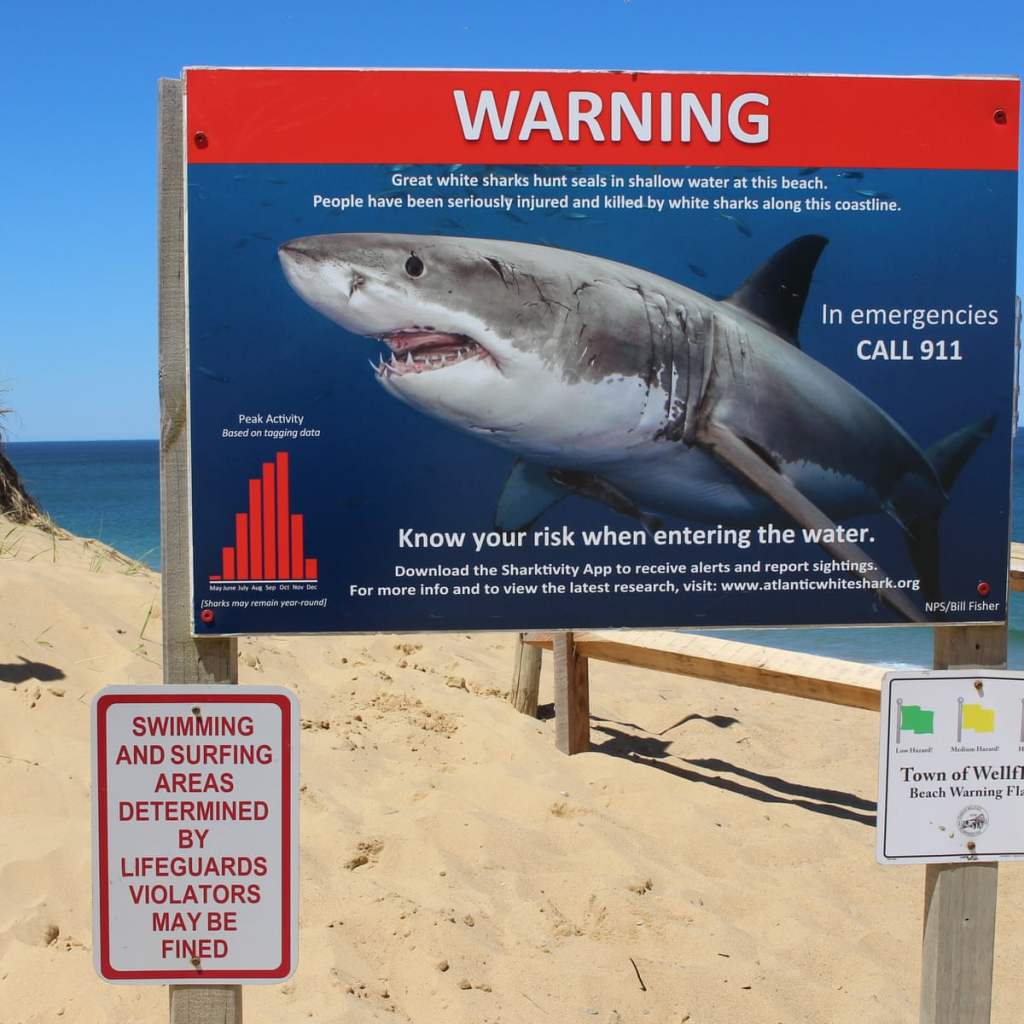
Cape Cod and the islands of Nantucket & Martha’s Vineyard are now called the Summer Home of The Great White Shark.  I believe that the Cape & Islands have developed a very good shark detection and warning system, but it is still a good idea to not swim in isolated areas.

Cape Survival

There is, however, a silver lining; no, rather a pot of diamonds and gold as you negotiate these hazards.  As my wife says, the longer we live here, the real Cape unfolds itself and presents a number of treasures.  You can join one of the fabulous writing groups and/or art programs. The beaches are amazing, fantastic summer theater productions at the Wellefleet Harbor Actors Theater and Cape Playhouse, art shows, Farmer’s Markets.  You can travel the Pilgrim Trail, from the initial landing in Provincetown to their excursions along the outer Cape.  One can get out on the water via the many harbor tours, whale watches, ecological kayak tours, you name it.  Visit the great Heritage Museums & Gardens and the Cape Cod Museum of Natural History and grab some clam strips or a pistachio waffle cone from Kate’s, or get both, then Bike or walk the Cape Cod Rail Trail to work off those calories. But wait, that will lead you to the Chocolate Sparrow, where I believe everything they sell is low calorie – NOT! My wife and I are amazed at the number of people who walk, no matter what their age, or the weather – tornadoes excepted.  So many art galleries and museums to visit, or watch the sunset from any number of beaches along Cape Cod Bay.  So, so many things that do make the Cape a great place to live.  See the stars of tomorrow play in one of the best amateur baseball leagues in the world – the Cape Cod Baseball League. Perhaps one of the best things about the Cape are the people who live here.  People with interesting and diverse backgrounds whose life experiences unfold, much like the Cape’s secrets, the longer you know them. The willingness of this diverse group of people to volunteer and help others is also amazing.

Ernie Stricsek

Chatham Memoir Group

June 10, 2022

The Iron Birdcage

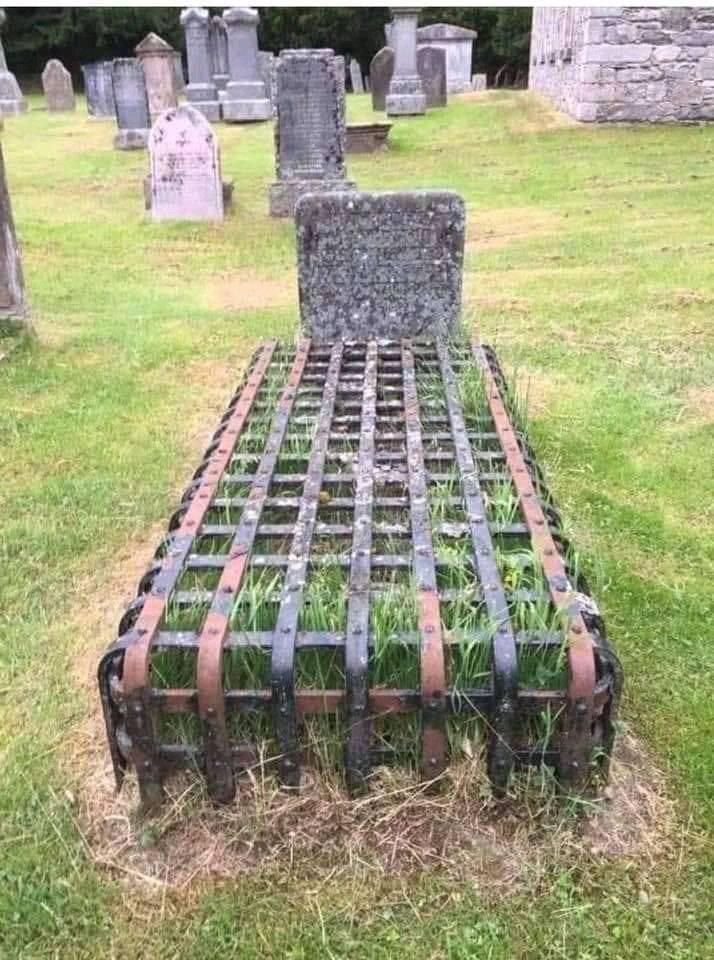
Mortsafe

Tody’s prompt for the Chatham Writers Group was the above photo, with a caption that read ”I would like to know the back story.” The prompt elicited 9 very different, excellent stories and poems. My fiction tale follows. I provide some additional background after the story.

The Iron Birdcage

“So after we get to England, Smitty and I were walking past this cemetery in Berkshire and we spot..”

“Nobody wants to hear about you and Smitty in a cemetery Tut, not now”, shouted a voice off to the left.

Brushing off the interruption, George Tutwhiler, or “Tut” as he is commonly called, continued, “as I was saying, Smitty and I spot these two graves with steel cages over them.  I’ve never seen that before.”

“Me neither,” said Eddie Smith, called Smitty by everyone, “So Tut and I go into the graveyard to get a closer look.”

The voice off to the left screeches, “Nobody wants to listen to you and Smitty talking about a Goddamn graveyard.  Not now!”

Tut shrugs and leans a little closer to the guy, last name Farkas, sitting across from him, “So we walk into the graveyard to investigate these cages over the graves.  They look like a cast iron bird cage, cut in half.  The cage is over the grave, and there appears to be bolts connecting it to the other half of the cage, which I am guessing goes around the coffin underground.”  

Smitty leans towards Farkas now too, “Tut and I are befuddled by this cage.  It’s freaking heavy!  We know because we tried to lift it.  Damn thing wouldn’t budge.”

“Smitty and I are gruntin’ and straining’ to lift this big bird cage when some guy starts yellin’ at us.”

“Tut and I jumped a mile!  In a graveyard at night, tryin’ to lift this damn thing, and a voice bellows out of the dark – “What in God’s name d’ya think you blokes are up to!” – scared the crap out of us, I tell ya!”

“Maybe you Smitty,” chuckled Tut, “you screamed like a 10 year old.  Anyway this guy is a cop, he has one of those “Bobby” helmets on, and starts laying into us about desecrating a grave.  We apologize and tell him we’re trying to figure out what this cage thing is.” 

Smitty’s head is bobbing in agreement with what Tut had said, “The cop hears our accents, – “are you blokes Yanks? – he asks.  We reply in the affirmative.  We repeat we were just trying to figure out what the meaning of the cage was.”

“The cop apologizes now for “giving us a fright”,” says Tut, “he then comments on us Yanks being a peculiar bunch, then he tells us what the cage is for.”

Tut and Smitty sit back without saying another word.  Farkas’ head is now moving back and forth looking at Tut, then Smitty.  He looks like he is watching a ping pong match.  “So what did he tell you?  What was the cage for?” he asks them.

“Oh, sorry Farkas,” Smitty apologizes, “the cop tells us that the people committed a crime so, so bad, so heinous, that not only were they sentenced to a life behind bars, but when they died, their coffin would be behind bars.  It made perfect sense.  We thanked him, then he told us to get out of the graveyard.”

The voice from off to the left sounds hysterical now, “Shut the hell up about graveyards!  Of all days! I don’t want to hear it!  One more word and I will gut you guys with my trench knife!”

“Settle down. Settle down, Mayhew. Nobody is gutting anybody on this plane,” the Lieutenant’s calm voice came from the front of the C-47 transport.  Looking to Tut & Smitty seated near the open door of the plane he said, “How about changing the subject, Sgt. Tutwhiler.”

“Yes sir”, saluted Tut, then he turned to glance out the door of the C-47.  “How about fireworks Lieutenant?  Looks like were heading into the Fourth of July.”  

The Lieutenant made his way back to the open door.  Leaning out into the prop blast, he could see hundreds of sun bursts and streaks of light as anti-aircraft flak shells and machine gun tracer bullets sought out targets.  “I’ll be damned,” he said, “that would be beautiful if it didn’t carry a death notice.”

The words were no sooner out of his mouth when the plane bucked from the concussion of a near miss.  More explosions began to buffet the C-47.  Looking at Tut, the Lieutenant said, “Mortsafes, Sarge.”

“I’m sorry, sir, what did you say?” Asked Tut.

“That cop was pulling your leg, Sergeant , those cages are called Mortsafes.  They were placed over graves to ward off grave robbers.”

Before Tut could reply, a red light over the door blinked on.  The Lieutenant directed the paratroopers to stand and attach their jump cords, then for each trooper to perform an equipment check.  Equipment check completed, the 10 men on board the C-47 remained with their eyes trained on the lights over the open door, waiting for the green one to illuminate.  The plane bucked and lurched from the flak concussions, the troopers fought to maintain their balance.  

The green light came on, the Lieutenant shouted, “Go!” And shoved Tut out the door, Smitty went right behind him.  Tut looked back at the C-47 then cried out in horror as the cockpit disintegrated in a ball of flame.  He could see Smitty just above him.  The plane began to roll on its side, Farkas tumbled from the open door back into the plane.  The plan continued to roll over, when the door again faced the ground, another trooper tumbled out.  No others.  Tut gasped and closed his eyes.  The zip of tracer bullets shook him from his despair and he looked to the ground to see where his chute was taking him.  “Of all the..!” He exclaimed.  He landed in a church cemetery.  Smitty touched down 5 seconds later.

Struggling out of his harness, Smitty whispered, “At least we’re on the right side of this graveyard, Tut.  It looked like Farkas was the only other guy to get out.”  Looking around at the graves, he said, “I heard the Lieutenant tell you what those cages were for.  From the looks of this place, the French don’t seem to be worried about grave robbers.”

Tut nodded in agreement, “Yeah.  Let’s try and find some of our guys.  We gotta a war to fight.”

Ernie Stricsek

Chatham Writers Group

June 5, 2022

American Paratroopers fly over the English Channel enroute to play a key role in the invasion of France, June 6, 1944.

Mortsafes came into vogue in England & Scotland in the early 1800’s. They were created to deter grave robbers from mainly stealing the bodies of the recently deceased for sale to doctors to use for teaching surgeons. There were several different types of mortsafes. In many cases they were removed after the body had reached a level of decomposition to render the unsuitable for medical purposes.

In regards to the setting for my story, I have had a keen interest in the D-Day invasion since forever it seems. To commemorate the anniversary of the ”Longest Day”, I used the setting of the paratrooper assault that occurred in the early hours of June 6, 1944. The 101st Airborne Division, the ”Screaming Eagles”, trained in Berkshire and Wiltshire England. I think this will become an annual event. Last year, to note the D-Day anniversary, I wrote a story about the French Resistance fighters who conducted operations to assist the Allied invasion forces. I hope you enjoyed the story.

The Leg

The prompt for the Chatham Writers Group today was to write about a mystery, either from your life, or a fictional one. In the following story, there are a few kernels of truth in the cornfield of fiction. After my story, I will reveal those kernels of truth.

The Historic Mexican War Streets Historic District in Pittsburgh. Located on Pittsburgh’s North Shore, the neighborhood was created in 1847 after a tract of land was subdivided into streets named after battles and leaders of the Mexican-American War. My story begins in this neighborhood.

The Leg
Bizarre, peculiar, curious, any of these words could be used to describe the series of events that began to unfold in the North Hills of Pittsburgh in 1978. The fact that I now had the title of reporter – community interest for the Manchester Press & Journal, and no longer shared a desk with the janitor, were not part of those curious events. No, the series of events I allude to began with two seemingly unconnected incidents. Events my boss called me into his office to talk about.

“I got a couple of stories I want you to cover. First, that new, upscale restaurant that opened in the Mexican War Streets neighborhood has closed, abruptly. Patrons with reservations arrived to find the doors locked with a hand written note taped to the window declaring “closed until further notice.”

I was startled, “You mean Chadwick’s? Wow! I heard reservatations were being taken 4 weeks out. That is curious indeed. I’ll see what I can find out.”

“This second assignment is even more bizarre. Two guys fishing one of the channels around Neville Island snagged a severed human leg from between a couple of logs floating near the shore…”

“Your kidding,” I interrupted.

“Why would I kid about a severed human leg?” Asked my boss.

“No, I mean guys actually fishing off Neville Island. Between the two chemical plants and the coke making ovens, they’re more likely to catch an incurable disease than a fish.”

“Instead of making sick jokes, reach out to your detective buddies, who d’you call ‘em? Rowan & Martin? Another sick joke. See what they have on this leg.”

“Will do boss!” I got right to work.

Pittsburgh’s Neville Island. Home for chemical plants. in my story, the severed leg was discovered along the shore of the channel to the left of the island.


The two detective buddies my boss referred to were Jack Rowan and Pat Martin, of the Pittsburgh PD. Friends of mine since college, Jack and Pat had known each other longer and had acquired their sobriquet from the popular comedy show, “Rowan & Martin’s Laugh In”. They were both busy, but agreed to meet at the Three Deuces for Happy Hour. I arrived at the bar before they did and was immediately hailed by the bars owner, Eddie Stanko. How he spotted me through the cloud of cigarette and fried kielbasa smoke, I don’t know. Eddie spoke in heavily accented Pittsburghese, which had taken me a couple of months to master. The first words out of his mouth caught me by surprise, “Yinz hear abaht Chad Riley’s new place closin’ all sudden like, n’at?”

I admitted all of us at the Press & Journal were surprised to learn of Chadwick’s closing.

Eddie continued, “Chad moved up pretty quickly in the restaurant world. Starting with that dive in the Strip District, then on the Sou’ Side with them college students, to going all snooty n’at with the Chadwick place.” Eddie motioned me to move closer. Looking about to see if anyone was listening he said, “The way I hear it, Chad got involved with some of them Picksburg mafia types. He owed somebody favors he couldn’t do. That leg that got snagged off Neville is rumored to be his. Something needs done about finding its owner.” My jaw bounced off the bar with the realization that my two stories now had a connection. Eddie’s eyes lifted and looked over my shoulder. With a big smile he bellowed into the smoke, “Well! If it isn’t two of Picksburg’s finest! Is this a reunion of sorts for the three of yinz? First round is on me!”

I stood to shake Rowan & Martin’s hands. Eddie set three frosty mugs of Iron City on the bar. Jack Rowan motioned to an empty booth with his beer hand and, batting smoke out of the way, we made our way to it.

After exchanging pleasantries, we got down to the purpose of our meeting. I related what Eddie Stanko had told me. Jack and Pat seemed as surprised as I was to hear of Chad Riley’s connection with the Pittsburgh mob. Pat looked around, softened his tone and said, “You’re hearing it from us first, but you can’t say where you heard this, if you print it. Chad Riley hasn’t been seen for several days now. His staff showed up for work and found the back entry door padlocked shut, with a note saying closed until further notice. No explanation from anybody, especially not Chad.”

Jack jumped into the conversation, “The leg found by the fishermen is from a male and, given its fairly good condition, was recently taken from its owner.” Glancing around, he added, “the pads of the toes were removed, so there is no way to check if there are any prints on record. If there is anything to the rumor Eddie is spreading, Chad’s disappearance and the leg’s appearance take on new meaning.” Jack usually played things close to the vest, it was most curious that he was offering this information ahead of the press conference.

Pat resumed talking, “The department is going to make an announcement about what we know regarding the leg and ask for the public’s help with providing information. Nobody has been reported to be missing in Pittsburgh, or the surrounding area. Not even Chadwick Riley.”

“My boss is expecting two stories, now they appear to be conjoined. Can I write this? How can I write it?” I asked.

Frank and Pat looked at each other and turned to me with broad smiles.

“You’ll figure something out,” said Frank, “you’re a good writer.”

“Just leave us out of it,” Pat chuckled.

Pittsburgh’s Triple Deuces Bar, 222 Federal Street. The scene of my meeting with Rowan & Martin. Three Deuces was sold in 2009 and was torn down about a year later.

I got in early the next morning and wrote about the puzzlement with the closing of Chadwick’s, and the unexplained disappearance of Chadwick Riley. I ran two pieces for the second story past my boss, one with Eddie Stanko’s (identified only as “a source”) unverified rumor, the second about the expected police announcement and their search for help. My boss chose to run the Chadwick closing story and the expected police announcement. “We don’t print rumors and speculation,” he said with pride.

Chadwick Riley was never reported as missing by his family, so the police couldn’t investigate, but he was not seen since before the mysterious closing of his popular eatery. A Tony Roma’s eventually moved into the place Chadwick’s occupied. Thirteen months later, a beaming Chadwick Riley appeared at a press conference to announce the start up of Riley Enterprises. His new endeavor would be providing food services for all three of Pittsburgh’s pro sports teams, also at the Convention Center. His only explanation for his mysterious disappearance was “he needed some time to clear his head and plan his next moves.”

To this day, almost 44 years later, the mystery of the owner of the severed leg, discovered floating among the logs along the shore of Neville Island, has never been solved.

The Background Story

My fictional story is based on true events that occurred in New Haven and Hamden, CT, in the mid-1980’s. The owner of a popular and successful tavern in New Haven decided to open an upscale restaurant in Hamden. This restaurant became immensely popular, reservations had lead times of several weeks. It was the place to be seen and many movers and shakers in New Haven, as well as the State of Connecticut were regular patrons. The restaurant did close abruptly, with no forewarning, stranding many reservation holders. The owner also mysteriously disappeared. A severed leg was discovered by some guys fishing in the salty marsh of New Haven harbor, the pads of the toes sliced away. Speculation and rumors began to swirl that the leg belonged to the missing restaurateur, and that he was the victim of a Mafia hit. Approximately a year after the discovery of the severed leg, said restaurateur astonishingly resurfaced with no explanation for his disappearance. He is very much alive to this day. The severed leg never was connected to its owner. Speculation had changed to it belonging to a cadaver and was a prank originated by Yale Med School students, also never proven. I changed the names of the actual people involved and moved the location of the events to Pittsburgh.

Ernie Stricsek
The Chatham Writers Group
5/22/22

Time Traveler – Part III

The prompt for the Chatham Writers Group this week was to write a letter to an advice columnist (Dear Abby, Miss Manners, etc.) and to write the advice columnists reply. It was an excellent writers group meeting with a wide range of types of advice being sought. Some letters and replies were very moving & poignant, some very lighthearted and funny. For my story I chose to write a story involving my time traveling Hungarian physicist, Doctor Lazlo.

Artist rendition of Lincoln penning his “ Ask Abe” advice column reply.

Time Traveler III
Diary of Dr. Lazlo – September 26, 1978:
I did the unthinkable. I traveled to August of 1858 and brought Mr. Abe Lincoln of Springfield, IL back with me to modern times. Things did not progress well. There were many obstacles to overcome. First, In dress, appearance, and manner of speaking, most people thought Mr. Lincoln was Amish. Secondly, he could provide no proof of having had a formal education so it was difficult to land a job. “Without that sheepskin, Lincoln, you ain’t goin’ nowhere,” one employment agent stated. Through much effort, I was able to secure a job for Abe with a small local newspaper in Buffalo Grove, Illinois. They were seeking an advice columnist and agreed to hire Lincoln on a trial basis, appearing under the the by-line, “Ask Abe”. His first column reads:

Ask Abe
Dear Abe,
I met a lovely woman at a singles night party hosted by a local tavern. We had a wonderful evening, and realized we had many things in common. One thing we discovered is that we both work at the same place. Our paths had not crossed because our company has many employees. I believe that this relationship has a strong possibility of becoming long term, so I have two questions for you:

1) what are your thoughts on romantic relationships in the workplace.

2) I would like to impress this woman by inviting her to dinner at my townhouse. Can you offer a
suggestion for a meal that is simple to make, but will still impress?

Sincerely,
Smitten in Chicago

——————————————————————————————————————————————————
Abe’s Reply:

Dear Mr. Smitten,
I have many fond memories of Chicago, I debated Stephen Douglas there once, about slavery and Popular Sovereignty. I am sorry to say that I did not meet any Smittens while I was there. That being said, there is much in your letter that leaves me in a confused state. Sir, I find your choice of meeting place to be somewhat startling. Gentlemen typically seek members of the fairer sex at church, at family gatherings, or via introductions made through family connections. You met this woman at a tavern, that bespeaks a dubious background.

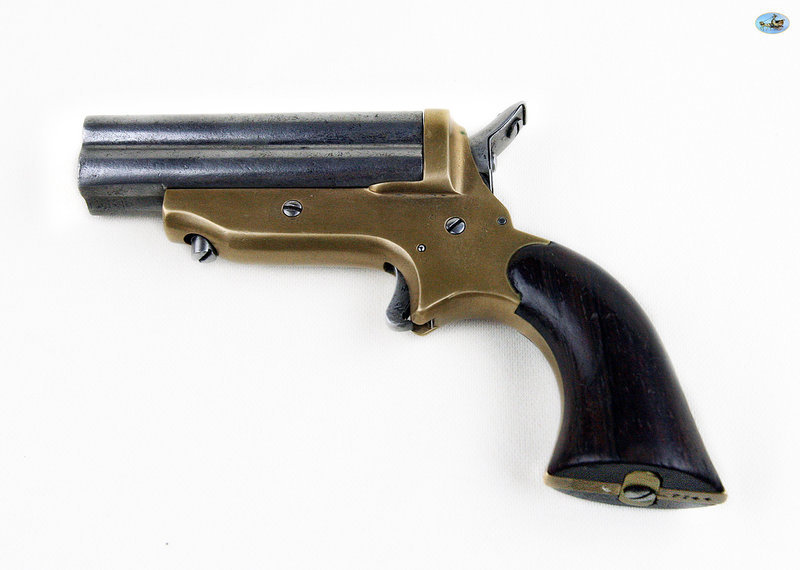
However, you state that you both work in the same place, so perhaps you are a teamster, keelboatman, farrior, I am speculating. And this woman you write of may be a char woman or laundress at this same place of business. My main concern about a workplace romance, as you call it, and what your main concern should be, would be the clientele who frequent these types businesses, who are typically all men. In my experiences with these entities, from a standpoint of legal representation, I have found the male clients to be rather coarse and very forward in their intentions. To allay your workplace concerns, you should encourage your romantic interest to conceal a pepperbox revolver in her crinoline skirts or, in the least, a Bowie knife to ward off any unwanted advances. Should she have to resort to the use of such items, any attorney worth his salt would acquit her of any charges brought forth.

Turning to your question about a meal to impress, I would first suggest that avoid scandal or impropriety, your lady friend should be accompanied by to your domicile by another couple, or at least a female acquaintance – her mother perhaps? Now for the meal, I find slow roasted Buffalo hump to be a true delight. If you lack suitable space to prepare a sizable fire, I would suggest frying strips of the humps in bear lard. You can use the same grease to fry potatoes. Desiccated vegetables are easy to prepare, they also prevent scurvy. I recommend buttermilk biscuits and a peach cobbler for dessert. If this does not win this woman’s heart and impress her mother, then I feel this is not a relationship to pursue, for it portends a house divided. Good luck, Sir.

Respectfully, A. Lincoln.

The editor of the newspaper thought this column to be some sort of a joke and never published it. Nor did he hire Abe.

Coming to the realization that I had made a great error in judgement, and Lincoln expressed he was homesick, I transported him back to his Illinois of 1858. Because I had typed it, I have the only copy of his single, never published, piece of advice to Smitten in Chicago.

Dessicated vegetables. A mix of potatoes, carrots, string beans, cabbage, beets, onions, tomatoes, etc. Compressed to a block one inch thick and 12 inches x 12 inches square, heated and dried. It took several hours to boil into something palatable. After preparation, there was no taste. But they did ward off scurvy!
Small caliber, four barrel pepperbox revolver made by Sharp’s firearms company.

Ernie Stricsek, Chatham Writers Group, 5/16/22


Art Projects

The Artless Dodger
A dearth of art skills plagued me through my school years from kindergarten through 9th grade – the last year that art was a required course. When it came to making a jewelry case out of a cigar box, I could paint it gold and glue various types of macaroni to it like a pro. When it came to drawing a landscape, or an image of the first Thanksgiving, I folded like a cheap lawn chair.

After a few years of basic art projects initiated by the teacher of the class, advancing into the 4th grade meant that we would now have more complex art projects, taught to us by a real art teacher who visited the school each week. Our first project of a higher level of art form was to create a Thanksgiving image on a 6” x 6” square of copper, using a variety of tools. When we were finished with the image, we would “antique” it by brushing on a liquid, bronze colored stain, then dab the excess liquid off with some old newspaper. The art teacher pointed to a stack of newspapers on the classroom teachers desk and said “use these”. Being the terrible sketch artist I am, I chose a very simple design of a log cabin, with smoke coming out of the chimney. A pilgrim hat hanging from a hook outside the cabin designated my image as having achieved the Thanksgiving theme. In my finished work, the cabin was not very symmetrical, the smoke looked as though someone stuck a head of broccoli in the chimney. The pilgrim hat resembled a flower pot. I applied the magic “antique” stain, took a few pages of newspaper and dabbed up the excess. While raising my my tooled copper piece of art to admire it in the fluorescent light of the classroom, I heard the art teacher screech, “My New York Times is missing a section! Who took my New York Times?” The paper I used to dab up my antique liquid was still balled up on my desk, the evidence was overwhelming, I was guilty as charged! The art teacher was livid. I was asked to go get the milk for our morning break, even though it wasn’t my turn to get the milk that day. When I returned with the milk, the art teacher had packed up and left. Events would play out in 5th grade that would lead me to believe she held a grudge against me for defiling her newspaper.

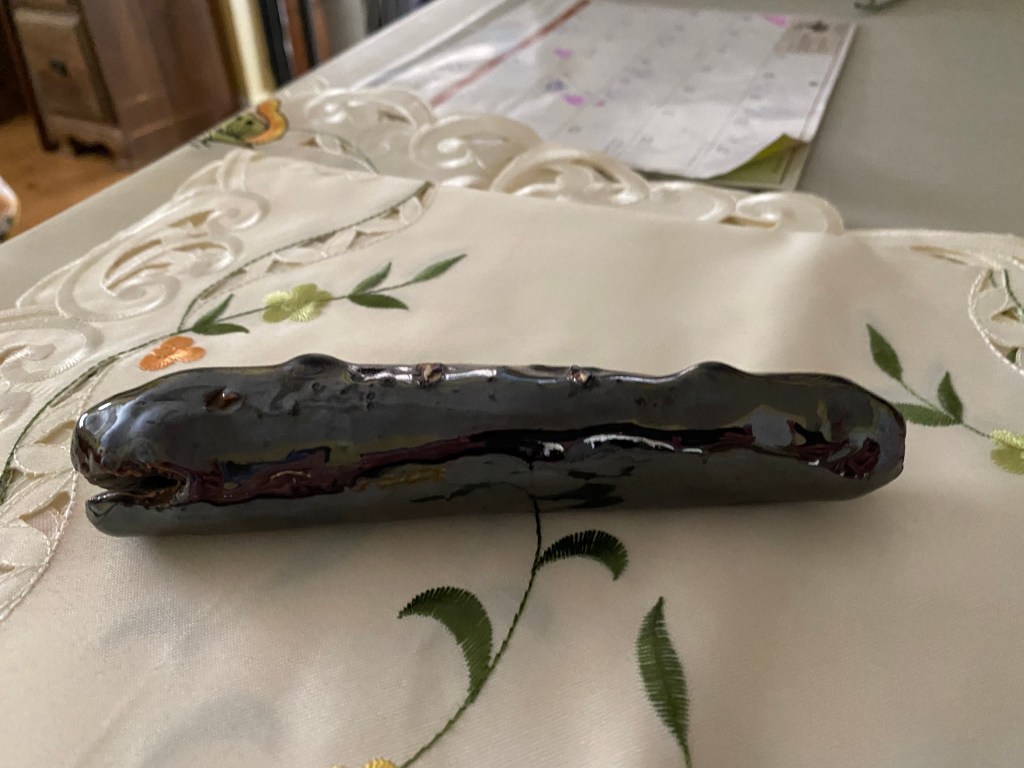
I had high hopes for my 5th grade art project. We were going to work with clay! We could make anything within reason. After creating our clay piece and applying the glaze, the art teacher would take the works of art and bake them in a kiln. At this point in my life, I was really interested in whales and the history of whaling. I had read Moby Dick and saw the movie version with Gregory Peck on TV. I was going to make a clay Moby Dick! I took my ball of clay and separated it into two pieces, one larger than the other. I took one piece and rolled the soft clay back and forth to make a cylindrical body shape. The other piece of clay I formed into Moby’s tail, somewhat crude looking, but a passable tail. All the time I was wetting the clay to keep it from hardening. On the cylindrical piece, I cut a mouth and made two divots for eye sockets. I then formed small humps on the back of the whale. I joined the tail to the cylinder, with difficulty, it fell off several times. Wetting the two pieces a bit more, I finally achieved the successful fusion of tail to body.

It was now time to apply the glaze. Because Moby Dick was white, I asked the infamous New York Times art teacher for white glaze. “Oh, I don’t have any more white glaze left,” she replied. Well, I would have to settle for a black whale, so I asked for black glaze. She was out of that too. She had pink, red, yellow…. Not typical whale colors, no blue either.

“How about brown?” She offered.

Brown it had to be, I guess. So, being mindful of the delicate tail piece, I carefully applied the brown glaze and gently carried my whale the art teacher to be packed up with the ash trays and pencil holders the other kids made. I saw several white and black glazed pieces. The art teacher announced she was leaving and asked two students to help carry our clay masterpieces to her car. She would return with the finished pieces the following week.

I was very excited and couldn’t wait for the week to pass. This was to be a Christmas gift for my Mom. The day of art class arrived, the New York Times art teacher breezed into class and selected two students to bring the boxes of ceramic artwork from her car. Once the boxes were in place, the art teacher removed the items one by one, calling the name of each student to come and claim their piece. She called my name and as I arrived at her desk, in an insincere tone said, “I’m so sorry, the tail fell off your piece and was not usable.” She handed me something that now looked like a glazed turd – with a mouth and eyes. I looked at her and asked if the tail could be glued on. She replied that it couldn’t, it had shattered in several pieces. I dejectedly returned to my seat. I don’t exactly remember what happened for the rest of the class, I may have become unruly, I vaguely recall a stint in the cloak room.

I wasn’t going to wait for Christmas, I had to show my Mom what happened to my whale. I believe we both began to giggle after it was revealed. It did look so much like a glazed turd. When I visited my Mom this past March, I was startled to see the brown, tailless Moby Dick on the bookshelf in her living room, next to the ceramic elephant I had given to her – a prize I won at Palisades Amusement Park.

My 5th Grade Art Project – Moby Dick, or a Glazed Turd….

Ernie Stricsek
Chatham Memoir Group
April 28, 2022

First Time I Skied


The prompt for the Chatham Memoir Group was to write about the first time you skied. In January of 1972, I went to Ski Round Top, in south central Pennsylvania, with 3 of my friends. My story follows:


In the winter of my senior year of high school, two of my good friends tried to encourage me into joining them on a trip to a local ski area. They both knew how to ski, I didn’t. At that point in my life, I was not interested in learning.

“Oh come Ernie, it will be fun!” They said.

“For who?” I asked. “I have never been on skis in my life.”

“Oh, don’t worry about that, we’ll teach you.” They offered.

Their efforts to entice me to the ski slopes began began just before Christmas break. They were planning on going some time during the break. I was adamant in my refusal. During a New Year’s Eve party at the home of one of these skiers, the screws really got turned up. The two experienced skiers cornered two other friends and me and really talked up what great fun we would have. The reluctance of my two non-skiing buddies began to melt. Caught up in the enthusiasm displayed by the two guys who knew how to ski, they agreed to go.

The skiing buddies now concentrated their efforts on me. “See! We got Jim & Paul convinced it will be great! Come on Ernie!”

As the party wound down so did my resolve and I agreed to go. Everybody was elated, I still had great concerns and was more subdued. A day during the week was chosen, the ski area would not be as busy as the weekend. It would be great. Maybe.

On the day of the ski excursion, I was mildly surprised to discover that we would be all going in the same car. That was because my non-skiing buddy Paul couldn’t go with us, he had to work. The scalawag most likely snagged the McDonald’s shift I tried to get so I wouldn’t have to go. Off the four of us went, half of us excited, the other half wary.

There were several things I noticed when we arrived at the ski area. First, being south central Pennsylvania, the ski area was on several high hills – not mountains like Vermont or Colorado. But having never skied, these hills looked like Rockies to me. Secondly, the clothes I selected for this ski trip, jeans, an army fatigue jacket, leather gloves and a New York Giants ski cap, stood out in sharp contrast the the stylish insulated and water proof ski outfits everyone else seemed to be wearing. Lastly, it was really busy. Every school student on Winter break seemed to be there. After getting fitted for my rental skis, I met up with my friends at the beginner slope, supposedly to get ski lessons from the two experienced guys. They showed me how to grab the rope that would pull us to the top of the little slope. My skis crossed and I toppled to the side, getting dragged rather than pulled. Everyone on the lift behind me began to swear. “People will swear at you if you fall off the rope line.” Said experienced guy #1. To avoid being the target of further invective, I side stepped the rest of the way to the peak of the beginner hill.

Once there, the experienced guys showed us novice skiers how to snow plow down the hill. That was the extent of our lesson. Their parting advice before heading off to the more challenging trails, was to take a few snow plow runs, then try putting your skis parallel to gain speed, bye. Watching their colorful ski clothes disappear into the throng of other skiers, I turned to my novice buddy and asked, “How do we turn?” That would prove to be a challenge.

Cowed by the outcry after my fall from the tow rope, every trip I made to the top of the beginner hill was via side stepping on my skis. I would start to snow plow down, attempt to turn, fall. Get up snow plow, fall. My skis would usually come off after each fall. Eventually reaching the bottom of this small hill, I would sidestep back to the peak and repeat the process. Ski, fall, ski, fall, ski, sidestep. Some kind skier showed me how to make turns. Things improved somewhat. I wasn’t falling as much. However, my previous encounters of the ground kind had led to my jeans and long underwear being soaked through to my skin. I was wet, cold, exhausted from side stepping, the time was 10:00 AM. It was hard to believe I had been skiing for only two hours. Well, maybe not skiing, falling for two hours.

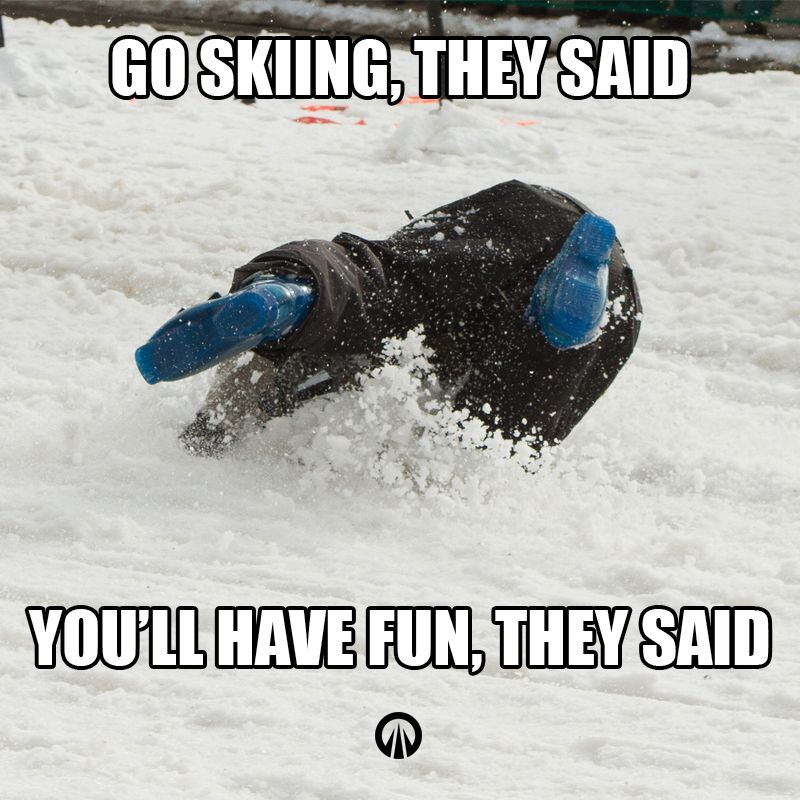
Gaining confidence in my ability to turn, I thought I would take a shot at a run with parallel skiing. I started out well, gaining speed as I progressed down the hill. I saw a ski school beginning to form in two lines, they were right in my path and I was now bearing down on one of the lines. I tried to make a slight turn, but lacked the skill to make it slight and was now barreling down on the middle of the other line. Desperate, I tried to make one of those Olympic stops that end in a shower of snow. I got the shower of snow, but it was because I catapulted over on to my side, eventually sliding to a stop between the two lines of beginners. I heard some gasps. Needing a moment to get my wind back, I stood up slowly, wobbled a bit, looked at the two lines of gaping skiers and introduced myself as their instructor. Eyes flew open wide, jaws dropped even wider. I said I would be right back after I got a different set of skis, these were making me fall.

I turned in my skis, went into the lodge and spent the remainder of the day sipping hot chocolate in front of the fireplace. It would be 25 years before I gave skiing another chance. I do know how to turn and parallel ski now. I still haven’t figured out how to stop falling.

Ernie Stricsek
Chatham Memoir Group
4/14/22