A Bridge Between

Well, after a brief hiatus, it was time for me to get back into the saddle and start scribbling stories and memoirs. I can’t remember the last time I was able to join the Monday Chatham Writers Group at the Eldredge Library. This week the prompt to write to was a picture of a bridge. I struggled with what I was going to write about, I had a couple of ideas, but finally settled on a Civil War era story with my characters, the Yankee Captain James Bartlett and his one time close friend, Redmond Downs, a Rebel Major. The prompt image is below. In my story, I added a couple of people to the bridge.

On either side of the trickling stream that divided the dense forest of pines and scrub oaks the locals called “The Wilderness”, two men stood silent, horses tied to the trees behind them. They wore the uniforms of bitter enemies: one Union blue, the other Confederate gray. The air was tense, though the muskets of their respective armies were miles away. Here, only the creek ran between them – and a memory neither could drown in time.

     Captain James Bartlett stepped down from the slight rise on his side of the stream. He moved slowly, hat in hand, a peace gesture for a private meeting that was arranged through a series of messages passed through cautious picket lines. On the other bank of the stream stood Major Redmond Downs, arms crossed over his chest, his LeMat revolver still holstered, his eyes roaming the woods behind Bartlett.

     “Hello Red,” Bartlett said first, his voice quiet, almost reverent. “It’s been a long time.”

     Downs didn’t exactly smile, but the corner of his mouth twitched. “Since the spring of 1862, I reckon. The day I saw you hauled off to Libby Prison.”

     Bartlett let out a breath that was almost a laugh. “You should’ve seen me get out of that old tobacco warehouse!”

     “I heard about that. They reported you were shot while trying to escape, and a passing side-wheeler chopped your body to pieces. Glad to see that was not the case.”

     “I reckon we have a truce for a bit, I suppose. I’ve got some of that good Yankee coffee and pot to boil it in. Mind if I come over and sit for a spell, Red?”

     They sat together on the bank. Golden sunlight filtered through the branches. Bartlett raised his coffee cup. “A toast, to when were friends, before the war. Before everything.”

     “To when we were friends, and before you took a liking to Miss Lizzie Haw,” Downs said, his mug tapping Bartlett’s.

     “I suppose that’s what brought us here,” said Bartlett.

     Downs barked out a sharp laugh. “We’re not here because of the war? No, of course, it’s Lizzie Haw! Still, the only cause either of us has ever really bled for.”

     They sat for a moment, not saying anything. The only sounds were of the stream and the buzzing of the late spring insects. Bartlett broke the silence.

     “I didn’t know she had written to you, too,” he said.

     “She didn’t,” Downs replied, his voice low. “I saw her in Richmond last spring. Volunteering at the hospital. She looked tired. Strong still. But worn in a way she never was before.”

     “I got a letter from her two months ago,” Bartlett said. “She’s in Baltimore now, working in a field hospital. She… she asked me not to hate you.”

     Downs looked up from his coffee mug, startled. “She said that?”

     Bartlett nodded. “She wrote that hate was too easy now. That it was pulling people apart faster than bullets could. She asked me to remember you as the man I taught how to swim.”

     Downs chuckled. “Taught me how to swim? You saved my life, Jimmy. I was floundering in the Hudson, going down for the last count. I…. I never said thank you.”

     “You didn’t need to, Red. You were my friend.”

     Down’s face broke into a wry smile, “We weren’t friends yet. You barely knew me. You risked your life to save mine.”

     Another moment of silence passed. Bartlett stood, unhooked his saddlebag and pulled out a rolled-up scroll of paper.

     “What’s this? Are you handing me one of your maps, Jimmy?”

     “It’s a drawing,” Bartlett answered. “Something I did in camp a few nights ago.”

     Downs unrolled the scroll. Although drawn on rough army paper, the sketch was beautiful. It showed a wooden bridge, with boxes of flowers on either side, arching across a narrow stream. He looked around the space where they were drinking coffee and realized this was the same spot depicted in the drawing. There were two figures on the bridge, standing in the middle, each wearing a different uniform. They were shaking hands.

     “I have always believed that bridges were a kind of promise,” Bartlett said. “Not just a way across, but a way to say that I’m willing to meet you in the middle.”

     Downs looked at the drawing for a long time before rolling it back up. He cleared his throat but couldn’t hide his emotion. “You always were the sentimental one, Jimmy.”

     Bartlett didn’t argue. “Maybe I still am.”

     The afternoon light deepened, shadows beginning to stretch long and quiet over the ground.

     “Do you think she loved us both?” Downs asked suddenly.

     Bartlett hesitated. “Yes,” he said. “But not in the same way. You were her fire. I was her calm. She needed both. Maybe, after all of this, she’ll need neither.”

     Downs took off his battered hat and ran his hand through his hair. “Do you still love her?”

     “I’ve never stopped,” Bartlett answered.

     Once again, they sat in silence, the stream the only voice between them.

     “I don’t know if there’s a future after this war,” Bartlett said finally. “Not for me. Not for Lizzie. Not for us. But I don’t want the past to go to waste because the present is broken.”

     Redmond Downs stood and stretched. He looked again at the scroll in his hand. “We won’t fix the world here today, Jimmy. But maybe we didn’t meet to fix anything.”

     Bartlett smiled and said, “Maybe we just came to remember.”

     They shook hands. Each hoped it wasn’t for the last time.

     As they turned to mount their horses, Downs stopped and glanced back. “Are you going to build that bridge you drew?”

     Bartlett gave a faint smile. “I believe I just did.”

     They rode away in opposite directions; the drawing of the bridge safely folded between memory and war.

A Father’s Sorrowful Search

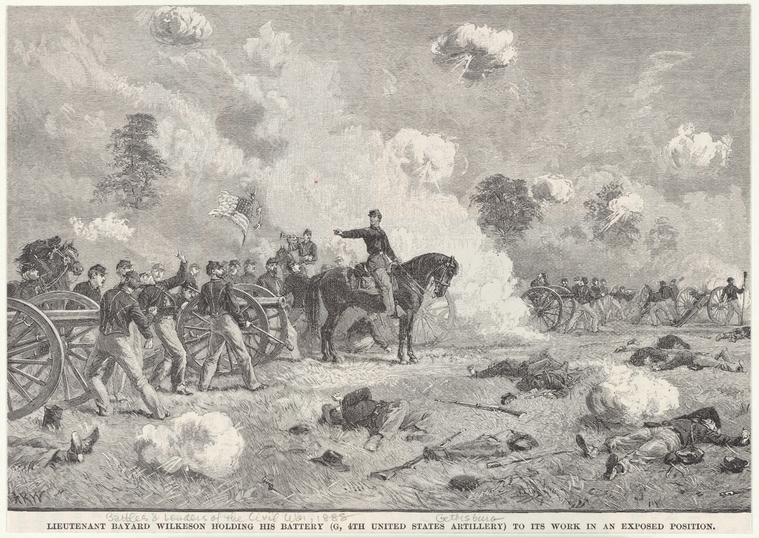
Civil War artist Samuel Ward captured Lt. Bayard Wilkeson in action.

This historical fiction story was written to the prompt “In peace, sons bury their fathers. In war, fathers bury their sons”, a quote from Herodotus. The fictional characters are Captain Bartlett and Sergeant Boyle. Samuel Wilkeson, Lieutenant Bayard Wilkeson, Major Thomas Osborn and General John Buford were present at the Battle of Gettysburg. With two exceptions, all of the dialogue between the characters is fictional. See my notes at the end of the story.

Gettysburg, PA, July 4, 1863
The rain was falling in sheets as Bartlett and his aide, Sergeant Boyle, reined their horses to a stop in front of the Fairview Cemetery gatehouse.
    “Ahh, this weather’s manky, sir. Truly ‘tis!” Boyle exclaimed.
    Bartlett smiled from inside the hood of his rubber poncho. “Manky. I’ve not heard you say that since Fredericksburg, Sergeant Boyle. This isn’t nearly as bad as that.”
    “For sure it’s not Captain. I’m just a tad surly after three days of racing all over this battlefield, dodgin’ every shot and shell the Johnnies could throw at us.”
     Bartlett nodded his head in agreement. The horrors he had seen over the past three days left him feeling numb. Gettysburg was not his first battle by far, but it was the most savage one he had been part of. Maybe because they fought to repel an invasion of northern soil. “Sergeant let’s get off these nags and take shelter in the gatehouse arch,” he said.
      Under the cover of the arch, they shook the rain from their ponchos like two golden retrievers and tugged off their hoods. From where he stood, Bartlett could see the stretch of the Baltimore Pike toward army headquarters.
     Boyle flipped the poncho over his shoulder and pulled a watch from his vest pocket. “When are you expecting the man from the New York Times, Captain, sir?”
    “Any minute now.”
    “If you don’t mind me askin’, sir, but do ya really think your friend, I mean Mr. Wilkeson’s son, might still be alive?”
     Bartlett inhaled deeply and let out a long sigh. “I don’t know, Sergeant. Major Osborn saw Lt. Wilkeson being carried away from his battery. His right leg was gone.”
    “Your man, Lt. Wilkeson, is a tough nut, sir. I heard his leg was mangled by a round shot that went through his horse. I heard he used his pocketknife to finish what the cannon ball started.”
    Bartlett sighed again and turned his gaze from Boyle to the Baltimore Pike. The heavy rain had lightened to a misty drizzle. Plodding towards them along the Pike was a team of horses hitched to an ambulance. Next to the teamster, Samuel Wilkeson sat bolt upright, shoulders squared, and head held high. His hands rested on his thighs.
     “Here they come,” Bartlett told Boylan. He walked out from the cemetery gatehouse to the middle of the Pike and raised his hand to halt the ambulance.
     “Good morning, James. To what do I owe the honor?”
     He noted Sam Wilkeson’s flat voice before saying, “Sergeant Boylan and I would like to help you look for your son.”
     “I would be honored,” Wilkeson’s voice trembled, “And please, sit with me. I need a friend to talk to.”
     Bartlett nodded, tethered his horse to the ambulance and climbed aboard and squeezed next to Sam. With a snap of the reins, the wagon jerked into motion and rolled towards town. Sergeant Boylan guided his horse to fall in alongside.
     After riding along in silence for a few moments, Sam Wilkeson turned to face Bartlett and said, “Thank you again for offering to help James. But I know where Bayard is. Major Osborn said he was carried to the Alms House after receiving his wound. I suspect he is still there.”
     “I know where that house is, Mr. Wilkeson. I saw it early in the morning of July 1st while scouting with General Buford. So, Bayard has been behind Rebel lines for the past three days.”
     “Yes. I pray he received adequate care from their surgeons.”
      The ambulance rolled slowly along the road through town. Sam Wilkeson spoke again. “James, the survivors of Bayard’s battery told me they were ordered to an exposed area. Rebels were firing on them from three directions. They fought back hard. The Rebs swept the remaining Yankees from the field after Bayard got wounded. He should not have been sent there. Bayard should not…” his voiced trailed off. He let out a long sigh and said no more.
     The ambulance passed through town and came to a halt in the yard of the Alms House. Wounded soldiers were everywhere. Bartlett and Wilkeson climbed off the wagon. Joined by Sergeant Boylan, they walked through the door into a den of pure misery. The cries of men being operated on, the sights and smells, were overwhelming.
     Bartlett stopped a medical attendant who tried to scurry past them. “Excuse me, this man is looking for his son. He was wounded on July 1st.”
     “Name? What’s his name?” The impatient attendant asked.
     Sam Wilkeson tried to hide his anger, but it was clear when he spoke, “Lt. Bayard Wilkeson. Battery G, 4th U.S. Artillery.”
    “Don’t know him.” The attendant pulled free from Bartlett’s grasp and hustled off.
    “Sir, we know where your son is.” The soft voice startled the three men, and they turned to see two young women approaching. “We took care of him after he was brought here.”
    Wilkeson’s shoulders sagged. “Cared. You said cared.”
    “Yes sir. We’re sorry, he passed on the evening of July 1st. We stayed by his side to the end.”
    His voice was heavy with emotion, Wilkeson asked, “Where is he? Can you take me to him?”
    The women led him out of the building to a mound of dirt beneath a tree. Bartlett and Boylan trailed along. Wilkeson stared at the ground where his son rested. Falling to his knees, he placed his hand on the grave and cried out in anguish, “He was only 19 years old! Dear God.” Sam Wilkeson sobbed.
     Boylan looked away and noticed Bartlett wiping tears from his face. Tossing aside regulations, he laid his arm over his commander’s shoulders. “I’m profoundly sorry for the loss of your friend, sir. I truly am. He was a fine man.”
     “Thank you, Sergeant Boylan. We will miss him forever. Like so many in this war. Now he sleeps the sleep that knows no earthly waking.”*
     Boylan turned his gaze back to the scene at the grave. “‘‘Twas it Herodotus, sir? Who said ‘In peace, sons bury their fathers. In war, fathers bury their sons.”
     “It certainly was,” replied Bartlett. Patting the sergeant on his back, he said, “Let’s see what we can do for Mr. Wilkeson.”

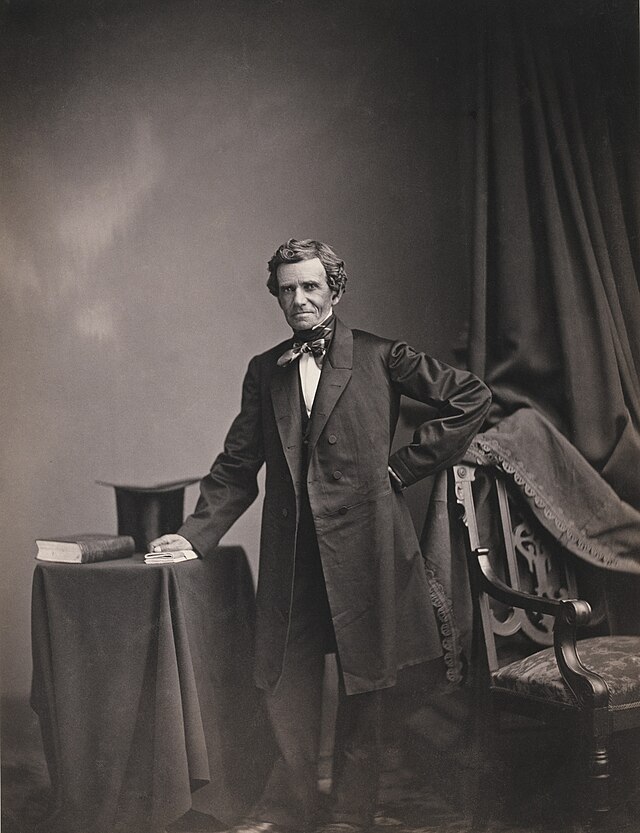
Samuel Wilkerson, Jr.. War correspondent for New York Times and father of Bayard Wilkeson.

Lieutenant Bayard Wilkeson, commander of Battery G, 4th U.S. Artillery.


Notes
1)    The Wilkeson’s were a prominent family from western New York. Samuel Wilkeson’s father was one of the founders of the city of Buffalo and his wife was the sister of suffragist Elizabeth Cady Stanton. After working for Horace Greeley and the New York Herald, Sam Wilkeson joined the New York Times as a war correspondent and was reporting on the battle of Gettysburg when he learned of his son being wounded on the morning of July 1st.
2)    Nineteen-year-old Lieutenant Bayard Wilkeson was a rising star in the Army of the Potomac and led Battery G, 4th U.S. Artillery. On the morning of July 1, 1863, his battery wreaked havoc on the Rebels advancing on the town of Gettysburg. So efficient was his leadership, Rebel artillery commanders ordered their gunners to aim directly at the young Lieutenant, prominently exposed on horseback. An artillery round struck the horse, passing through it and mangled Bayard’s right leg. He used his pocketknife to sever through the couple of tendons still connected to his leg. Carried to the county poor house, he died from shock and loss of blood the evening of July 1st.
3)    The words, “sleeps the sleep that knows no earthly waking” were not spoken by my character, James Bartlett. They appeared in a letter of condolence written to Samuel Wilkeson by Eunice Beecher. Eunice was the wife of noted minister, orator, and abolitionist Henry Ward Beecher. Her sister-in-law was Harriett Beecher Stowe.
 

First Meeting

Paratroopers of the 101st Airborne Division Liberating Sainte-Marie-Du-Mont, June 6, 1944. Photo at Memorial De Caen/NARA

A couple of years ago, I began writing D-Day related historical fiction pieces to prompts for the Chatham Writers Group. This particular story was written three years ago, months before the D-Day anniversary to a prompt about strange meeting places. My original draft was longer than the 1,000 word limit. I resurrected the story, made several changes, and I am posting for the 80th Anniversary of the Invasion of the European Continent.

 June 5, 1944, outskirts of St. Marie-Du-Mont, France    

     In the corner of their dining room, Gerard Bouchard sat huddled around a small wireless radio with his brother, Rene, and father, Charles, listening to jazz being broadcast by the BBC in London. Shutters drawn, blackout curtains drawn and clipped together with clothespins, the only light in the room came from the radio dial. The musical program ended, and the Bouchards leaned in closer to the radio. 

     A distinct voice floated over the airwaves now. A French-speaking host announced, “London calling with Frenchmen speaking to our countrymen, London calling with some messages for our friends”. From this point on, they would broadcast all messages in French.

  After a brief pause, the voice recited a line from a poem by Paul Verlaine “Wound my heart with a monotonous languor”, then repeated it.  

     The Bouchards sat bolt upright, emitted a collective gasp and looked at each other’s faces with wide, anxious eyes. They leaned back over the radio as a series of other abstract messages poured from the wireless. “Molasses tomorrow will bring forth cognac,” announced the voice.

    “My God!” exclaimed Gerard’s father.  

     The next radio message declared that “the dice are on the carpet”.  

     Charles sobbed, stood, and motioned for his sons to stand. Hugging and kissing them both, through his tears, he said, “France is about to be liberated. We have a long night ahead of us. Be quick, we have work to do.”

     Messages still were being transmitted when Gerard turned off the radio and hid it away. They didn’t need to hear anything else. The ‘dice were on the carpet’ was their signal, which meant the Allied invasion of France would begin before dawn. The Bouchard’s role in this drama would be to disrupt communications by blowing up a line of telephone poles that linked the German army rear support depots to the defensive lines on the beaches at Normandy. Gerard and Rene followed their father to the root cellar. Charles pried the lid from a barrel and pulled out a canvas bag loaded with plastic explosives. He reached into the barrel twice more, handing a bag with fuses and wire to Gerard and one with the detonator to Rene. They slung the bags over their shoulders and set off for their targets.

     Avoiding German patrols along the roads, the Bouchards followed obscure paths, leading them through orchards to a dense hedgerow. Pausing for a moment, Charles Bouchard looked back in the direction they came to make sure no one was following. The hedgerow ran roughly 100 yards where it stopped at the edge of a forest where they were to meet someone who would guide them to the targeted section of trains tracks.

    “We are not being followed,” Charles whispered to his sons, and led them off towards the tree line. After they moved about 50 yards, a light flashed on and off once from the woods at the end of the hedgerow. Gerard pulled a flashlight from his coat pocket and clicked it on and off twice. A single flash of light answered him from the woods. Charles said, “That’s our guide. Let’s go.”

     When they reached the trees, Gerard was surprised to discover that their guide was a woman.

     “My name is Margaux. Follow me. No talking,” was all she said.

     In the darkness, it was impossible for Gerard to make out her features. Gerard didn’t recognize her voice, but she sounded young. About his age.

     Margaux led them to a second team of Resistance fighters tasked with blowing up the rail bridge over the Merderet River, close to the telephone poles the Bouchards were to destroy. They carried weapons. There were German soldiers guarding the bridge. For the first time, Gerard noticed Margaux had a machine gun slung over her back. She turned to look at him. The clearing next to the railroad tracks was not as dark, and he immediately noticed how beautiful she was. Ringlets of dark hair curled from beneath her beret. He couldn’t tell if it was black or brown in this light. But there was no mistaking how blue her eyes were.

     She smiled at him briefly, but then her features drew hard, her eyes flashed and she snapped, “Close your mouth before a bug flies into it. We’ve got work to do.”

    Gerard’s face felt red hot, and he hoped it was dark enough to hide his embarrassment. 

     The two teams reviewed the plan one more time. The bridge and telephone pole explosions had to occur at the same time. The Bouchards would set their charges first, allowing the other group time to approach and set their bridge charges. When the bridge team was ready, Margaux would jog back along the tracks and signal with a torch. Seeing her signal, Gerard would turn to his brother and father and signal his torch. After detonating the charges, the Resistance fighters would disappear into the darkness and make their way back to their homes. The groups separated. 

    It did not take long for the Bouchards to have their explosives in place. Gerard ran alongside the rail line towards the bridge. Ducking behind a utility box, he awaited the signal from Margaux. “Where was she? He thought, “This is dragging on for too long!””

     Shouts, German voices, from the bridge made his heart skip a beat. Gun shots now, more German voices yelling “Halt”! He could see tracer bullets searching through the trees. There were gun flashes from the woods. Someone was approaching fast along the rail line. He had no weapon to use if it were a German. It was Margaux! She signaled with her torch. Gerard turned and sent his signal. A stream of German machine gun fire spit down the tracks. He heard Margaux cry out in pain, saw her tumble down the rail embankment. At the same moment, the explosive charges detonated behind him and in front of toppling the telephone poles and collapsing the bridge into the river. In the light from the explosions, he saw Margaux lurch off into the woods. He stood to run after her, but there were Germans on this side of the river! They were walking in his direction with weapons at the ready. Upon spotting Gerard, they shouted, “Stop!” and started shooting without aim.  

     The burping of Margaux’s sub-machine gun from the woods to his left made the German soldiers scramble for cover.  He sprinted towards where he had seen her muzzle flashes.  

     He stumbled over a branch and heard her call out “Here”! Discovering Margaux behind a fallen tree with a wound on her side, he bent to help her up. Throwing her over his shoulders, he lumbered off deeper into the woods. They could not outrun their pursuers. Margaux begged him to put her down. German soldiers tracking them from both sides of the river fired indiscriminately into the trees, the rounds striking very close to them.  

     Bursting from the woods, Gerard discovered the Merderet River flowing right in front of them. With little thought, he plunged into the water and began swimming along with the current, his arm around Margaux. Soldiers following on the other side of the river saw them and raised their weapons to fire. The sound of plane engines, hundreds of them, halted the German soldiers in their tracks. They now stood gaping up at the sky. Soon searchlights broke through the darkness, parachutes blossomed in the glare. The Germans sprinted back to the smoldering bridge.

     Gerard floated onto a shoal. Catching his breath, he carried Margaux out of the river and set her down on its bank to examine her wound. From the darkness came whispered voices. Margaux let out a cry of pain.  

     A voice shouted from the darkness, “Throw down your weapons! Put up your hands!”

    The voice from the woods was speaking English! Gerard called out, “I am French, I have a wounded friend”.  

    Three men, faces blackened with burnt cork, cautiously stepped from the woods. Gerard noticed their uniforms. Their left shoulder had a black patch with a white eagle stitched on it, and their right shoulder had an American flag.

    Gerard cried out, “Americans! Your Americans!”

    Seeing the wounded Margaux, one of the Americans yelled “Medic”!

#####

L’Estaminet Hotel, Sainte Marie Du Mont, June 1994  

     From the kitchen entrance, Annette saw the host seat a couple at a table in her section. Both were strikingly attractive. The woman had black curly hair threaded with silver and her eyes were a deep blue. Gray streaks were also present in the man’s brown hair. His brown eyes sparkled above his broad smile. Annette thought they were about 60 years old.

     After seating the couple, the host walked over to Annette and said, “A special couple for you, Annette, and a special evening. They’ve been celebrating their anniversary here long before I came to the L’Estaminet.”

    Arriving at their table, she said, “Hello, my name is Annette, and I will be your server tonight. I understand you are celebrating a special event this evening?”

    The woman answered, “Yes! My name’s Margaux and this is my husband, Gerard. It’s our 50th wedding anniversary.” Annette realized they were older than they looked. “Oh, my! How delightful! Congratulations! Can I ask how you the two of you met? I am always curious how people who have been together a long time met each other.”  

    With a twinkle in his eye and a wry smile on his face, Gerard looked at Margaux and replied, “Well, Annette, we met while swimming. It changed our lives forever. We had a blast.”

L’Estaminet Hotel, Sainte-Marie-Du-Mont. The site of my character’s anniversary.
French Resistance members received coded messages relating to the impending invasion along the Normandy Coast. The last two messages in this string are the ones that alerted the French that the invasion would begin in 24 hours.

Other People

The following story was written to a prompt for the Sturgis Library Writing Group titled “Other People”. I had been researching some of the activities of the First Day of the Battle of Gettysburg and decided to write a short historical fiction piece using my recurring character, James Bartlett, a young topographical engineer officer in the Union Army of the Potomac. After my story, I’ll provide some of the historical facts.

Lieutenant Bayard Wilkeson at Gettysburg. One of the central characters in my story. Print is from Battles & Leaders of the Civil War

Other People

Captain James Bartlett slowly made his way through hospital tent looking for Bayard Wilkeson.  The two had met at Fredericksburg back in December and became fast friends.  Poised and confident, Wilkeson seemed older than 19.  Bartlett had heard his friend’s artillery battery had suffered severe pounding that morning and it was rumored that Wilkeson was wounded.  Ambulances laden with casualties were caught up in the retreat from the fields north of Gettysburg and had delivered their cargoes of misery to the field hospitals that had been hastily erected below Cemetery Hill.  He was hoping to find someone from Wilkeson’s unit that could tell him of his friend’s whereabouts.  Bartlett had searched through two tents already, calling out for anyone from Battery G.  But nobody had answered.  He would have to report to headquarters soon, he’d have to find it first, so this would be his last tent for now.   The sounds in the hospital defied description.  The moans of the wounded, the soft voices of those calling for their mother, the screech of the bone saws and screams of men losing their limbs were sounds he could never push aside, even after two years of war.  Above those spine-tingling sounds, Bartlett heard a voice call out, to no one in particular, “‘Twas those other people again!”

“What “other people”?” a second voice questioned.  Bartlett couldn’t place the accent.  It sounded more Russian than German.  

“You know who I’m talking about.  Those damn Dutchmen in Eleven Corps.  They turned tail and ran again.  The whole line began to fold up ‘cause of them.” the first voice replied.

“DAMN YOU!” the accented voice roared.  

Bartlett watched as the voice’s owner struggled to stand.  A blood-stained bandage was wrapped around his head and one pant leg was sliced to reveal another bandage on his thigh.  The ruby red chevrons on his jacket sleeves indicated he was an artillery sergeant.  

“DAMN YOU!”, he bellowed again. Stabbing his crutch at his accuser, he continued, “I’m in the 11th Corps!  We did not run!” 

Wounded men nearby called out defending the 11th Corps.  “It’s true, they didn’t run.”  Their chorus of voices shut down the accuser.  The argument exhausted the artillery Sergeant and he tried to lay back on his bed of straw.  Bartlett stepped over to help ease him down.

“Thank you, sir.  Most kind of you.  “Other people”, I am sick of hearing “other people”.  Our ancestors were once “other people”.”

“No trouble Sergeant.  I have many friends who traveled here from Europe.  I understand and I wish this animosity didn’t exist.”

Bartlett helped the Sergeant get comfortable then said, “You are in the 11th Corps artillery.  Do you by chance know a Lieutenant Wilkeson?”

“I know him very well Captain.  He’s my battery commander.  We were wounded by the same shell.”

“He’s wounded you say.  Where is he?”

“I am sorry sir; he was badly wounded, and I hope is under the care of Rebel doctors.”

“How badly wounded?”

“His leg was nearly severed.”  Reaching into his jacket pocket, the Sergeant removed a pocketknife and passed it to Bartlett, “He used this to complete the job.” 

Bartlett recognized the knife immediately; his friend’s initials were etched into its bone handle.

Seeing Bartlett’s distress, the Sergeant gently grasped his shoulder and said, “I am sorry about your friend, sir.  Keep his knife.  You can give it back to him when you see him next.”

The man who accused the 11th Corps of cowardice called out, “I am sorry about me saying “other people”, Sergeant.  We were wounded fighting together.  Please accept my apology. I don’t need any more enemies.”

Historical Notes

At the time of the Battle of Gettysburg, nineteen-year-old Lieutenant Bayard Wilkeson led Battery G, 4th U.S. Artillery, in the artillery brigade of the Army of the Potomac’s 11th Corps. The majority of the soldiers in the 11th Corps were immigrants from Germany, their regiments and brigades led by officers named Von Gilsa, Von Steinwehr, Schimmelfennig, Schurz, Amsberg. But many had combat experience and were excellent soldiers.

Their reputation as “cowards” came about during the Battle of Chancellorsville in early May of 1863. The Corps suffered the brunt of “Stonewall” Jackson’s surprise attack and were routed. This came about due to poor leadership by Corps commander, Major General Oliver Otis Howard, who dismissed reports of a large body of Confederate soldiers lurking in the thick woods on the exposed flank of the Corps. However, the rout earned the 11th Corps the nickname “The Flying Dutchmen” (Dutch being misrepresented for Deutsch).

During fighting North of Gettysburg on July 1st, Lt. Wilkeson and his battery rushed to aid the beleaguered division of Francis Barlow, who foolishly advanced to an exposed position. Wilkeson commanded his battery, from atop his white horse, with such devastating efficiency that he attracted the attraction of several Confederate artillery batteries. While exposed, a shell from a Rebel gun passed though Wilkeson’s horse and practically severed his leg. Carried to the nearby Adams County Almshouse, he removed the remains of his mangled leg with his pocket knife. Bayard Wilkeson died from shock and loss of blood a few hours later. His father, Samuel Wilkeson, was a reporter for the New York Times and was at Gettysburg covering the battle. He found his son’s body after the Confederate retreat on July 4, 1863.

Photo of Wilkeson and his knife from Time-Life Civil War book series, Gettysburg issue.

Relaxing On The Rhine

Cologne Frankenwerft on the Rhine River in the 1930’s. The setting for my story.

The prompt for the Sturgis Library Writing Group this past week was “relaxing”. My story is a sequel to the one I wrote some time ago called “Lisa”. The location and time frame is Cologne Germany in the 1930’s.

Relaxing on the Rhine

Guido Mara stepped off his barge and climbed the steps to the wide promenade fronting the Rhine River in Old Town Cologne. After fifteen years as an inspector in the criminal police, or Cripo, he was on his way to tender his resignation. Disgusted with the disturbing rise to prominence of Hitler, his National Socialist Party, and the intrusion of its secret police into day-to-day Cripo activities, Guido decided it was time to move on. He managed to secure several contracts to transport freight on his barge, Lisa, to and from ports along the Rhine between Cologne and Rotterdam.

As he stepped onto the promenade, he spotted two men wearing long, black leather trench coats with gray fedoras pulled low over their eyes, approaching him. 

“Gestapo! Bloody Hell,” he muttered to himself.

“Good morning, Inspector Mara. It seems we managed to catch you just in time. Were you going somewhere special?” asked one of the men. He was rail thin with a skeletal face. The eyes above his smile were icy, penetrating, searching.

“Just on my way to headquarters. How can I help you, gentlemen?” Guido fought to remain calm.

“You were observed last night carrying a couple of large sacks across the promenade to your barge. Onlookers thought it suspicious. May we have a look?” the second man asked in an officious tone. His jowly cheeks and upturned nose made Guido think of one word, “Swine.”

“Of course, you may look,” answered Guido, “We were with some of your colleagues searching for vagrants. I discovered a boxcar with several sacks of potatoes trying to avoid detection, so I brought two of them to my boat for questioning. I determined they were indeed potatoes as well as fit for consumption.”

“Jews. You were searching for fugitive Jews. Inspector Mara, not vagrants,” said the swine, “I find your humor disrespectful.” Contempt hung from every word like an icicle.

“I meant no disrespect, sir. Let me take you aboard.”

The skeletal man held up his hand, “NO. You will remain here. We will call you down if we have any questions.”

As the Gestapo agents went to search Guido’s barge, he lit a cigarette and scanned the shops along the promenade. He spotted one of the fishmongers staringat him. Guido waved to the man and called out, “Good Morning, Herr, Schiller! Were you keeping an eye on my boat last night? Thank you!”

In response, the man shouted back, “Bah!” and walked back into his fish shop, shaking his head. Guido chuckled, then pitched his cigarette into the river. The Gestapo officers were calling him to come on board his barge.

They made Guido open the lockers on the deck where all the life jackets and tarpaulins were stored. 

“We see no potatoes,” the skeletal Nazi said.

“Because they are the galley pantry, sir,” replied Guido, “I’ll show you.”

The agents inspected the galley pantry and made Guido open the lockers in his and the crew member’s quarters. After searching the engine room and examining the bilge with Guido’s flashlight, they removed their hats and wiped sweaty brows. 

“What exactly are you gentlemen looking for?” Guido asked.

The skeletal man said, “It appears the information we were given was inaccurate.” He looked at his watch, smiled at Guido, and said, “We’ll leave you now. You will be late for work.”

The other officer said, “It must be nice living on a boat. I think the gentle lapping of the river would make it very relaxing for you.”

Guido ushered them off the barge and began securing its lockers and crew cabins. Entering the galley, he opened the pantry doors and removed the potatoes and some canned goods, exposing the teak panels of the pantry’s back. Giving a gentle push on one of the panels, it sprung open slightly. Removing it completely, he poked his head into a small compartment hidden behind the pantry. 

He smiled at the two children huddled in the compartment’s corner.  “Hello again, Rachel and Paul. Everything is fine; you kids did well. I am going out again. The same rules as before. If you hear people moving about, don’t make a sound until I open the panel.” Their heads bobbed in agreement.

Rachel Edelman asked, “Will you be looking for our Poppa, Herr Mara? The police took him last night. You’re a policeman.”

“I’ll do my best to find him, little Rachel. But he was taken by different police. I’m going to close things up again.”

When everything on the barge was secure, Guido climbed the stairs back to the promenade. He turned to give one more look to the Lisa. “It’ll be some time before I’ll truly be able to relax again.”

Ernie Stricsek

The Sturgis Writers Group

August 29, 2023

Descent Into Madness

Captain John Alden, Jr. being denounced as a witch by young Mercy Lewis during his hearing at the Salem Witch Trials, May 31, 1692.

The prompt for the Chatham Writers Group this past Monday was the image displayed above, titled “The Denouncement of Captain John Alden”. My initial thought was the Pilgrim John Alden, but upon researching the print, I discovered it involved his son, Captain John Alden, Jr. As I dug deeper, I learned things I didn’t have prior knowledge of. For instance, the younger Alden was accused and convicted of witchcraft in the notorious Salem Witchcraft Trials of 1692. Alden’s association with the Village of Salem (now Danvers, MA), was his stopping there briefly on his return from Quebec after conducted hostage release negotiations with the French and Abanaki tribesmen. There was speculation that Alden played both sides of the equation, on one side profiting from selling gunpowder, weapons and ammunition to the French and Native Americans, and on the other profiting from hostage negotiations. One of the young girls claiming to be possessed by evil sprits, Mercy Lewis, was orphaned after French and Abanaki warriors massacred her family in York, Maine. She had heard the rumors of Alden’s dealing with the French, and it is thought that was why she accused him. My research of the Salem Witch Trials proved to be fascinating and I learned more than I ever knew. The University of Virginia has a large cache of original documents relating to these trials and they are available in digital format. In my following story, the actual comments made by the parties involved appear in italics. This story is historical fiction.

The warrant for Captain John Alden, Jr. to appear before magistrates in the Salem Witchcraft Trials. Transcription below. From the University of Virginia Archives of the Salem Witchcraft Trials.

The transcribed version of the warrant pictured above reads as follows:

(Warrant for the Apprehension of John Alden & Officer’s Return)

[May 31, 1692]

To the Constable of Salem 

Essex Ss Whereas Complaint hath been made unto us John Hathorne & Jonathan Corwin Esq’rs by severall persons of Salem Village that Cap’t John Alden of Boston Marrin’r # [that he] is guilty of witchcraft in cruelly tortureing & afflicting several of their Children & others these are therefore in their Maj’ties King William & Queen Maryes name to Authorize & Comand you forthwith to Apprehend the body of the said John Alden and Imediately bring him before us to Answer what shall be objected ag’t him in that behalfe and this shall be yo’r sufficient warrant Given under our hands the 31st day of May 1692 And in the fourth year of the Reigne of our Sovereigne Lord and Lady William & Mary now King and Queen over England &c

Per us * John Hathorne
* Jonathan. Corwin { Assis’ts 

Persons Complaining viz’t  
Mary Walcott 
Mercy Lewis 
Abigail Williams
Ann putnam
Elizabeth Booth

Mary Warren

(Reverse) In obediance to the within written warant I have Apprehended the Body of Cap’t John Alden accordeing to tener of this warant
(In right margin) John Alden

My story follows:

Descent Into Madness

Captain John Alden, Jr. entered the parlor of his Boston home, an opened scroll in one hand, the other hand rubbing the back of his neck. His wife, Elizabeth, asked, “Who was at the door John?  And what is the nature of the scroll you are reading?”

Looking perplexed, he answered, “I have been accused of witchcraft.  Two constables have been sent to escort me to Salem, where I am to be examined and questioned by magistrates in three days hence!”  

The letter Elizabeth was reading fell from her hand and fluttered to the floor.  “Witchcraft? But that is preposterous!”, she exclaimed.

John had been at the Fort of Quebec in New France since February, negotiating a prisoner exchange with French authorities and members of the Wabanaki tribe.  He first learned of the witchcraft accusations and arrests when he passed through Salem on his return to Boston a few days ago.  He thought it all hysteria and madness, but he complied with the summons and prepared to accompany the constables.  He felt he had nothing to worry about, almost all of his business was conducted in Boston, so he knew no one in Salem.  Additionally, one of the magistrates who would be examining his statement, Bartholomew Gedney, was a friend and business associates.  They also had been shipmates at one time.

The descent into madness for John Alden began on the day established for his examination, May 31st, 1692.  As a test of the veracity of the girls claiming to be victims of witchcraft, he was allowed to join the court proceedings unescorted by constables and be situated amongst the members of the public viewing the trial.  He was allowed to wear his normal clothing as well as his sword.  Alden was appalled by what he saw.  The girls behaved in all manners of bizarre behavior.  Those accused of witchcraft had no legal representation, no witnesses to cast doubt on the accusers’ stories.  When the magistrates asked one of the possessed girls named Mercy Lewis to identify the person in the gallery who caused her suffering, she pointed to another man, several times.  Alden’s relief was brief however when he observed an unknown man lean close and whisper something to the girl while nodding in his direction.  Mercy blurted out, “It is Alden that caused me harm, yes Alden.”  

The magistrates demanded everyone in the makeshift courtroom go outside where, in better light, a more positive identification could be made.  The supposedly bewitched girls circled Alden, accusing him of pinching and biting them, causing great pain.  Mercy Lewis pointed at him and began to yell, “there stands Alden, a bold fellow with his hat on before the judges, he sells powder and shot to the Indians and French, and lies with the Indian squaws, and has Indian papooses.”  

“What does this have to do with witchcraft,” he wondered.  The girls also claimed he was able to bewitch them with his sword.  Before returning to the courtroom to continue proceedings, Alden had his sword taken away and his hands tied.  Once inside, he was made to stand on a chair and keeps his hands open in plain view so as not to pinch the girls.  He was forced to look them in the eye which caused them to begin their hysterical mannerisms, and then to perform a touch test.  When he touched the women, their bizarre behavior ceased, and they returned to normal.  

Alden’s humiliation was further deepened when his friend, Judge Gedney, denounced him and said the bewitched girls had changed his opinion of him, he no longer felt he was trustworthy.  

“These wenches, playing their juggling tricks, falling down, crying and staring dumbly in your faces have completely beguiled you.  Why would I come to this village to afflict people I have never seen before?”, Alden challenged.

“Confess Alden,” demanded Gedney, “to give glory to God.”

“I hope I should give glory to God,” Alden fired back, “and I hope to never gratify the devil!”

He began to question why the girls would would go so far to harm innocent people, but the magistrates cut him off.  He was found guilty of witchcraft.  Because the jails in Salem were full of the accused and convicted witches, Alden was sent to a prison in Boston to await his fate.  

The executions of the convicted witches began that July, further adding to Alden’s gloom.  On a night in mid-September, he was jolted awake by the sound of footsteps approach his cell.  The door was unlocked and opened; guards ordered him out.  As they marched him to the gates of the prison, Alden thought, “Is this it?  Is my life to end in my 66th year?”

He was ushered through the gates and was astonished when the guards went back into the prison, slamming the the gates behind him. Alden stood alone on the street.  Men appeared out of the shadows, leading a riderless horse.  He knew these men!  They were his friends!  

“Climb on this horse and ride fast and far!  As far you can go Captain Alden!”, they urged.

He first rode to his home in Boston to gather up some things.  His clattering about woke his family.  With his voice shaking in terror, he told his wife, “I am flying from the Devil!  And the Devil is following me!”  He fled off into the night.

Some accounts claim he escaped to New York City, some have him hiding out at his family’s home in Duxbury.  In April of 1693, Captain John Alden returned to Boston and appeared in court to answer the warrant for his escape, and his pending witchcraft sentence.  The hangings had stopped, the hysteria disappeared.  None came forward to accuse or denounce.  He was acquitted of all charges.

Notes: The details of exactly how Alden escaped from prison are not recorded anywhere, the only references are he was “friends assisted in his escape”, so the description of his escape in my story is completely fictional. In my research before writing this story, it is clear the citizens of Salem Village, largely a farming community, were contemptuous of the “merchant class” of Salem Town. Additionally, there was much animosity among the residents of the Village, they were fond of suing each other over a variety of issues. It also appears the different religions in the village did not get along. A number of these factors contributed to the a number of people accused of witchcraft on the trials. If someone didn’t like you, or disagreed with you, then they would seek allies to their cause and accuse you of being a witch. Very fascinating, very horrific.

Ernie Stricsek

The Chatham Writers Group

June 4, 2023

Philadelphia Alley

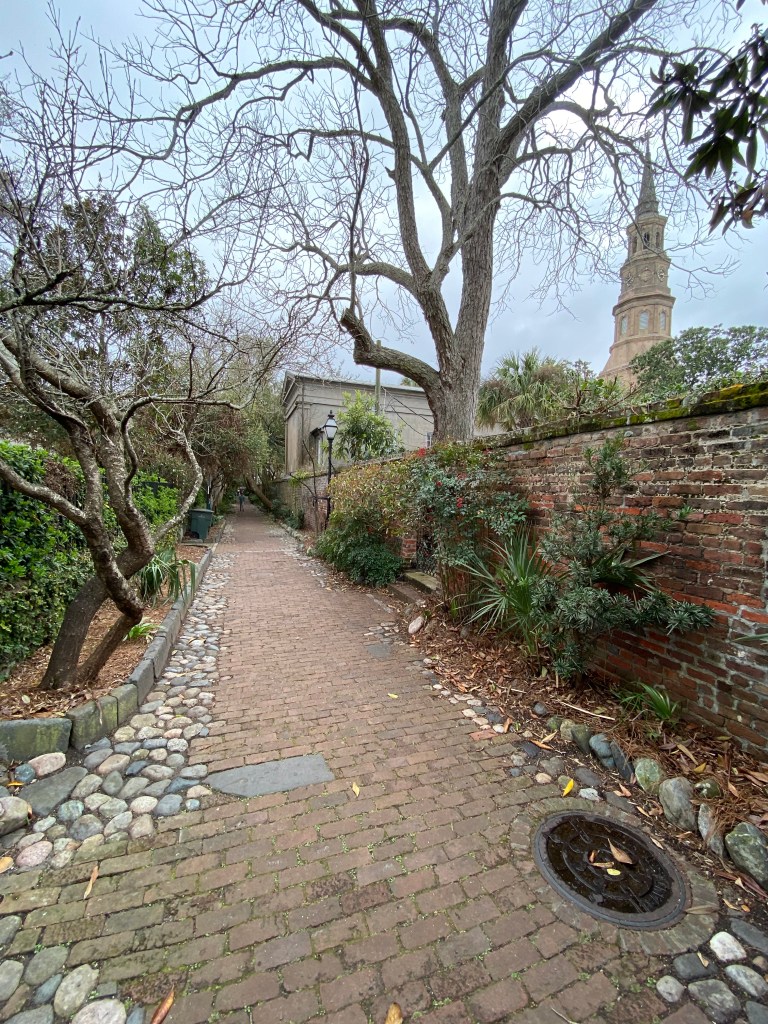
Philadelphia Alley, Charleston South Carolina. The steeple of St. Philip’s Church rises above the wall to the right. The setting for my story

This week’s prompt for the Sturgis Library Writing group was to write a story/memoir/poem using the photo of the alley shown above. My tale of mayhem follows.

Philadelphia Alley

Sergeant-Major Poe stood at  the parapet of Fort Moultrie, jotting down his observations of Sullivan’s Island in a notebook.  Shortly after his arrival at the Fort, the local inhabitants told tales that the pirate, Captain Kidd, had buried a substantial treasure somewhere along its shores.  The tales had given Poe an idea for a short story and he had begun to create a plot line.  To help potential readers develop an image in their minds of the story’s setting, he wanted to provide a description of Sullivan’s Island.   Poe stopped writing for a moment and gazed off to the west across the wide expanse of Charleston Harbor at the city of Charleston itself.  In the setting sun, he could just make out the stately homes on Battery Street and the tall spire of St. Philip’s Church.  His line of concentration was interrupted by the approach of one of the post’s orderlies.   He snapped Poe a crisp salute and pulled a folded piece of paper, sealed with wax, from his leather messenger bag.  “Lieutenant Griswold’s compliments Sergeant Poe, he asked me to pass this order to you.”   Poe thanked and saluted the orderly.  Breaking the seal and folding open the note, he read that he was being ordered to Charleston the following morning to oversee the unloading of munitions from a supply ship and to ensure their delivery to Fort Moultrie.  He would be met at the docks by Monsieur Paul Douxsaint and would be a guest at his house.  Poe signed the log book acknowledging receipt of the order and proceeded to his quarters to prepare for the trip.

The unloading of the supply ship began mid-afternoon and ceased at dusk.  As Poe stepped from the gangplank on to the dock, a rather well dressed man in top hat and carrying a bejeweled cane approached and introduced himself as Monsieur Douxsaint.   Gregarious and possessing a delightful French accent, he invited the sergeant to dine with him at a private club called the Vendue.  By the time they completed their dinner, darkness had fallen and the streets were illuminated by flickering gaslights.  Walking along Queen Street on the way to the Douxsaint house they had reached the intersection of Philadelphia Alley when their conversation was cut short by a horrible scream that made the hairs on the back of their necks stand up.  It was a woman’s scream and it came from somewhere in the Alley.  As they stared into the darkness, a second scream made them jump.  Poe started to make his way into the Alley but Douxsaint grabbed his arm.  

“Sergeant Poe, please, do not enter they Alley, it is dangerous.”

“But it sounds like a woman is in trouble Monsieur, she needs our help.”

“It could be a ruse to lure us in, Sergeant Poe.  We will be discovered in the morning with our skulls bashed in, our money and valuables taken.”

Women’s screams and the hoarse shouts of men disrupted the darkness of the Alley.

Poe retrieved a pistol from his valise and drew his sword.  “Tell me what’s down this Alley, Monsieur.  Someone is in desperate need of help.”

“A few apartments, the entry to the church cemetery on the left.  The Barnwell Mortuary on the right.”

Poe disappeared into the darkness.  Douxsaint uttered a curse, and began to shout for the police.  He gave the jeweled head of his cane a twist and pulled it, extracting a short sword from its hollow body.  “Wait for me Sergeant!”  

The two of them crept slowly along Philadelphia Alley, listening.  The shrieks and shouts had stopped for the moment.   A door swing open and slammed against the wall, making them retreat a few steps.  A shaft of light from the other side of the door broke through the darkness in the Alley.  They gasped as a man staggered from the door, the handle of a knife protruding from his neck.  Falling to the ground, blood from his severed jugular sprayed the Alley.  Poe and Douxsaint ran to the fallen man, but they saw he was beyond help.  Douxsaint stood and began to shout as loudly as he could for the police, anyone, “Murder! Murder!” he yelled.

Readying his sword and pistol, Sergeant Poe went through the open door.  What he saw revolted him, his dinner gave a huge roll in his stomach.  On the floor lay the body of another man, mouth open, empty eyes facing the ceiling.  It appeared he had been stabbed in the heart.  On a table was the body of a third man, but it was clear he was being prepared for burial.  “The morgue,” thought Poe.

“Oh Mother of God!”  exclaimed Douxsaint when he came through the door.

Shouts and screams from two women came from somewhere else in the building.  They pushed through a set of doors into a wide hallway.  To their left was a staircase leading to an upper floor.  The sounds seemed to be coming from there.  Bolting up the stairs they stopped to listen.  A struggle could be heard from a balcony behind them, in the front of the building.  Racing out to the balcony, they saw a woman gripping another woman by the throat with one hand, while trying to plunge a knife into her chest with her other hand.  The second woman was using both of her hands to keep that from happening.  Poe could hear the sounds of police whistles from the street below.

“Madame, please, put down the knife,” Douxsaint said softly.

The quiet French accent had an effect on the knife wielding woman.  She looked at Poe and Douxsaint, blinked and dropped the knife.  “They killed my husband,” she sobbed, “they cut him open down in that room.” Looking at her blood stained hands and clothing, she gasped, “What have I done?”

Police officers boiled out on to the balcony.  Quickly assessing the situation they escorted the knife wielding woman away.  From the woman who had been attacked they learned the knife wielder’s husband had died of consumption the previous day.  The morticians were in the process of preparing his body for burial when the distraught wife burst in.  Seeing her dead husband displayed on the table made her go berserk.  She grabbed a dissecting knife and stabbed one of the morticians in the heart then jammed the knife into the neck of the second mortician.  Then she grabbed another dissecting knife and came after her.  Gesturing at Poe and Douxsaint, she said, “The gentlemen arrived in time to save me.” 

Before giving their version of what they witnessed to the police, the gentlemen were asked to provide their full names and occupations.

“Monsieur Paul Douxsaint, shipping merchant.”

“Edgar Allan Poe, Sergeant-Major, Company H, 3rd United States Artillery.”

The police completed their questioning and allowed Poe and Douxsaint to leave.  Sipping brandy in the parlor of his home, Douxsaint shuddered.  Looking at Sergeant Poe he said, “My dear Edgar, this has been a truly horrific night.  I don’t know if I will ever see another restful night of sleep.  God, I will forever rue the night we came upon the murders at the morgue.”

Edgar Allan Poe looked at the brandy in his glass and swirled it once.  “Murders? Rue? Morgue? Hmmm…” he thought.

A drawing of Edgar Allen Poe in his uniform at the time he was at Fort Moultrie on Sullivan’s Island. The stripes on his sleeve are not those of a Sergeant-Major, he didn’t achieve that rank until later in 1828.
The house of Paul Douxsaint on Church Street in Charleston, S.C., built in 1725, still standing today. My story ends in the parlor of this home.
Saint Phillip’s Church. Philadelphia Alley runs behind the Church, the Douxsaint home is a block away.

I took some creative license in writing this story, what is factual follows:

  1. Edgar Allan Poe was a member of Battery H, 3rd U.S. Artillery at Fort Moultrie S.C. from 1827 to 1828.  He wasn’t promoted to Sergeant-Major until after his transfer to Fort Monroe in Virginia in December, 1828.
  2. For some some reason, Poe enlisted in the army using the name Edgar A. Perry, perhaps to disguise his age?  He said he was 22, but was really 18 when he enlisted.  He resigned from the service near the end of 1828, at which time he revealed his real name and age.
  3. Poe did use the setting of Sullivan’s Island and the rumors of Captain Kidd’s treasure as the inspiration for his short story, “The Gold Bug”.
  4. St. Philip’s Church was built in 1836, 9 years after the time line of my story.
  5. Paul Douxsaint was a real person, his home still stands, two blocks from St. Philip’s Church & Philadelphia Alley.  He built his home in 1725, so he would never had met Poe.
  6. The Vendue is a boutique hotel on Queen Street in Charleston, but didn’t exist at the time my story takes place.  I thought it was a cool name to use.

Ernie Stricsek, The Sturgis Library Writers Group, March 15, 2023