The Pitt Street Bank

The prompt for The Chatham Writers Group for today was to write about a bank, in any genre. I chose to write a fiction piece. This is linked to an earlier story published on this blog titled ”Freedom”. The slave owning tobacco farmer, Asa Washburn, is the link. In a sense, then, this is another chapter in the story of Galileo Washburn – although his name does not appear in this story, …yet.
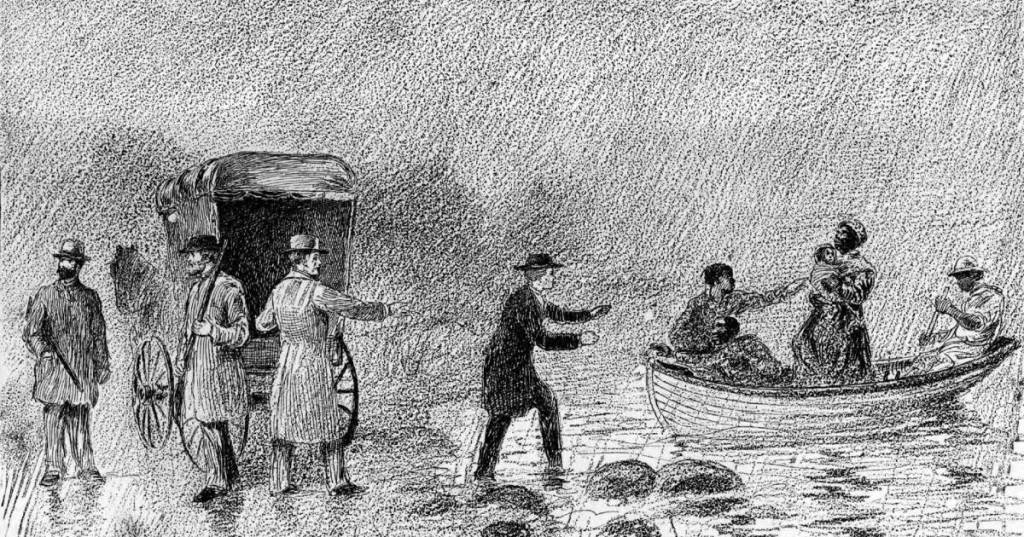
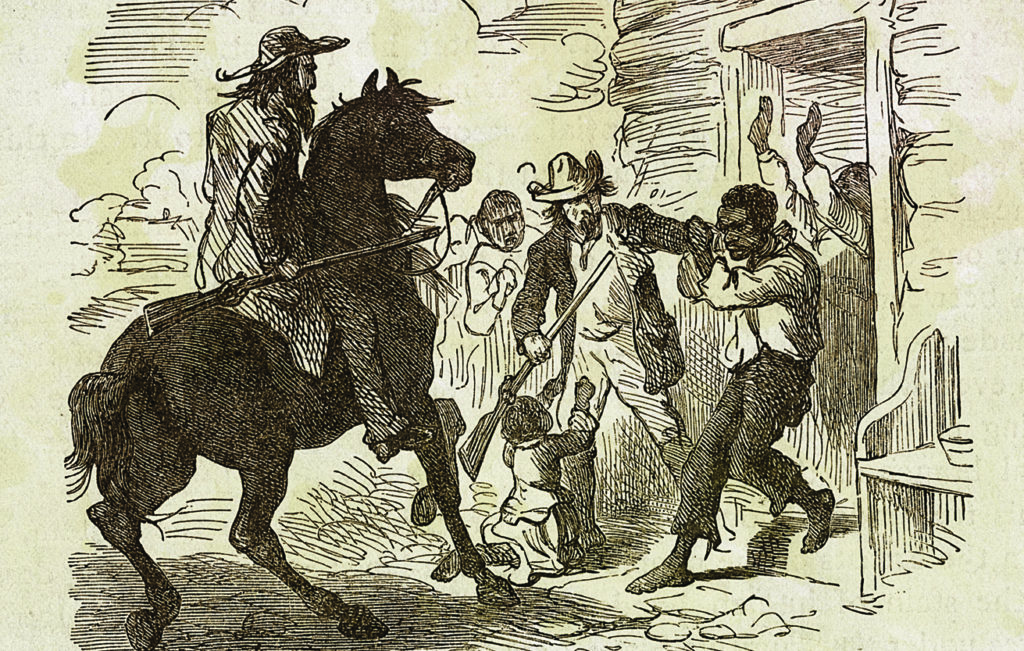
The Underground Railroad in action

The Pitt Street Bank

Alexandria, Virginia 1854

The morning began on a good note for Nathaniel Dutton, owner of the Pitt Street Bank.  The first visitor that day had been an impressive looking gentleman from Savannah, Georgia, named Edward Farnsworth.  He owned a shipping firm, was expanding his operations in Alexandria, and wanted to open a business account.   Nathaniel expressed his interest in managing his accounts, however Farnsworth had some concerns he hoped could be addressed.

“First, I have to admit I am not a Quaker.  I understand you are and the rumor is you offer limited services to non-Quakers.”

Nathaniel assured Farnsworth the bank had many customers who were not Quakers, including several who had business accounts.  He mentioned the owner of the largest tobacco plantation in Fairfax County has his accounts with the bank,   “Asa Washburn’s his name.  He will be here later today if you would like to meet him.”

“I just might,” said Farnsworth.  “The second thing I need to know is how secure my deposits and banking records will be.  You are close to the Potomac River.  Will the damp basement damage them?”

“Everything is stored on our 3rd floor to prevent something like that from happening.  We have another safe on that floor,” assured Nathaniel.

Seemingly satisfied with Dutton’s answers, Farnsworth rose to leave and said he might come back to meet the tobacco farmer.  “Two of my associates will be in shortly to meet with you. Good day sir.” Tipping his hat to the cashiers, Farnsworth left the bank and turned towards Queen Street.

Three men on the corner of Queen Street watched Farnsworth striding from the bank.  Stopping in front of them he snarled, “I believe that damn abolitionist have my property on the top floor of his damn abolitionist bank.  Ya’ll go git ‘em now!”

Nathaniel was gathering the documents needed to open Farnsworth’s account when two of the seediest men he had ever seen swaggered into the bank.  Long greasy hair fell from the sweat stained hats to their shoulders.  Beneath their filthy linen dusters, he could see each man had a curled whip on one hip, and a Colt’s Dragoon revolver holstered on the other.  Hard eyes glared above bushy beards.  One was a good head taller than the other. Following them was the Fairfax County Marshal.  

“Can I help you gentlemen?”, asked Nathaniel.  The two hard cases scoffed at the word “gentleman”.

“We heared ya’ll got a rat problem in ya’ll’s attic,” said the short one.

“Yeah, us is gonna get rid of ‘em for ya’ll,” chuckled the other.  Both men were missing several teeth.

“What’s this all about marshal?”, asked Nathaniel.  Holding up a document, the marshal  apologized and said the two men were seeking runaway slaves.  “What’s that have to do with me?”

The marshal coughed and explained that someone believed Nathaniel was harboring runaway slaves somewhere in his bank.  He couldn’t hide his embarrassment.  “I’m sure it’s all a misunderstand, Mr Dutton,” he said, handing Nathaniel the document.  Under the Fugitive Slave Laws, the two men, along with the Federal Marshal were permitted to search a dwelling if the owners were suspected of hiding runaway slaves.  The document was signed by none other than Edward Farnsworth.  
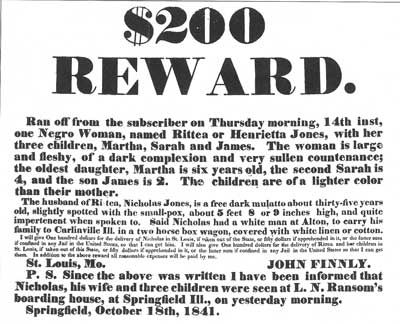
A typical ”advertisement” associated with Fugitive Slave Act

Fugitive Slave Act in action

Pushing Dutton ahead of them, the two men clomped up the stairs to the 3rd floor of the bank.  Following them, the marshal puffed, “There’s no need to manhandle Mr. Dutton, he is a respected…”

“Don’t be tellin’ us how to do our bidness,”  growled the taller slave hunters.

Dutton unlocked the door to the records room on the third floor.  Shafts of light angled in from the windows on each side of the room.  Eight rows of oak file cabinets stretched back towards a large safe at the end of the room.  There were doors on either side of the safe.  Nathaniel was ordered by the tall man to,  “Open ‘em doors n’at safe now.”  Fumbling with the keys on a  ring, Nathaniel found the one he needed and reached for the door.  The slave hunters yanked the Colt’s from their holsters.  “Is that really necessary?”, asked Nathaniel.  

“You don’t tell us our bidness!”, hissed the seedy short man.  The door swung open to a reveal a room with tall oak cabinets lining the walls.  There was a table in the middle of the room with four chairs.  Light came from a single window high on the back wall.  

The same scenario was repeated when  Nathaniel opened the door to the other room and the safe.  “These are rooms for safety deposit customers to store valuable documents,” he explained.  With bewildered looks, the two slave hunters stalked around the outer room, shaking cabinets and asking Nathaniel to open some of them.

“We’re checkin’ for false fronts.”  The search was fruitless.  “Tain’t nobody here.  Looks like tain’t nobody ever been here.”  The seedy men were perplexed.  “What’s on the middle floor?”, asked the taller man.  

“Offices,” replied Nathaniel.

“We’d best have a look then.”

“You said your interest was on the 3rd floor,” objected Nathaniel.

Snatching the writ from the marshal’s hand, the shorter slave hunter proclaimed, “This here paper gives us the theority to look anywhere’s we want!”

“He means authority,” said the marshal.

“You got somethin’ there you don’t want us to see?”, asked the tall one. 

“Not at all,” answered Nathaniel.

The search of the 2nd floor offices also revealed nothing amiss.  They stomped out of the offices, clumped loudly back down the stairs and stormed from the bank without uttering another word.  The marshal apologized to Nathaniel and he left the bank.

Nathaniel let out a long breath, turned to the cashiers and said, “Well, that was very interesting.”  The cashiers gave nervous laughs.  “I have to go back upstairs and lock the safety deposit room doors.  I’ll be back down shortly.”

Entering the 3rd floor room, Nathaniel closed the safe and gave a spin to the combination lock.  He closed and locked the door to the right of the safe.  Entering the room to the left of the safe, he went to a cabinet of drawers on the right. Leaning against the cabinet, he softly said, “Everything will be alright, the hunters have left.  We will get you out of here and on your way to safety very soon.”  The 8 escaped slaves, huddled in the secret room behind the safe, let out a collective cry of relief.
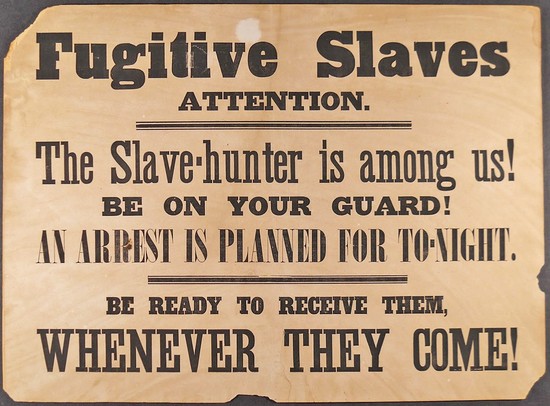
Poster warning of presence of slave hunters
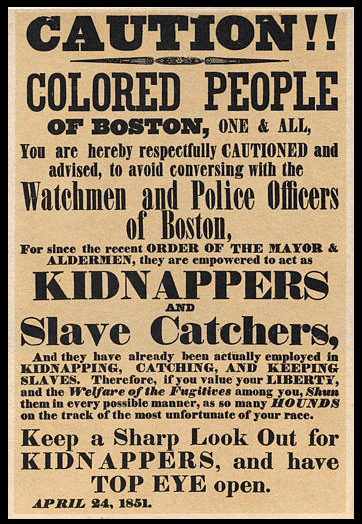
A Boston broadside warning presence of slave hunters

Ernie Stricsek

The Chatham Writers Group

1/23/22

A Journey Through The Province of Quebec


Note: I made “A Christmas Story” editorial move in my story. I substituted ”fudge” for “the mother of all swear words”.

Journey Across Quebec

Relating the journey of two engineers and a sales person across the Province of Quebec to visit a potential customer in a remote place on the border of Canada & Vermont should cause the listeners eyes to glaze over.  However, the story I am about tell is anything but dull.

It was a mild, early December day when we departed Pittsburgh for Montreal.  Our party consisted of Dave, a retired engineer of prickly nature, but with wealth of technical experience; Bob, a sales person with the usual abundance of sales person optimism; and me, the 2nd engineer & manager of the place that was going to make the stuff the customer desired. When our flight landed, we were surprised to discover the weather in Montreal mirrored that of Pittsburgh, sunny and in the upper 40’s.  

We cleared customs and made our way to the rental car kiosk.  “You have your choice of a Jeep Cherokee or a Coup DeVille.”, offered the rental agent to our salesman, the rental was in his name.

I knew there had been some snow in northern Vermont, so I suggested Bob take the Jeep because of its all wheel drive capability.  “We’ll take the DeVille!”, barked prickly Dave.  Finding our car in the lot, we loaded our luggage into the cavernous trunk.  Prickly Dave, who in his heyday, loved nothing more than to be driven about in a limo, claimed the back seat.  Bob would drive and I would handle the GPS, which in 1999 was Rand-McNally Road Atlas.  We left sunny Montreal for Derby Line, VT, a drive of about 1 ½ hours.  

A half hour after leaving Montreal, Bob exclaimed, “Holy Hell!  Is that snow?”  The highway ahead of us disappeared into a white cloud.  Bob lost some of his exuberance.  Within a few minutes the DeVille entered the near white out conditions of a heavy snow squall.    With the exception of a narrow strip of clear pavement in the center lane, it was almost impossible to determine where the shoulders of the highway were.  The traffic slowed to a crawl, mostly because of poor visibility.  A few minutes into snow squall, I noticed Bob’s knuckles were white, due to his death grip on the steering wheel.  Bob lived in Charlotte, NC, so he had virtually no experience driving in weather like this.  I suggested he pull over at the next exit and I would take over driving.  Bob thanked me, but felt he could manage.  Besides, he did not want to stop and chance getting stuck.  

A few more miles into the blizzard, prickly Dave announced he was hungry and demanded we stop at the next exit, there was a McDonald’s.  Bob and I weren’t hungry and didn’t want to stop, however Dave persisted.  Bob paid for Dave’s food with U.S. dollars.  He caught the cashier attempting to short him on the exchange rate when he got his change.  He brought it to the cashier’s attention.  Curiously, she no longer spoke English.  A talk with the manager corrected the issue.  We got back on the highway without any mishap, Dave munching away on his Big Mac and fries in the back seat.  Driving Mr. Dave I thought.  

The atmosphere outside the car was icy, with snow swirling around the windows.  The atmosphere inside the car was warm,  but an odor of seaweed at low tide enveloped Bob and I.  We gave each other accusatory,  wide eyed sideward glances – did this come from you?  We both gave each other almost imperceptible head shakes.  Damn!  That prickly bastard farted in the car!  In a freaking blizzard!  Bob cracked a window.  Prickly Dave barked, “Close that damn window!  I’m freezing back here!” Bob and I silently damned stinky Dave again.  We did eventually drive out of the squall and arrived at our hotel in Derby Line 3 ½ hours after leaving the airport.

Bob & I wished we had done this.

At dinner that evening, Dave downed 3 gin martinis, each with 3 blue cheese stuffed olives.  He became less prickly, but the adult beverages clouded his judgment.  As the waitress started to clear our plates, he tried to place a little, adhesive backed,  embroidered rose on her breast pocket, but really on her breast.  She adroitly dodged his outstretched hand.  With eyes flashing, she grasped a steak knife from one of the plates and said, “Get that hand back or lose it!”  She said it in a joking way, but there was murder in her eyes.  When Dave went to the bathroom, Bob and I apologized to the waitress and the manager.  We hustled Dave out.

The next morning would bring further adventure.  Somewhat hungover from the martinis, an even more cantankerous Dave wanted to go for a big breakfast before our 9:00 AM meeting. Trooping out to the car in the raw morning, Bob discovered he couldn’t unlock the car door. It appeared the mechanism was frozen!  Dave began to swear.  He demanded Bob cross the road and get a mechanic from the car dealership there.  But it wasn’t open yet.  Bob got a pack of matches from the hotel desk clerk and walked back out to the car with Dave and I, Dave swearing without pause.  

There was a drug store next to the hotel and I started to say, “I am going over to the drug store to see….”

But Dave cut me of with a snarl, “What the fudge good is a drug store going to do!?”  While Bob and Dave vainly tried to use the matches to heat the key up enough to melt the iced lock, I went back into the hotel lobby to munch on a donut and sip coffee.  A guy in the lobby pointed his donut at Bob & Dave in the parking lot.  “What are those two up to?”, he asked.  I told him.  He said, “Boy! I bet they’re glad their boss is not here to see that!”  

I smiled and said, “That would be me.”

At 8:30 AM, I saw the drug store open.  I walked past Dave & Bob in the parking lot on the way to the drug store.  Purchasing a small spray bottle of lock de-icer, I walked back to the car and asked Bob and Dave to step aside.  It took one squirt to unfreeze the lock.  We had to hustle, it was now 8:40 AM, we were due at the customer in 20 minutes.  Bob pressed the trunk release button on the key fob so we could stow our luggage.  The trunk flew open like a Jack-in-the-box lid and struck poor Bob above his left eye.  It swelled immediately.  Now Bob was swearing.  Dave snarled, “Quit wasting time Bob, we gotta go.  No fudging breakfast!”  Bob grabbed a handful of snow and held it against his eye in an effort to reduce the swelling.  He wasn’t successful.  Arriving at our meeting, he looked like he went a couple of rounds with Mike Tyson.

We were ushered in to a large conference room and offered coffee.  Bob and Dave couldn’t hide their disappointment at the absence of pastries.  Experience has taught me that coffee on an empty stomach should be avoided.  The people we were visiting tried not to appear distracted by Bob’s swollen eye.  Soon, however, they were not able to disguise their bewildered expressions at the loud growling and popping noises emanating from the empty stomachs of Dave & Bob.

Ernie Stricsek

Chatham Memoir Group

1/20/22

Of Opening Days & Other Fish Tales

I remember the thrill I had on Christmas Day 1965 when I tore the wrapping paper from a box containing my first fishing reel!  Not one of those King Neptunes or Zebcos, but a Mitchell/Garcia 300!  Kind of like the Red Ryder BB gun of fishing reels.  I couldn’t wait to use it on the opening day of trout season.   The  3 ½ months dragged as though it was 3 ½ decades.  All of that time my buddies and I talked about our first opening day jaunt.  The mother of one of my buds offered to drive to a lake in NW New Jersey that had a reputation for humongous brown trout and plentiful rainbow trout. 

The day before our fishing safari, we rode our bikes over to the sporting goods store to stock up on hooks and sinkers and to buy a small container of red worms, supposedly the trout ate these like I eat clams at the Chatham Fish Pier.  After one of those nearly sleepless nights, we left for this magical place at the earliest blush of dawn.  Arriving at our destination, our jaws dropped when we saw a parking lot full of cars.  The second blow came when we discovered all of the row boats were rented we would have to fish from the shore line.  Thirdly, even though it was the 2nd week in April, almost 95% of the lake was frozen!  The only portion of the lake not frozen was where the boat rental shack was.  The flotilla of row boats in that cove were jammed on top of each other.  The cove resembled the Philadelphia Navy Yard.

The shore was ringed with fishermen, all protecting their personal space fiercely, and that personal space seemed to be a 10 yard circle around each guy.  We did find a place finally, kind of in the woods, we would have to be careful to not snag a tree branch trying to cast out into chilly cove waters.  People were catching lots of fish, one guy in a row boat about 50 yards in front of us whooped every time he hooked a rainbow trout.  And he whooped a lot.  Our cold hands flew to knot our hooks and crimp our sinkers onto the line.  We worked our squirmy red worms over the hook – ewwww – and cast our lines out.  We would wait,  fishing line resting lightly on our fingers so we could sense the slightest of trout bites.  When a few minutes passed with no sensations, we would reel our line in to discover a bare hook.  Re-baiting and casting, we would again wait for that sensation.  Meanwhile, other fishermen began to compete with the war whoop guy by offering any variety of hoots and hollers.  Bait, cast, wait. Bait, cast, wait. Over and over.  After a few of the landlubbers near us caught their 6 fish limit and departed for the day, we slid over to their spots.  That had to be “The Spot”!  Those 3 guys caught 18 fish between them!  We were going to be “In Like Flynn” and on our way back home in no time.  Bait, cast, wait – nothing.  Some kid who had gone to fish in the spot we vacated earlier came walking past with 3 nice trout hanging from his stringer.  We asked what he was using for bait.  After failing to catch anything with worms, he told us he got desperate and stated pulling apart the white bread from his sandwich and used that for bait.  He caught three trout right away.  We had no sandwiches among us, just some apples.  My buddy asked if his sandwich was made with Wonder Bread, as though that mattered.  After a few more casts which yielded nothing, we moved back to our first spot.  I managed to catch a tree branch, it got the better of me and I had to cut my line and go through the whole process of affixing a new hook.  

We were running low on red worms and had yet to even get a bite.  Another group of guys came walking past us, laden with fish.  They said we should go up along the shore a little more and try fishing as close to the ice crust as possible.  Supposedly all the trout were leaving the cove to get away from what had become a noisy cove, with all the hooting and hollering.  They asked what we were using for bait.  When we revealed what we were using, one of the guys snorted and said “nobody uses red worms this early in the season, you should be using salmon eggs”.  First white bread, now salmon eggs.  Did anybody have an egg salad sandwich we could borrow?

Out of bait, the clock approaching noon, we were hungry and fish less.  There was another kid fishing in the 2nd spot we vacated.  He pulled in a trout as we were walking past.  My buddy asked him what he was using for bait.  “Cornmeal!”, he exclaimed proudly.  Next time we just need to haul my Grandmother’s pantry with us.

On the the return trip, all of us fell asleep.  One of my friends woke me when his arms flew up and hit me in the shoulder.  He dreamt he caught a fish and was trying to set his hook.  Walking in the door to my house, there was some good natured ribbing.  What were we going to have for dinner now?  Everyone was counting on that rainbow trout!  Fortunately there was a plan B.  Although all their hearts were set on trout, nobody was disappointed with the offering from Pizza Town that night.  As my success on subsequent opening days would attest, plan B was put it to effect many times.  Thank heavens for Pizza Town or the Joy Yuen Chinese Restaurant.

Ernie Stricsek

Chatham Memoir Group

1/14/22

Time Traveler

The prompt for the Writers Group this week was “ At what historical event would you have have wanted to be present.” Following is a fictional account of the event I would have been at.

Time Traveler

I will not waste words on the preparations made for the trip I am about to describe, that’s another story in itself and probably better suited for the eyes and ears of physicists due to its highly technical nature.  I will say that my journey began with the purchase of a 200 year old farm with a large barn in Cashtown, PA, population 450 souls and a mere stones throw from Gettysburg.  I had studied the writings of H.G. Wells for a good many years, so the barn served me well and I was able to design and construct a vehicle that would enable me to travel through time.  Given the astronomical technological advances which have occurred since Welles era, my time machine was of vastly superior capabilities.  I performed three successful test runs, which allowed me to become a somewhat familiar figure amongst the local populace.  I explained away my prolonged absences by saying I travelled extensively, lecturing on matters of a scientific nature.  My three test journeys transported me back to December of 1862, May and September of 1863.  On my visits, I shrewdly established a relationship with one David Wills, a Gettysburg attorney of renown with many political attachments.   My next trip would transport me to the month of November, 1863, more specifically to November 19th, to be part of the audience of the one event that I had been most desirous of attending, Abraham Lincoln’s Gettysburg Address.  Allowing myself some extra time to become acclimated and secure prime points of observation, I successfully arrived a few days before the schedule event.

Things were all hustle bustle in Gettysburg over the upcoming dedication of the cemetery established for those who fell in the July battle.  My first order of business was to visit the office of lawyer Wills to let him know I would be in town for a few days.  Under the pretense that I was unaware of what was about to occur, I asked if Wills would like to join me for dinner one evening.  He could barely contain himself and he began to rock in his chair.  With twinkle in his eye and with a rush of words he exclaimed, “I can do you one better!  I am inviting you to my home, sir, to be one of my guests in entertaining his Excellency, the President of the United States!  Yes sir!  Mr. Lincoln himself!”  I knew from history that Lincoln stayed at Mr. Wills house, it exceeded my wildest imagination that I would soon be in the same space as the great man.

I also knew from history that besides Lincoln and Secretary of State, William Seward, Mr. Wills had invited close to 40 dignitaries to his home for dinner.  Edward Everett, the featured speaker of the dedication ceremony was already at the Wills house when I arrived.  I moved towards the back of the parlor, my plan was to remain as low key as possible and be a virtual wall flower at this event.  I was thrilled to be just present and to listen.  My plan began to go sideways when Lincoln and Seward walked into the parlor.  I gasped so loudly, several people turned to look at me with raised eyebrows.  Lincoln began to greet everyone.  “I’ll be damned”, I uttered a bit too loudly, “Daniel Day Lewis nailed Lincoln’s voice!”  Then I let out a large sob.  More people heard this, the French Admiral standing next to me asked me if I was unwell.  Even worse, President Lincoln heard me and looked right at me.  It was not hard to pick me out of the group, next to him, I was the second tallest person in the parlor.  Attorney Wills navigated Lincoln through the crowd.  Stopping in front of me, Mr. Wills said, “Mr. President, please meet my friend, Dr. Lazlo, a noted Hungarian physicist.”  I had been using the name Lazlo as my alias on these time travels.

Daniel Day, I mean, Mr.Lincoln said, “It is a pleasure to meet you Dr.Lazlo.  Who is this Day Lewis you mentioned?  Nailed you said?  Is he a carpenter?  Never mind, I may have a question or two for you later after dinner. A pleasure to meet you sir.”  Mr. Wills winked at me and took Lincoln to meet the others in the room.  

After dinner, Mr.Lincoln did seek me out.  He said it is not often he is able to almost look someone in the eye without having to look down.  I laughed at his joke. I told him I was looking forward to hearing his speech the next day.  He replied humbly, “It’s just a few lines.  Everett is speaking first, I doubt anyone will ever remember my words.”  I almost blurted out, “You have no idea sir…”, but I caught myself and just said, “History will decide.”  Lincoln thought about that for a moment.  A wry smile made the wrinkles on his face deeper.  He said, “here is the speech I would like to give, it’s General Lee’s Invasion of the North, Written by Himself,

“In 1863 with pomp,

And mighty swell

Me and Jeff’s Confederacy, went

Forth to sack Philadel

They Yankees they got after us

And gave us particular hell

And we skedaddled back again

And didn’t sack Philadel…” (limerick written by Lincoln after Battle of Gettysburg)

We both had a hearty laugh.  Lincoln then excused himself.  Shaking my hand he said, “I have to go and finish my real speech, I am going to get Seward’s opinion on it.  I hope you will find it worthwhile Dr. Lazlo.”  He turned to walk away and I whispered, “Don’t go to the play.”  He looked back at me with a puzzled expression, gave a slight nod and off he went to find Seward.

I didn’t sleep a wink in anticipation of the historic event that would enfold the following day.

The pomp and circumstance of the procession to the cemetery was interesting to see from the standpoint of, in 1863, there was no Secret Service to surround the President.  He had virtually no “security” detail.  I endured Edward Everett’s 2 ½ hour oratory, which almost nobody remembers.  Then it was time for Lincoln to speak.  He pulled a couple of sheets of folded paper from one pocket, his glasses from another.  He looked at the crowd, then at the graves of 1,200 men who “gave their last full measure of devotion.”  I began to swallow hard.  Quaking with emotion, with tears streaming down my face, I stood in awe at the edge of the stage as Abraham Lincoln proceeded gave one of the greatest and most influential speeches in history.

Then it was over.  A wave of realization crashed over me, as strong as the wave of emotion I felt hearing this monumental speech.  I needed to leave the cemetery and leave now.  I pretended to not hear attorney Wills calling my name and melted into the crowd.  Securing a carriage, I directed the driver to use side streets to reach the road that would take me to Cashtown.  Deep in thought, I did not realize we had reached our destination until the carriage lurched to a halt.  I waited until the carriage was out of sight before entering the barn.  Climbing in to the time machine, I knew what I had to do.  I came oh, so close to changing history.  As desperately as I wanted to, I knew that I couldn’t.  However, I didn’t trust my emotions getting the better of me and feared I would do something foolish if I met President Lincoln again.  This would be the last journey I would make through time.

I would journey to Gettysburg to hear the greatest speech ever written recited once again.  However, it would be on November 19, 2013, 150 years later.  Standing with our son Geoff near the stage in the National Cemetery, we listened to a Lincoln re-enactor present the Gettysburg Address.  I felt the same wave of emotion I did when I heard it given by Lincoln himself.

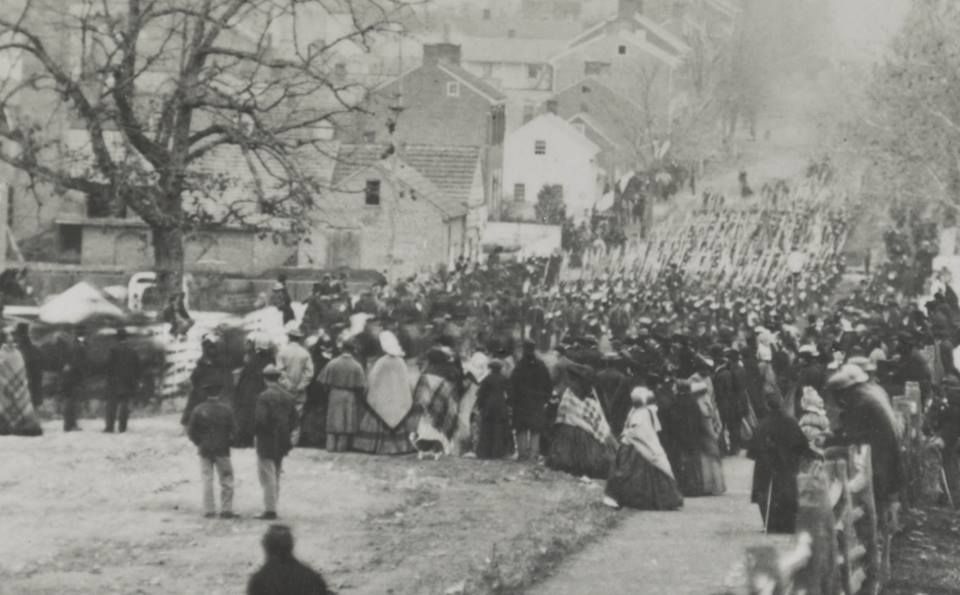
The procession to Gettysburg Cemetery. Lincoln is somewhere near the company of soldiers. So is Dr. Lazlo….
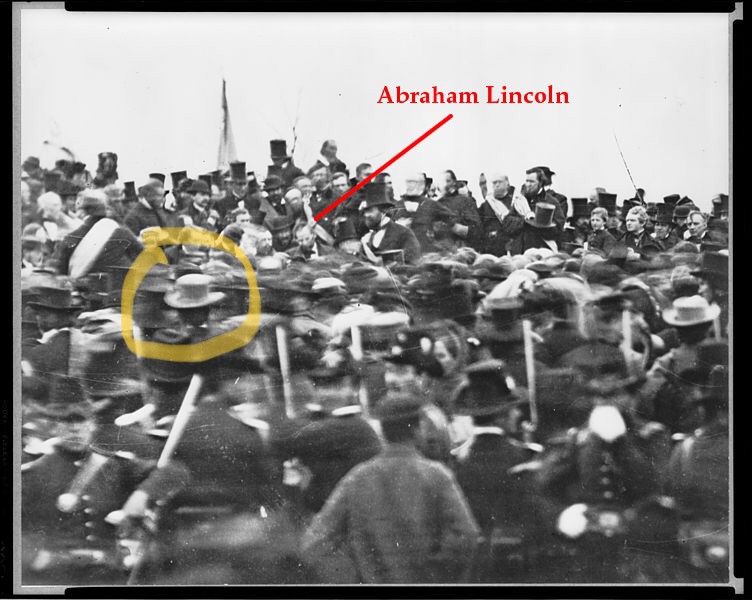
One of the purportedly two photos of Lincoln giving his Gettysburg Address. Circled man in front of stage is assumed to be Dr. Lazlo.
Actor reciting Gettysburg Address at 150th Anniversary of event on November 19, 2013.
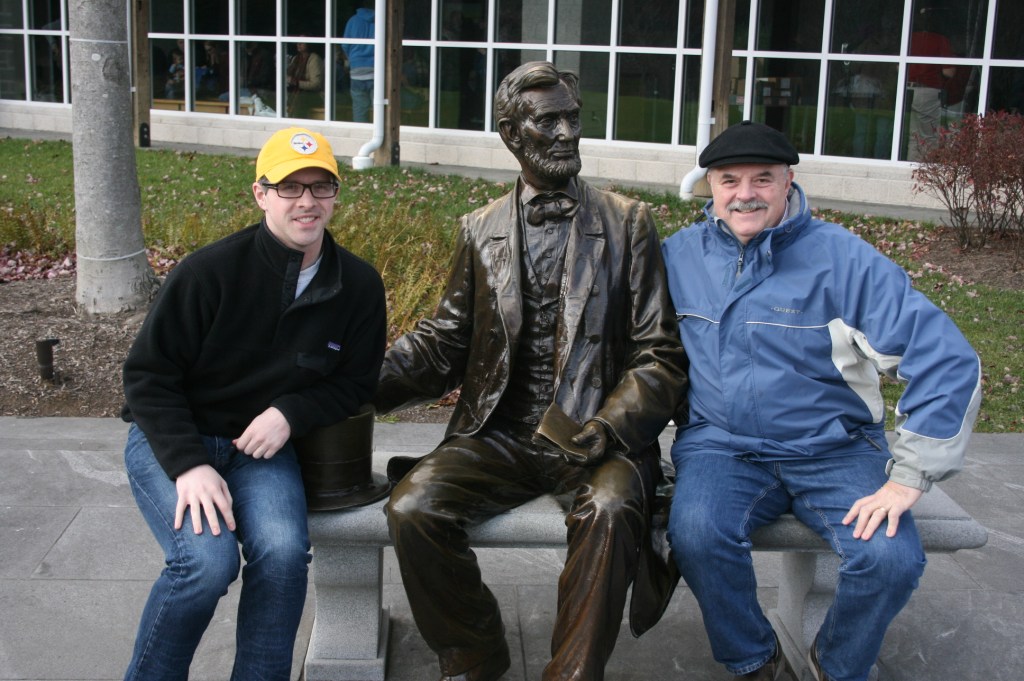
Geoff, Lincoln and I. November 19, 2013. 150 years after my first visit😉

Ernie Stricsek

Chatham Writers Group

1/10/22


“Little Manhattan”

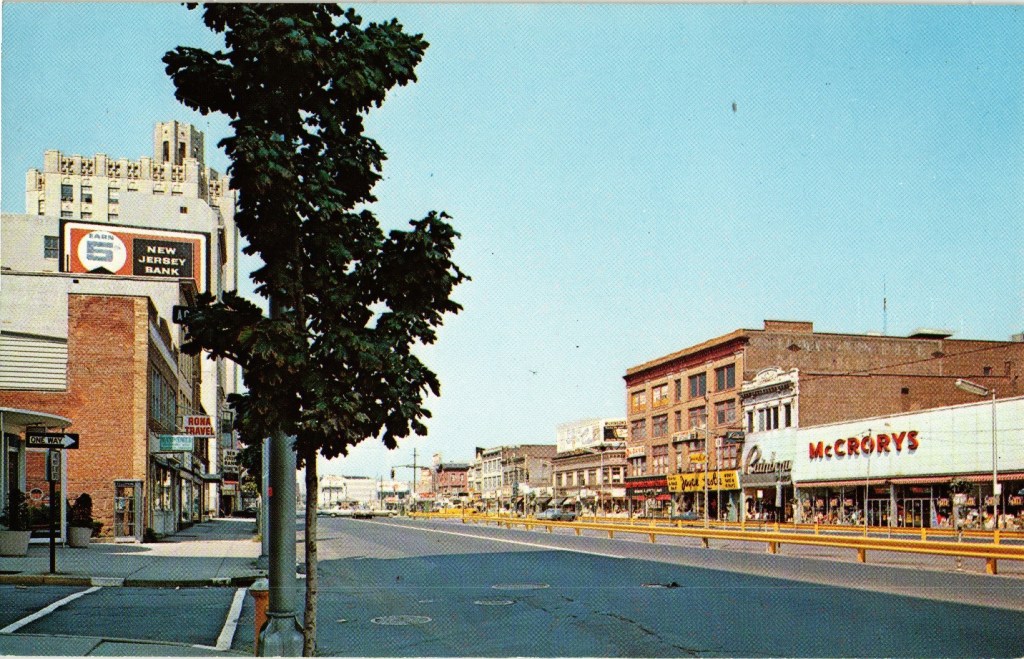
Downtown Passaic, New Jersey. Circa 1964, post Erie Railroad commuter line.

“I think we should go to Passaic tomorrow.”  If I could do backflips, handstands and cartwheels every time my mother said these words I would.  But I couldn’t, so I would spend a restless night, tossing and turning, thinking of all the possibilities that the next day would bring.  Growing up in Bergen County, New Jersey, a trip to Passaic in the late 1950’s and early 1960’s was like going to New York City for us kids, well for me anyway. 

We had only one car, which my Dad drove to work, so our journey to Passaic would start with a walk to the bus stop.  A caravan consisting of my Mom, grandmother, two brothers and toddler sister would trudge, mile after mile, up and down hills – well, when you are 6 years old, it seemed like mile after mile and hills – but I drove it one time, there was only one hill and my trip odometer measured 4/10 of a mile – but eventually we would arrive at the bus stop.  

The bus driver on the route from Midland Avenue to Lexington Avenue in Passaic resembled William Demarest, the actor who played Uncle Charley on My Three Sons, but lacked his charm.  He was curt to most passengers, however he had a great deal of respect for my Grandmother and strained to be polite with our entourage.  This respect developed on an earlier bus ride to Passaic.   I missed the coin slot on the fare box and the change fell to the floor.  Uncle Charley started to chastise my mother and I but my grandmother cut him off by telling him to “shut up and go shit in his hat”.  I think he was afraid to have any issues with us after that.

Getting off the bus on Lexington Avenue, to us, was like getting out of a cab in Times Square.  Two and three story department stores with big Art Deco signs, illuminated with huge light bulbs advertised McRory’s and Nadler’s.  To beat the lunch crowd, we would go into the five & dime store, S & S Kresge, and make a bee line for the lunch counter at the back of the store.  A waitress wearing a yellow uniform with red piping, a white apron and a little paper hat with “Kresge” on it would take our hot dog order.  When the waitress was out of earshot, my grandmother would comment on her excess lipstick.  By 11:30, hot dogs consumed, we would head back out to the cavalcade of stores.  We always made a stop at the Thom McCann shoe store.  To my parents, it seemed my brothers and I would outgrow a pair of shoes every 6 weeks or thereabouts, so the shoe salesmen (they were all men then) greeted my mom like an old friend.  

On the streets between stores we would encounter a guy playing an accordion and and, of all things, an organ grinder, slowly twisting the handle of one of those barrel organs.  He had a tin cup, but no monkey.  There were also a few scruffy looking guys selling #2 pencils for a nickel each.  My grandmother would point at them and tell my brothers and I that could be us if we didn’t do “good” in school.  Before catching the bus to return home, my grandmother would make a dash into McCrory’s to snag a bag of their home made potato chips. At their lunch counter, one of the wait staff would scoop the chips into a big shopping bag. The price – a quarter! On the bus ride back, the greasy bag would get passed among us, the only sounds made were the crunching of the magnificent McRory chips. My grandmother especially liked them. So much so, she was inspired to make her own potato chips at home, which were even better than the McCroy chips.

Christmas shopping in Passaic was especially delightful.  The existing glittering store signs were enhanced by the addition of Christmas lights, wreaths and Christmas trees in the stores.  Nadler’s Department store would almost quadruple the size of their toy department, much to the dismay of my mother.  It would be near impossible to drag my brothers and I away from the Lionel trains and the Marx toy play sets.  When I watch A Christmas Story, the downtown scenes, to me, resembles Passaic at Christmas time.

Downtown Passaic, decorated for Christmas.
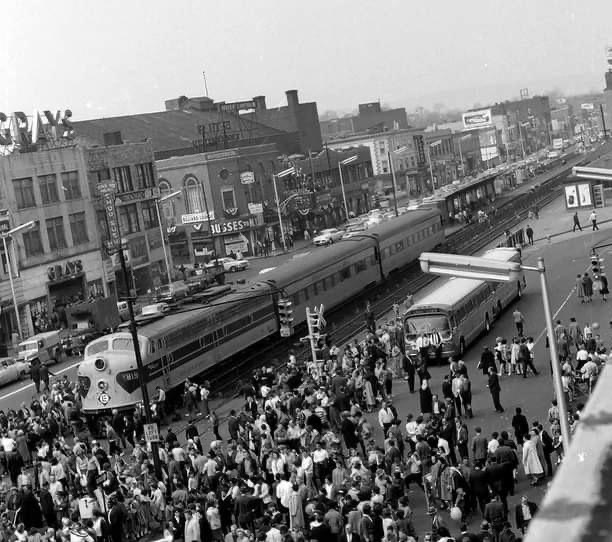
Downtown Passaic in 1963, a photo of the last Erie Railroad commuter run.

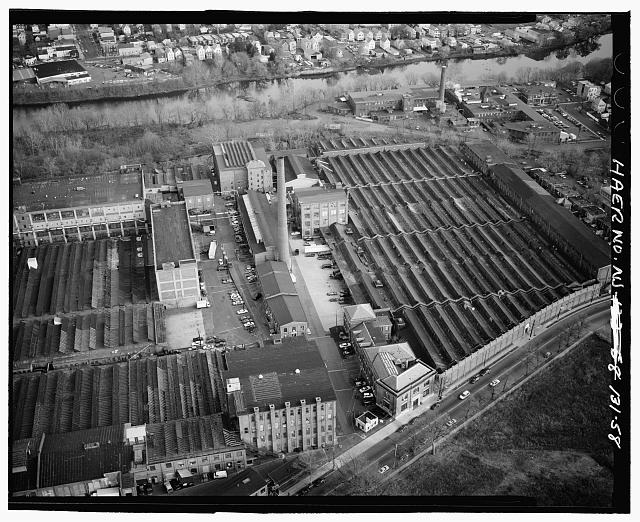
In the early 1960’s Passaic was a noisy place as well.  The steam whistle at the massive, nearby Botany textile mill would emit its ear splitting screech at noon to announce its employees lunch break.  A commuter branch of the Erie Railroad ran through the center of the business  district.  Shoppers would pass back and forth through underground pedestrian tunnels to visit stores on each side of railroad tracks.  I remember being in Passaic with my Mom & Dad in the late 1950’s and being scared out of my shoes by the sounds of an old steam engine signaling its arrival at the downtown station.

The massive Botany textile mill. You could hear the shift change & lunch whistles from miles away.

By 1964, my Dad had gotten a job that included a company car.  My mom now had a car to load us all into for shopping trips.  Parking had always been an issue in Passaic, another reason to take the bus.  By 1963, the Erie Railroad had pulled up its tracks through the center of Passaic and parking space was created, however it was metered parking.  We began to make shopping trips to the Garden State Plaza and the Bergen Mall in nearby Paramus.  Parking was free and there was a wider variety of stores to choose from.  The days of the stores in downtown Passaic were numbered.  There was a quaintness about shopping in Passaic, although the entire population of the town at that time was about 58,000 people, it had a big city feel to it.  It was always busy.  It was like Manhattan, only closer to home.  When you are 6 or 7 years old, everything seems farther away then it is in reality.  From our home in East Paterson to downtown Passaic was 3 ½ miles.  The Bergen Mall was about 4 miles from our home.  It was a two block walk to catch the Port Authority Bus Station to Manhattan, only a few blocks from Times Square, a distance of only 17 miles from our house.

Ernie Stricsek

Chatham Memoir Group

1/7/22

Freedom

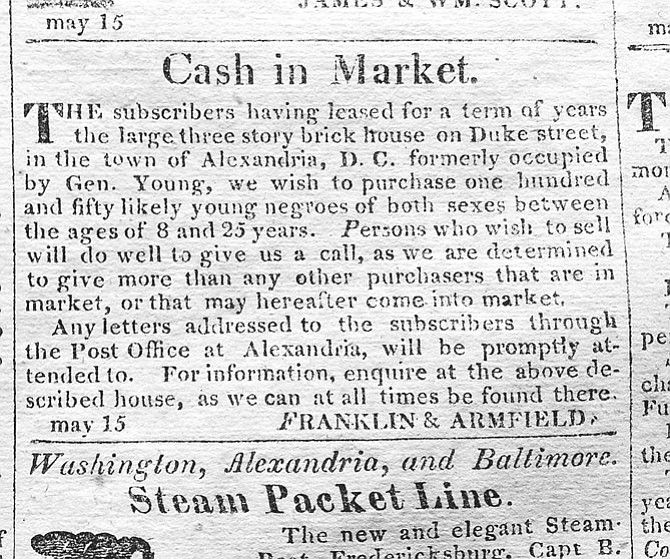
Advertisement appearing in the Alexandria Phoenix Gazette in May of May, 1828

The prompt for this week’s Chatham Writers Group was to pick a word that you would focus on for 2022 and write a poem, work of fiction, write about why this was your chosen word. I chose to write a fictional piece, with my character focusing on a word for his future. I decided to go this route after starting to read the two books my wife gave for Christmas; “My Monticello”, and “How The Word Is Passed”, the Frederick Douglass biography my son and his wife gave me last year, “Caste” & “The Warmth of Other Suns”, “The Underground Railroad”.

About a year and a half ago I started to write an outline for a book based on slaves escaping from a plantation and their ordeal in navigating the Underground Railroad to freedom.  But I felt this was not my story to tell, I do not have the personal history a person of color would have, these aren’t my experiences, rather these are someone else’s experiences I have read about.  Based on feedback from the Writers Group and others, I may approach it again. At any rate, my story follows.

Freedom

Galileo Washburn sat in the wagon seat, shoulders slumped, the reins for a team of 4 mules gripped tightly in his gloved hands.  He was staring hard at those gloved hand.  So hard in fact, he feared his eyes would burn holes through the gloves and cut the reins.  The sounds flowing over the brick walled yard to his right were as though from a carnival from Hell.  Drunken laughter, men swearing, whips cracking in the air, the sing-song cadence of an auctioneer, voice shouting dollar amounts, the pitiful shrieks and cries of families being torn apart.  It was auction day at Franklin & Armfield, it always sounded like this on auction day.  It took every ounce of his strength for Galileo to not leap from his seat and run from the horrible sounds.

After the completion of the auction, Galileo would sometimes take a wagon of slaves to either the rail yard where they would be loaded into cattle cars and sent to Mississippi, or to the river front for transport to New Orleans on one of his master’s ships.  Today, however, he would be taking a group of slaves to his owner’s plantation on the outskirts of Alexandria, Virginia.

Harsh voices and rattling chains alerted him to the approach of his cargo.  Galileo jumped down from his seat and jogged to drop the wagon gate to load the passengers.  There were four, two men and two women, no children.  The women, inconsolable, were being roughly handled by two men who shoved and jabbed them sharply in the ribs with the balled end of whip grips.  They were grieving being separated from their children during the auction.  Galileo recognized them as being from Sierra Leone, they were speaking the same language as his mother.  Perhaps their families knew each other.  The two women were startled when he began speaking to them soothingly in Krio while helping them climb into the wagon bed.

“All I can say is how sorry I am for what has happened to you.  But you must try to settle yourselves, or you will be whipped.  Please understand,” he said.  The two women continued to sob, but were somewhat more subdued.

The booming voice of Asa Washburn, Galileo’s master, made everyone jump, “That Galileo can charm a catamount, look how he calmed those wenches!  Good work son!”

With their cargo loaded, Galileo and Asa climbed into the wagon seat and set off for Laurel Hall, the Washburn plantation.  As the wagon moved slowly along Prince Street, Galileo could catch a glimpse of the wide Potomac River, and just beyond the opposite shore line, the outer buildings of the nations Capital.  “But not my Capital,” he thought.

The route from the slave market to Laurel Hall was a straight path and normally took two hours.  Today Asa Washburn directed Galileo to take a less direct road, closer to the river.  This road would eventually fork, with one path leading back to the plantation.  As the wagon approached the fork, Galileo gasped, “My God,” and yanked the reins to stop the wagon.  From the branch of a tree at the fork hung the body of a slave.  The gentle breeze from the river made the body twist slowly.  The man appeared to have been severely beaten before being lynched.  A sign hung from his neck – “This Fate Awaits Murderous Runaways”.  Asa Washburn said, “Keep the team moving Galileo.”  Turning to the passengers, who were cowering and shielding there eyes from the sight, he said, “Runaways are treated harshly. This slave’s  punishment was severe because he killed a prize hound who caught up with him. Open your eyes and look!  You do not want this to happen to you!  I don’t want this to happen to you!”  

 Galileo asked his master permission to translate his words to Krio, their passengers did not understand English.  Asa huffed, took a swig of bourbon from his flask and gruffly agreed, adding, “well they better learn to know what I say, and learn right fast.”

It wasn’t much longer before the wagon pulled to a stop in front of Laurel Hall.  Helping the stiff legged, and frightened passengers from the wagon bed, Galileo welcomed them to their new “home”.  A rush of crinoline, petticoats and skirts announced the approach of the wife of Asa Washburn and the plantation’s namesake, Mistress Laurel Washburn.  

“Welcome to Laurel Hall, y’all,” she stated with a flourish, “As long as y’all follow the rules and meet the expectations of the plantation owners and overseers, y’all should find living here agreeable. Now let the ceremony begin!” The ceremony being the “naming” of the newly acquired slaves, assigning them English names.  The men were named Jackson and Kermit, the women Loki and May Belle.  Mistress Washburn followed the alphabet when assigning names.  Even her children were named Asa Jr., Brady, Clarissa and Diana.

Turning to Galileo, in a somewhat more icy tone, she said, “Leo, please show our new hires to their quarters.”  With the exception of Master Washburn and his mother, everyone else at Laurel Hall called him “Leo”.

While being led to their new quarters, the woman recently name Loki caught up with Galileo and walked along side him.  “I sense that woman does not like you.”

“Get used to referring to that woman as Mistress Washburn, it will make things somewhat easier for you.  And, no, she is not very fond of me,” he replied.

What Loki said next caught him completely by surprise, “I see in you a strong resemblance to her husband.  Is this why she dislikes you?  Are you, ahhh, perhaps her step-son?”

He replied stiffly, “Her husband is called Master Washburn.  I never knew my father, he was sold while I was an infant.”

Loki felt he knew all to well who his father was.  Chuckling she said, “Master, Mistress, it matters not to me.   I am leaving to find my husband and children.  I will be free of this place!” 

Galileo grabbed Loki’s arm and spun her to face him.  It was her turn to be surprised.  Jabbing his finger at Loki, Galileo hissed, “Crazy woman!  You have no idea how big this country is!  Your husband and children are most likely going to places that are hundreds, a thousand miles from here!  You will be like a lamb in a den of lions.  You will end up like that poor soul we saw on the road today.  We all want to be free of this place.”   Calming down somewhat, he continued, “Freedom is foremost in all of our minds.  Acquiring it is dangerous, keeping it is equally dangerous.”

Galileo had stopped in front of a row of cabins.  He directed the two men to one cabin, the two women to the second.  To Loki he whispered, “We will talk more about freedom later, now here is your new home.”

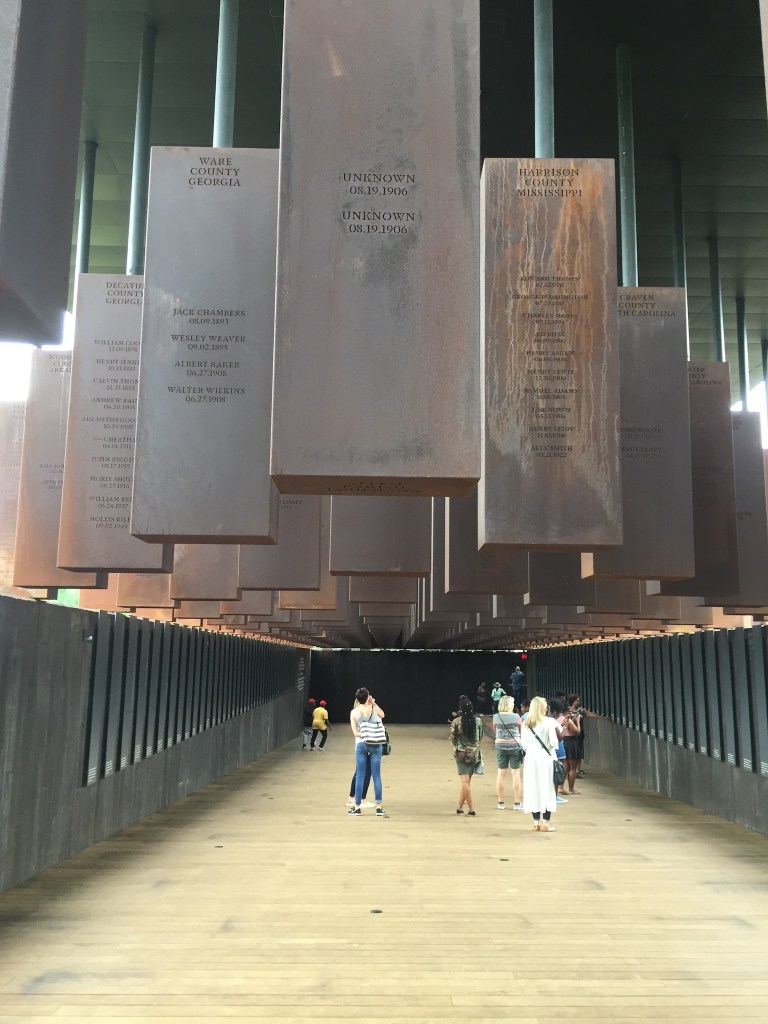
A photo I took while visiting the Lynching Memorial portion of The Legacy Museum in Montgomery, Alabama in 2018

Unrequited Love

The prompt for the Writing Group this week was “Unrequited Love”. I normally write a preface to my story posts, but I will make my comments at the end.

Unrequited Love


I was shocked upon discovering when the seed of your betrayal was planted.  For decades, you bided your time, planning and plotting all the while.

I thought we would be together for a lifetime, you thought otherwise.  I made a mistake, oh so long ago, I had no idea how deeply I had hurt you.

All seemed to forgotten, or forgiven when I reflect on all of the things we did together since that time.  Baseball, football, basketball, tennis, racquetball, and the trepidation we shared learning to ski.  We biked to work together and you really seemed to enjoy kayaking.  As I approached retirement age, I thought we were looking forward to having more time to do fun things.

But you were patient, plotting all the time.  “Pretty soon,” I said, “Only two more years!”  That is when you first betrayed me, and it hurt, deeply.  Soon, your vengeance flowed forth like lava. You snickered when I was no longer able to cross my legs to tie my shoes.  You would lull me into moments where things seemed to improving, getting better.  Only you would roar back with another jab of betrayal.  You waited for almost a year after I retired to showcase the depths of cruelty you could sink to.  “Bike riding?  Hah!  Forget about it!”   “Have fun trying to get out of that kayak, old man.  What a riot!  You need two people to help you get out of it!”  “I know how much you and your wife like taking long walks.  I’ll put a stop to that!”  “Have fun trying to bend over to pick up that pile of leaves you just raked.”

I finally reached my limit, I had had enough of your abuse.  Once I decided on a separation, there was no going back, not a thing you could do to change it.  Your vengeance was harsh, mine would relegate you to the bone heap.  

Once severed from you and your wrath, my relief was instantaneous and exhilarating.  I felt better than I did five hours earlier, the last time we were together.  Propped up in my hospital bed, a nurse asked me how my right hip was.  Looking down, I asked, “So. How are we?”  Without a moments hesitation, Right Hip answered, “We’re good Boss!  I ain’t going anywhere!  I’ve always loved you more than that Left Hip ever did!”

“Well now you shake it to the left
Shake it to the right
Do the hippy hippy shake
With all of your might”

“Hippy Hippy Shake” – Chan Romero, 1959

Ernie Stricsek

Chatham Writers Group

11/8/21

Way, way back in the Fall of 1962 I injured my lower back and hip in a playground accident. It was serious enough that I was unable to walk for several hours, I had no feeling from my waist down. It did not take too long for me to bounce back from this and within a week or so I was back doing all the things an 8 year old normally does. That accident began to catch up with me about 7 years ago, first with my lower spine and eventually my left hip. I had the spine surgery a year ago, my left hip was replaced a week ago. I feel infinitely better than I did the day before my hip surgery.

We See What We Want To See

It has been awhile since my last post! I did not take the Summer off from writing, I joined a Summer Fiction Writing Group and actually wrote 7 chapters of a historical novel I hope to publish. The Chatham Writers Group resumed activities after Labor Day and following is my first submittal for the new writing season. My story is based on an actual event that occurred at an assisted living facility my wife worked at in the early 1980’s. The names of the characters and facilities have been changed to protect the innocent…. The prompt the story was written to was “Enclothed Cognition”, how what we wear impacts how we think and how we remember.

We See What We Want To See

Massimo DiLorenzo marveled at the glorious sunrise.  The window of his 4th floor apartment at the Savin Arms afforded him a panoramic view of Long Island Sound.  To his left in the distance was Lighthouse Park in East Haven. To his right, the sandy expanse of beach curved to Point Beach in Milford.  Looking straight ahead, Massimo saw a freighter slowly steaming  along the stone breakwater towards a gap that permitted entrance to the harbor of New Haven.  The morning was clear enough that he could see Long Island itself, appearing as an irregular brown outline beyond the ship. The rising sun lent a golden tint to the calm waters of the Sound.  Massimo  reluctantly turned from the morning seascape to prepare for his day.

After showering and shaving, Massimo meticulously trimmed his moustache and waxed the tips to magnificent handle bars at the corners of his mouth.  “Bello”, he said looking at his reflection in the mirror.  Deciding to pass on eating breakfast in the Savin Arms dining room, Massimo chose to eat a banana and a granola bar in his apartment instead.  His plan for the day involved going to New Haven to withdraw some cash from his bank account and he felt compelled to dress appropriately.  From his closet he selected a navy blue pinstripe suit, a light blue dress shirt with a white collar, a red silk paisley tie and matching silk pocket handkerchief. To hold up his trousers he picked a set of navy blue galluses with a red diamond pattern stitched on them.  A pair of brown wing tipped shoes completed his outfit for the day.  Before getting dressed, Massimo dialed 777-7777 for New Haven Yellow Cab Company and indicated what time he wanted to be picked up.  Securing his tie with an onyx and gold pin and smoothing his jacket, he gave himself the once over and said “Bello” one more time.  He confidently strode from his apartment to await the arrival of the cab.

Turning his cab into the circular driveway of the Savin Arms, Luca Giovatti spied a tall, trim man with a wild shock of salt & pepper hair and a handle bar moustache waving to him.  He was impeccably dressed.  Luca was greatly impressed with his fare’s appearance.  Rolling to a stop, Luca jumped from his car to get the door for his dapper passenger.  “Mister DiLorenzo?” Luca asked.

“Si. Yes. Call me Massimo,” his fare replied in heavily accented English.

“Massimo it is then,” said Luca with a smile.

With his fare comfortably situated in his cab, Luca asked, “Where to sir, I mean Massimo?”

“New Haven Bank and Trust, next to the Knights of Columbus, downtown.”

“I speak Italian, Massimo, if you would feel more comfortable,” Luca offered.

“No , English is good,” replied Massimo.

Traffic was light that morning, took less than 20 minutes for Luca to get to the bank.  He was even able to park at the curb.  Luca jogged to get the door for his passenger, Massimo exited and said, “Wait here, I won’t be long.”  Luca watched with admiration as he strode to the double door of the bank; straight backed, shoulders square, the epitome of confidence in his killer suit.

Entering the bank, Massimo nodded to the security guard.  Taking in the dapper man, the guard nodded back and said, “Good Morning, sir.”

As he passed them, the bank tellers all greeted him with, “Good Morning, sir.”    

Massimo ignored them and continued walking to the row of offices at the back of the bank lobby.

Nestor Findern looked up from his desk to see a well dressed, distinguished looking man walking towards the bank offices.  He appeared to be someone of importance so Nestor got up from his chair and walked out of his office to greet the visitor.  Extending his hand he said  “Good Morning sir!  I am Nestor Findern, assistant bank manager.  May I be of some assistance?”  

Massimo ignored the hand that reached out to him.  He simply said his name and said, “I need to withdraw $5000 from my account.”

Findern was about to say that one of the tellers could help with that, but the man looked important.  It was odd though, he never remembered seeing this gentleman in the bank before.  “Maybe he has other people do his banking for him, he looks like a big shot,” thought Findern.  “I can certainly help you with that Mr. DiLorenzo.  Please step into my office.” 

Nestor began scanning the list of accounts.  He flipped a few pages back and forth, eyebrows knotted in confusion.  Glancing up for a moment, he noticed that Mr. DiLorenzo was not paying any attention, but rather seemed to be fixated on a framed print of hydrangeas on the office wall.  Clearing his throat, Nestor said, “Mr. DiLorenzo, ahh, I am sorry, but we don’thave an account listed under your name.  Would it go by the name of a business?”

“What? No! Bah, forget it!”  DiLorenzo stood and stormed out of the bank.  Perplexed, Findern watched him leave.  He thought the back of DiLorenzo’s shirt collar looked frayed.  DiLorenzo had Luca drive him to three more banks.  The outcome was the same at each bank.

Luca saw Massimo stalk out of the last bank, he looked to be tired now, and agitated.  “Is everything alright, sir?”, he asked.  “Take me home”, was the abrupt reply.  As he held the door for his passenger, Luca was struck by the rather weathered look of Massimo’s wingtips.  And one of his pant cuffs was hanging down. “Is that a piece of scotch tape holding up the cuff?  I didn’t notice that before,” he thought.

Stopping at the Savin Arms, Luca punched his meter and said, “That will be $127.50, please, Massimo.”  But he was speaking to an empty seat.  Massimo was already walking through the doors of the Savin Arms.  Luca ran after him and entered the building.  Looking around he did not see Massimo, just some woman arguing loudly with, well, with nobody.  She was yelling at an empty chair.   Spotting a door with the word “Executive Director”,  Luca knocked on it and entered.  There were two people in the office, a man and a woman.  “Excuse me, I am looking for Mr. DiLorenzo.  He owes me some cab fare.”

The woman looked at her colleague and sighed, “He did it again.”  Turning back to Luca the woman said, “All I am willing to say is Mr. DiLorenzo is a resident of this facility.  I’ll need an invoice for the cab fare.  I’ll contact your dispatcher not to provide cabs to this facility without my authorization.  Our residents are not able these types of decisions independently.”

“But he looked so polished, so professional.  That suit made him look like a banker,” said Luca.

“People see what they want to see.  Sorry for your troubles,” the woman said and turned back to the stack of papers on her desk.

Ernie Stricsek

Chatham Writers Group

9/20/21

Storm Clouds, June 28 – 30, 1863

Burning the Wrightsville/Columbia Bridge spanning the Susquehanna River, June 28, 1863.

By the afternoon of June 28, 1863, the vanguard of General Robert E Lee’s vaunted Army of the Northern Virginia is spread in a wide arc across south central Pennsylvania, wreaking havoc. On the western side of the Susquehanna River, the left wing of Lt. General Richard S. Ewell’s 2nd Corps approaches the heavily defended state capital at Harrisburg. The right wing of the 2nd Corps arrives at Wrightsville, PA, to find the 5,620 foot long covered bridge (thought to be the longest in the world) engulfed in flames. The stretch goal of threatening the city of Philadelphia now seems out of the question.

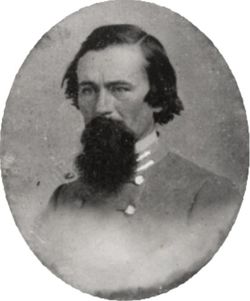
The center of Lee’s arc, Major General Harry Heth’s division of Lt. General A.P. Hill’s Corp, arrives in Cashtown, PA, on the 29th of June. It is rumored that there is a warehouse containing 2,000 pairs of shoes in the crossroads town of Gettysburg, about 8 miles East of Cashtown. A large number of Harry Heth’s soldiers are barefoot. He directs Brigadier General James J. Pettigrew to take his 1,800 man brigade and a train of supply wagons to get the shoes from the Gettysburg warehouse. Believing that there are only local militia troops in the region, Heth still cautions Pettigrew to not bring on an engagement should he encounter any resistance. Pettigrew sets off on the morning of June 30th to collect the footwear supposedly ripe for the picking in Gettysburg.

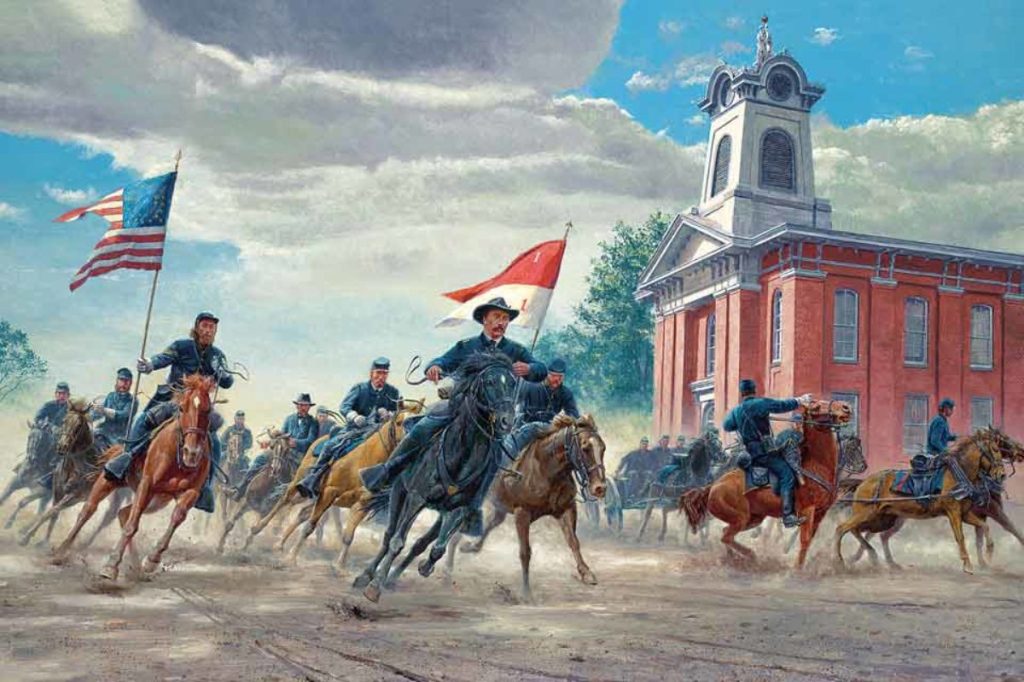
Brigadier General John Buford leads his Cavalry Division into Gettysburg on June 30, 1863.

At 11:00 AM on June 30th the lead element of the Union Army of the Potomac, 2,900 troopers of Brigadier General John Buford’s division of cavalry, noisily clatters into the town of Gettysburg. Buford finds the townspeople people to be in a state of heightened anxiety. The town elders inform him that Rebel infantry has been reported at Cashtown to the west, and that scouting parties were seen observing the town. Buford orders his troopers to fan out from the northwest to the southwest of town to seek out the Rebel troops.

As Pettigrew’s Brigade approaches Gettysburg, his scouts come rushing back to tell him that the town is crawling with Yankees. Pettigrew trots out in advance of his command and clearly sees the Yankee cavalry – Buford’s troopers – confidently and aggressively probing the woods and ridges on the outskirts of Gettysburg. Under orders not to bring on an engagement, Pettigrew turns his column to march back to Heth at Cashtown. According to historian Bruce Catton, John Buford watched Pettigrew approach, halt, then reverse course. Catton wrote, and I paraphrase, that as the last of the Confederate troops began to march out of view, a Rebel officer (perhaps Pettigrew) was seen to remove his hat, raise it high above his head and make a sweeping, theatrical bow to the Yankees watching. I have not read this anywhere else (“when the legend becomes fact, print the legend”).

Upon returning to Cashtown, Pettigrew informs Heth and his staff that Gettysburg appears to be under the control of the cavalry of the Army of the Potomac. Heth is incredulous and neither he, nor his staff take much stock in Pettigrew’s assessment. The Army of the Potomac is thought to still be in Maryland or even Virginia. And, you see, James Pettigrew is not a professional soldier, he did not attend West Point. Pettigrew, who enrolled in the University of North Carolina at the age of 15, is a truly brilliant man and takes affront. He pushes back stating he knows the difference between militia and well trained soldiers. The confidence, discipline and aggressive behavior of these Yankee cavalry troopers was sure not indicative of part-timers. Heth is still skeptical. He asks his commanding officer, A.P. Hill, if he would have any issues if he took his entire division to Gettysburg the next morning, July 1st, to obtain the shoes. Hill replies “None at all”. The rest is history.

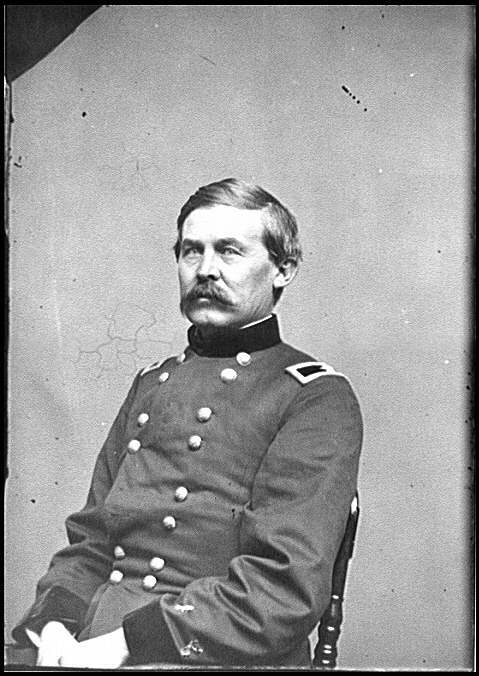
Brigadier General John Buford: Buford’s Cavalry Division, Pleasanton’s Cavalry Corp, Army of the Potomac. (And one of my heroes of the Civil War).

Sources: Edwin Coddington: “The Gettysburg Campaign”, Bruce Catton: “Glory Road”, Douglas Southall Freeman: “Lee’s Lieutenants”, Harry Pfanz: “Gettysburg: The First Day”, Stephen Sears: “Gettysburg”, others to numerous to mention as well as special Gettysburg issues of “Blue & Gray Magazine” and “Civil War Times Illustrated”.

What Was I Thinking…..

It has been almost a month since I had written anything for the Chatham Writers Group or the Chatham Memoir group. A pesky thing called “work” kind of got in the way. This week I took pen in hand and got back to it. The prompt was related to errors, mistakes, mis-steps we have made in our life, what we learned from them, etc. The following is a true story of a job I had in when we lived in Western Michigan, the biggest career error I ever made, but some good did come of it.

What Was I Thinking

It is 4:45 AM on a winter’s morning.  I am pulling out of my driveway in Grand Haven, Michigan to make the 15 minute drive to my place of employment in Muskegon.  It is dark as pitch.  Winters in western Michigan seem to always be dark.  It is dark when I get up for work, it is dark when I come home from work.  My office has no windows, I never know if it is light or dark outside.  The industrial lighting inside the building is an artificial sunlight, it burns at the same intensity 24/7/365 – no clouds ever obscure the artificial sun.  The effect makes me feel as though it is dark all of the time.  I arrive at work at 5:00 AM and enter the building, squinting after the transition from outside dark to inside halogen sun.  My night shift supervisor, Jim, sees me enter the building and begins shaking his head. “What’s up”?, I ask.

Jim grumbles about so & so not getting an order together for the morning shipment.  I say “you are his supervisor, aren’t you supposed to be the one that ensures he gets the shipment ready?  What did you do all night”?  Jim slinks away like a possum caught in the outermost edge of your headlight beam.

I arrive at work early each day so I can get some work done before my boss comes in.  My boss loves meetings, we have several a day, that consume anywhere from 2 to 6 hours, depending on what mood he is in.  His expectation is that the hours you spend in a meeting don’t count towards your work day, you have to put in your regular work day when the meetings are done.  At 5:10 AM my phone rings.  It is my boss.  “I need to see you now”, he says.  I ask “Where? At your house”?.  “No” is his terse reply. “I am in my office. I heard you come in early, so that means we can meet early, I need to talk to you about something”.  “Be right there”, I reply.  

I enter my bosses office, he is holding a Newport cigarette in his right hand. In his left hand is a coffee mug that says “World’s Best Dad”.  He waves his cigarette at a chair, motioning me to sit down.   He farts.  A short, sharp report.  He says “Sorry, that was not meant for you”.  I ask “Is that supposed to make me feel better”?  He calls me a wise ass.  He starts to tell me what the meeting is about.  Apparently an order to one of our top customers is going to be late, so my boss has developed a story that he wants me to tell the customer.  Instead of just saying that a production issue has caused the delay, he wants me to tell the customer that the truck driver assigned to pick up the load was drunk, we refused to load his truck, we are trying to round up another driver.  His order will most likely not arrive today.  I blink and stare at my boss, incredulous.  I then start to laugh thinking it is a joke.  The look on my boss’s face clues me in to the fact that it is not a joke he is serious.  I tell him I will do no such thing.   My boss leaps up out of his seat and back kicks it to the wall.  The Worlds Greatest Dad’s coffee sloshes out onto the papers covering his desk.  He jabs his cigarette at me and says “Right now you big ape, you and me behind the building”.  If there was a meter capable of measuring levels of astonishment, I believe that I probably would have caused it to break, I was that astonished.  “Are you challenging me to a fist fight?”, I asked.  “Right now you big bastard”, growls my boss.  I laugh, a really hearty laugh, and say “no way, I would probably fuck you up pretty badly”.  I turn and leave his office to return to mine.  I look at my watch, it is 5:40 AM.  The sun has not yet risen and I have been farted at and challenged to a fistfight. By my boss.  Walking back to my office I reflect that, career-wise, accepting this position was probably the worst decision I have ever made.  Surprisingly the rest of the work day passes quickly and is actually a good day, given the way it started, but my boss avoided me the rest of the day.  I leave work, it is snowing lightly.  There is a faint gray light of the sun setting on the other side of Lake Michigan.  The colors of winter in western Michigan seem to be white, gray and black.

That evening, dinner is over, my wife and I are relaxing in the family room, our sons doing their homework.  The phone rings.  Our youngest son, Jeremy, answers it.  Jeremy walks from the kitchen and in a low, gravelly voice says, “Dad, it’s Jim from the shop”.  Both of our sons have managed to mimic Jim, the night supervisor’s voice, quite well.  I mean, he calls me almost every night, so it was an easy task to accomplish.  I pleasantly say “Good evening Jim, what’s up?”.  Jim replies “I caught Carnot and Heather having sex in the warehouse, what should I do?”  The astonishment gage flies off the wall.  “Well, you have to send them both home immediately Jim.  We will handle it from there in the morning”.  Jim says “What about the Union?  These two will grieve it and there will be a shit storm”.  “Send them home, now.  We will handle it in the morning”.  The conversation with Jim reinforces my feeling that I made a bad choice. I go to bed that night thinking that the first bit of business to be performed the next day is to update my resume.

Ernie Stricsek

Chatham Writers Group

6/14/21