Brawner’s Farm – August 28, 1862

Brawner’s Farm, Bull Run National Military Park, Manassas, Virginia

The Ridge Top

A solitary figure on horseback emerges from the woods, turns to his right and begins to slowly ride along the line of trees towards a white farmhouse. His butternut Gray uniform is shabby and his equally shabby cap is pulled low, making his face appear as though it is all beard. In the shadow that the bill of his cap casts over his face are two deep blue pools of light, his eyes, which gaze with great intensity at the long column of blue clad soldiers trudging slowly along the distan Warrenton Turnpike. The blue column has gaps in it, indicating that the men in it are tired of marching in the hot, afternoon sun. The rider reaches the farmhouse, turns his horse around and retraces his route, this time at a trot. The rider enters the woods at the same point he exited earlier. A circle of men, also dressed in butternut Gray, abruptly stop their animated conversation and turn to watch the approaching rider. The rider, Major General Thomas Jonathan “Stonewall” Jackson reigns up in front of the group of men and says “Gentlemen, you may lead your men forward”. The group of men run and leap on their mounts, heading off in different directions to their commands. Jackson can hear them shouting to their men to form up and prepare to attack, the 20,000 Confederate soldiers who had been waiting in the woods unstack their rifles and begin to organize in lines of battle. Jackson turns his horse and, followed this time by his staff, trots back to the edge of the woods to watch the progress of the attack.

The Warrenton Pike

Riding at the head of his brigade on the Warrenton Pike, Union Brigadier General John Gibbon is somewhat anxious. His division commander, General Rufus King, has suffered an epileptic seizure, is incapacitated and riding in an ambulance, division command has been passed to General John Hatch. The division is relatively inexperienced and gaps have developed between the brigades. Gibbon is nervous that if the marching column were attacked, it would be time consuming to get the individual brigades arranged so they could provide support to each other. Gibbon’s brigade is rather unique in that all 4 regiments are from the mid-west – the 2nd, 6th & 7th Wisconsin and the 19th Indiana. What makes them stand out further are their uniforms; the black felt, regulation full dress uniform high crowned hats, a blue frock coat reaching to mid-thigh, and tan leather gaiters covering their boots. The high crowned hats result in Gibbon’s brigade being named “The Black Hat Brigade”. Their tight formation and crisp marching cadence indicate, that despite being untested in battle, they are a well trained and highly disciplined unit. Gibbon’s anxiety is heightened when he spots a a single Confederate riding slowly along the ridge off to the left of the marching Union column. He sees the rider disappear into the woods and looks at the map in his hand to try and gauge how much farther the division has to march to their goal of Centerville, Virginia. Gibbon looks up from his map and turns to his left to gaze back at the ridge where the solitary rider had been. He sees more riders now on the ridge. “Probably Reb Cavalry watching us” he thinks. He rides a short distance into the field on his left to get a better look. He observes a flash of light and on the ridge top and realizes what he sees is the reflection of the late afternoon sun of the brass barrel of an artillery piece! He turns to warn his brigade but he is too late, he hears the far off bark of the cannon, the scream of the shell as it draws near, then the explosion of the shell just on the other side of his column.

Brigadier General John Gibbon. His brigade of mid-westerners were initially called The Black Hat Brigade for the tall, dress uniform hat they wore. Also known as the “Hardee Hat”, named after it’s creator, General William Hardee.
Unique uniform of the Black Hat Brigade

The Battle Is Joined

After the initial shot, two Confederate artillery batteries (8 guns total) now open up on the Union column strung out on the Warrenton Pike. Men, horses and wagons begin to scatter about to escape the falling shells. The brigade of New York troops trailing the Black Hats break and run away. They will not be part of this fight. Gibbon orders the artillery battery he used to command, Battery B, 4th U.S. Artillery, to unlimber and return the Rebel fire. Gibbon then begins to move his brigade towards some woods towards his left front to gain some protection from the Rebel artillery and to try to flank them.

The fire from the 4th U.S. Artillery proves to be accurate and effective that it forces the Rebel artillery to withdraw from the field. Unaware that there are 20,000 Rebel soldiers in the woods to his front, thinking he his being harassed by only artillery, Gibbon sends the 2nd Wisconsin infantry regiment to fully drive them from the field. As the 2nd Wisconsin emerges from their strip of wood, an entire brigade of Confederate infantry emerges from the woods to their front, it is Jackson’s former command – The Stonewall Brigade. The legendary, seasoned veterans now number only 800 men, but they still outnumber the 2nd Wisconsin by a 2 – 1 margin. Both lines approach each other, the Black Hats undeterred by the superior numbers of Rebels. At 100 yards, the 2nd Wisconsin unleashes a volley that staggers and halts the Stonewall Brigade. It is 6:00 PM.

Over the next two hours Stonewall Jackson will pour more and more soldiers into the battle, extending his line to try and overlap the Union left. John Gibbon is able to anticipate Jackson’s moves and has sent the remaining Black Hat regiments into line, extending his left to avoid being flanked. This frustrates Jackson. The Union and Confederate lines close within less than 50 yards of each other. The untried Black Hat regiments fire volley after volley into the Rebels, and vice versa. Men fall like mowed hay. Gibbon commits his last regiment to this maelstrom and has no more troops to extend his left. The fire from the Black Hats has stymied the seasoned Rebels, but they try to exploit the fact that Gibbon has now committed all of his men. At this critical point, the lead regiments of Union General Abner Doubleday’s Brigade arrive on the field and provide support to Gibbons left. The time is now 8:00 PM, daylight is diminishing to where it is becoming difficult to tell friend from foe. Firing becomes sporadic and eventually ends. The only Yankee and Confederate soldiers moving on the field now are those crawling wounded, or those trying to collect the wounded. The cost has been fearful. Stonewall Jackson and his men were fought to a standstill. Grudgingly they acknowledge the stubborn stand by the Black Hats as causing the fight to end in a draw. From this day forward, the Black Hat Brigade of mid-westerners will be honored with a new name – The Iron Brigade.

Black Hat Brigade and Stonewall Brigade go head to head.

Epilogue

I have wanted to visit the Bull Run battlefield since I was a child. Barb and I went there this weekend. I was fortunate to get a personal tour from a very knowledgeable Park Service Ranger. I was deleighted in our exchange of knowledge. So many things to see, but I desired to visit the Brawner’s Farm portion of the Bull Run National Park. The Iron Brigade of mid-western troops has been one of my favorite Civil War units. I have seen the field where they where almost annihilated, Gettysburg, I wanted to see the field where the legend was created.

I have several books about the Iron Brigade, but Alan Nolan’s “The Iron Brigade” provides the best description of the unit at Brawner’s Farm. From the Confederate side, John Casler’s “Four Years In The Stonewall Brigade” is an outstanding unit history. John J. Hennessy provides an overall analysis of the 2nd Battlemof Bull Run, and covers Brawner’s Farm , in his book – “Return to Bull Run: The Campaign and Battle of 2nd Manassas”. I read this excellent book this past summer. Much is owed to my wife, Barb, for indulging my interest in the Civil War and for traipsing over the muddy fields of Bull Run and Brawner’s Farm, dodging rain drops.
The First World Series

The regular 2019 Major League Baseball season has ended and teams are preparing to meet for the Wild Card games and the American and National League Championship Series, with ultimate champions from each league meeting in the World Series. The post season playoff series did not enter the MLB picture until 1969, before then the teams with the most wins in each league met for the World Series. Such was the case on October 1, 1903. On this day, 116 years ago, the National League Champion Pittsburgh Pirates Deacon Phillippe threw the first pitch in World Series history to the first batter in World Series history, outfielder Patsy Dougherty of the American League Champion Boston Americans.

The Pirates had dominated the National League at the dawn of the 20th Century, with 1903 being their 3rd league championship. After its creation in 1901, executives from the American League had been in discussions with executives from the National League about playing a championship series between the two leagues, but nothing concrete had come to pass. A National Commission had been created in 1902 to preside over both leagues, but not much had been done on their part either to facilitate a championship series. During the course of the 1903 season, the Presidents of both leagues became more enthusiastic about a championship series. By August, it appeared that the Pirates and Americans were locks to win their respective league titles and with encouragement from the executive from both leagues, the first World Series came about by agreement between the owners of the Pirates and the Americans. This “VOLUNTARY” arrangement would consist of a best of 9 series, the first 3 games being played in Boston, the next 4 in Allegheny City – the North Shore had not yet been incorporated into the City of Pittsburgh – the last 2 in Boston if needed.

The Boston Americans, who would eventually become the Red Sox, finished with a strong first place standing, 14.5 games ahead of their nearest rival, the Philadelphia A’s, with 91 wins and 47 losses. Players of note were 36 year old pitcher Cy Young and player/manager Jimmy Collins – both would enter the Hall of Fame. The Americans played their home games at The Huntington Avenue Baseball Grounds, on land now occupied by Northeastern University. Going into the World Series, the Americans were a healthy team, boasting a excellent pitching staff – better statistically than the Pirates pitchers – and had an excellent outfield.

The Pirates won their 3rd consecutive National League Championship in 1903, finishing the season with a 91 – 49 record, 6.5 games ahead of the New York Giants. The Pirates also had two future Hall of Fame members on the team, shortstop Honus Wagner and player/manager Fred Clarke. The Pirates pitching staff was not as strong in its two prior championship seasons, but solid hitting and fielding more than covered for the slip in pitching. Pirates played their home games in Exposition Park. The park was located on the north shore of the Allegheny River, across from downtown Pittsburgh, in what was then Allegheny City. The location of the park was on land between the current Heinz Field and PNC Park. Going into Series, the Pirates were limping. Pitcher Sam Leever, a 25 game winner during the season, injured his shoulder skeet shooting! The 3rd starter on the pitching staff, Ed Doheny, was admitted to a psych ward for “episodes of paranoia” eventually being committed to an insane asylum. That left the pitching staff in the hands of 25 game winner Deacon Phillippe and two ham & egg guys with less than 10 wins each. Star shortstop Wagner had a sore wrist and had injured his leg in the last regular season game.

Despite the advantages in pitching, and the lame Pirates team, the Americans were considered to be under dogs going into the series. The Americans beat the odds and won the World Series, 5 games to 3. Deacon Phillippe would pitch in 5 games, winning all 3 of the Pirate victories. Sam Leever was largely ineffective in his two starts. Honus Wagner would hit only .222 for the series. For the Americans, pitching dominated. Cy Young won 2 games and Bill Dineen 3 games. Patsy Dougherty provided power by hitting 2 home runs including the first out of the park home run in World Series history. Early ballparks had immense outfields, so many home runs were inside the park. Out of the park home runs were extremely rare. For winning the first World Series, each player for the Americans received $1182.00, the losing pirates received $1316.25! The Pirates owner kicked in his share of the ticket sales to the Buccos winnings.

There would not be a World Series In 1904. In 1905 the National Commission decided to make the World Series an annual, compulsory event.

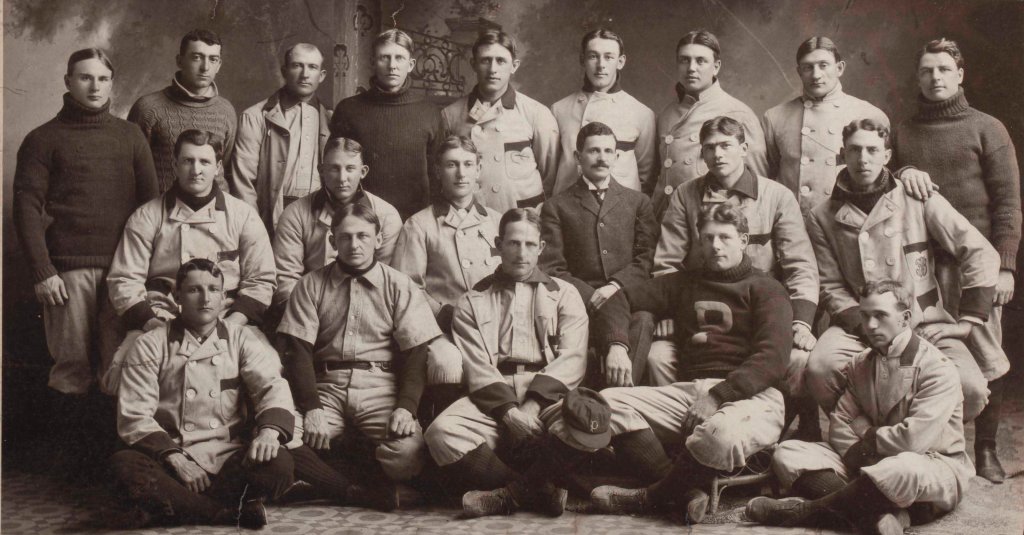
1903 Pittsburgh Pirates – Honus Wagner is in last row, 2nd from right.
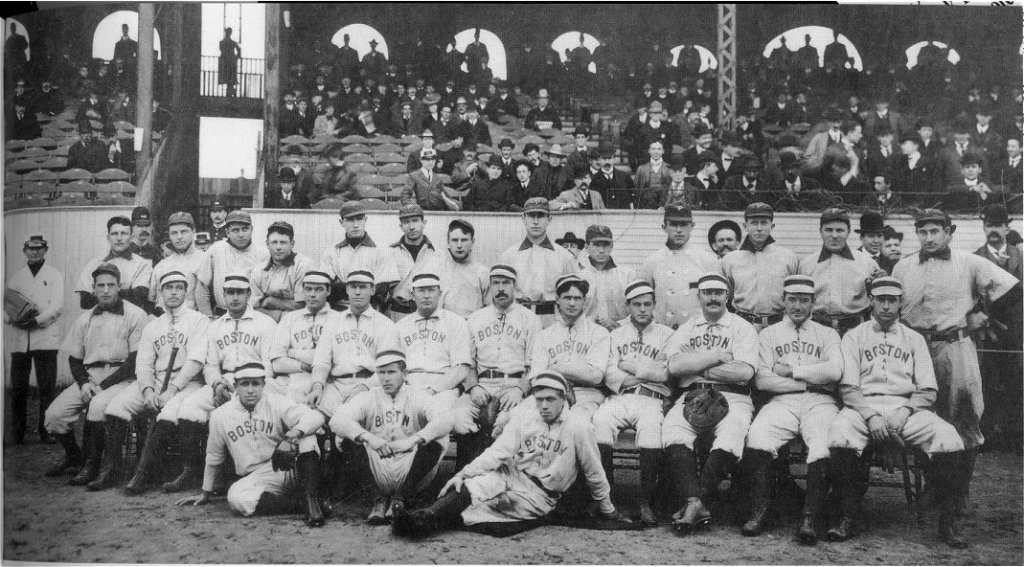
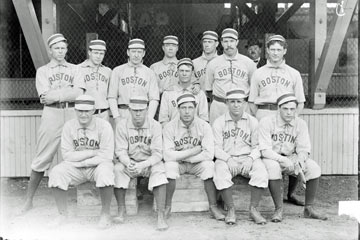
1903 Boston Americans
Photo of both teams at 1903 World Series
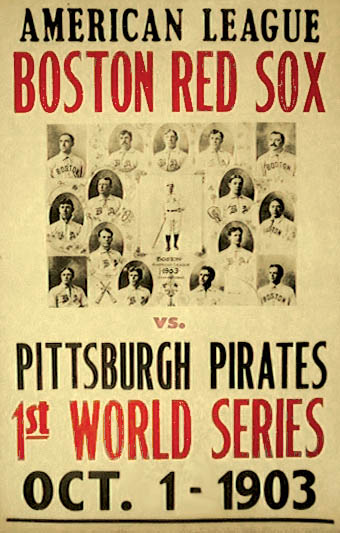
Poster from 1903 World Series
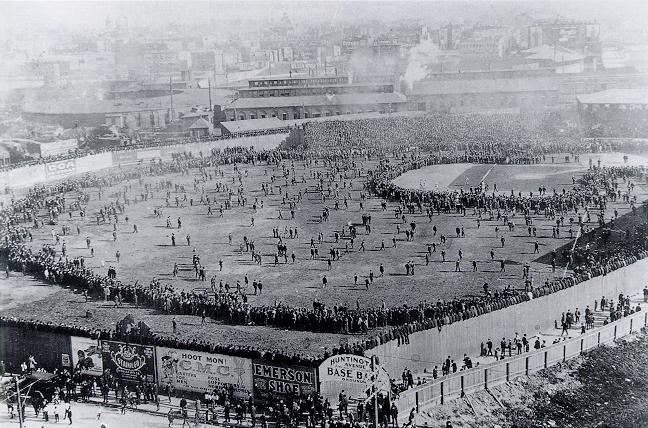
Boston Americans Huntington Avenue Park. Note deep outfield fences and large crowd of onlookers in semi-circle on outfield. The fans stood there during the game. Any ball hit into the crowd was a ground rule triple. The Americans hit 5 ground rule triples in one game.
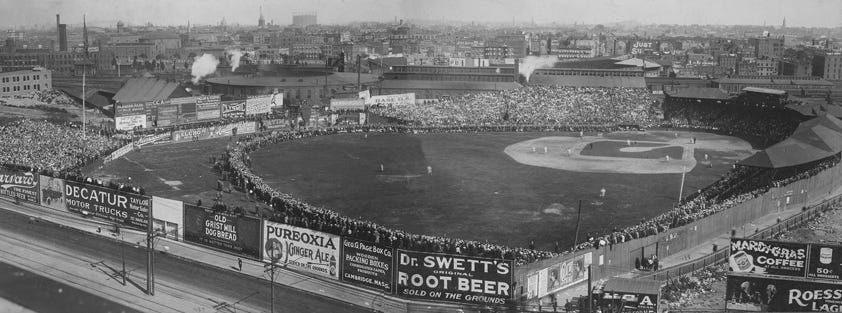
The Pirates Exposition Park on the North Shore. Fans in the outfield were common in early parks.
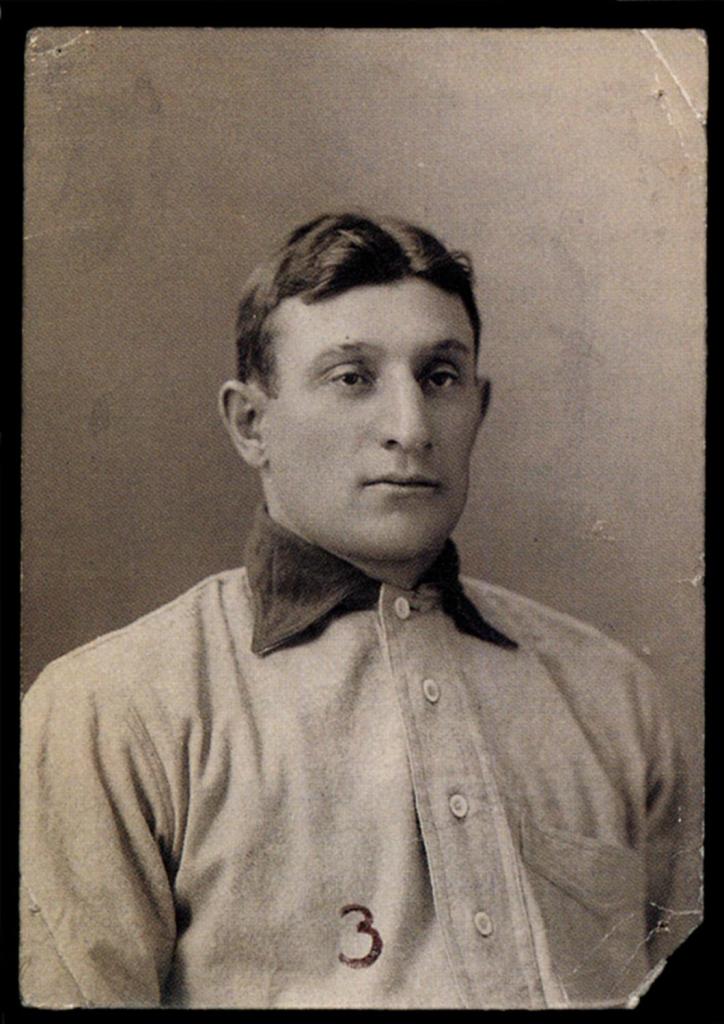
Pirates Hall of Fame member Honus Wagner.
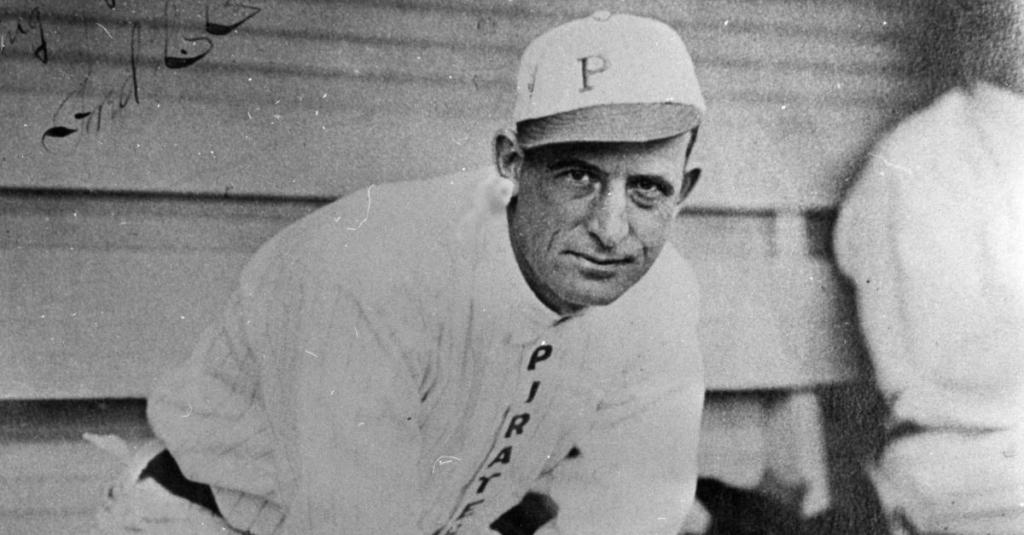
Pirates player/manager and Hall of Famer Fred Clarke
Boston Americans pitcher and Hall of Famer Cy Young
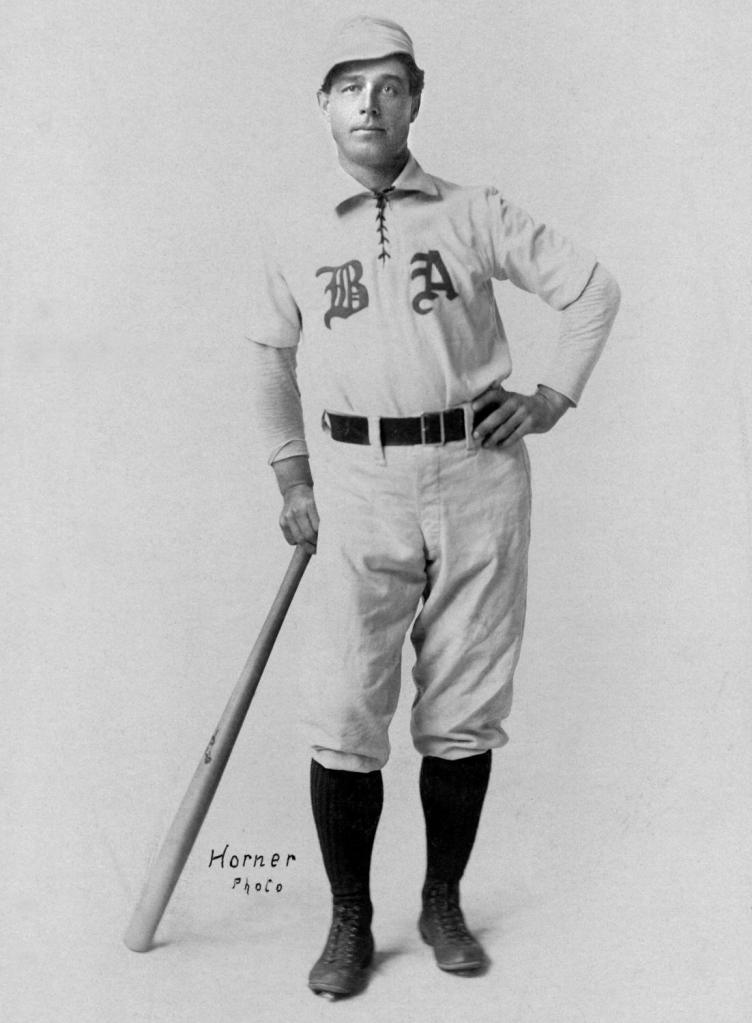
Boston Americans player/manager Jimmy Collins, also Hall of Fame member.
Boston Americans Team Logo
Pittsburgh Pirates team logo
1903 World Series Souvenir Card

Sources: Baseball Almanac, Baseball-Reference.com, The Encyclopedia of Major League Baseball, Boston Red Sox and Pittsburgh Pirates team archives, many books that I have read, too numerous and tedious to mention now.

Hiram Berdan

American inventor Hiram Berdan was born on this day in 1824. A mechanical engineer by profession, Berdan held patents on over 30 inventions. Berdan invented a reaper, a mechanical bakery, an amalgamation machine that separated gold from ore, a repeating rifle, a collapsible boat, a center fire cartridge with a primer design that is still in use today. His inventions made him a very wealthy man. Berdan’s hobby was target shooting and by the 1850’s, he had achieved worldwide renown as an expert marksman.

Inventor & mechanical engineer, Hiram Berdan

Berdan’s Sharpshooters

In 1861 the Civil War would rip the nation apart. The Union debacle at First Bull Run in August of 1861 indicated that the war was going to be a prolonged affair and the Lincoln Administration sent out the call for volunteer units to flock to the Union cause. Berdan’s reputation as an inventor and marksman enabled him to have friends in high places, so he was able to wrangle a face to face meeting with President Lincoln to pitch a unique idea for an elite fighting unit. Berdan wanted to raise a regiment, or two, of skilled marksmen to act as skirmishes or snipers to wreak havoc on their Confederate foes. The idea would be to target Confederate officers and non-com’s (sergeants & corporals) and artilleryman to disrupt operations. Lincoln was intrigued by the proposal and gave his approval.

Berdan got to work immediately to recruit marksmen for his elite units. The recruits had to pass a rigorous marksmanship test of placing 10 shots in a 10 inch circle from 200 yards away. They were permitted to use weapons of their own choosing during the test. Lincoln himself came to witness the testing. By the end of September 1861, Berdan completed the qualification of enough marksmen to create two regiments, officialy known as the 1st & 2nd Regiments United States Sharpshooters, and were formed into a brigade with Hiram Berdan being appointed a Colonel in command of the brigade. Swiss immigrant and Crimean War veteran Casper Trepp was appointed Lt. Colonel and second in command.

The weapon that Berdan wished to outfit his sharpshooters with was the Sharps breechloading rifle. The Sharp’s rifle fired a .52 caliber conical bullet with a linen cartridge. The breechloading feature allowed the marksman to fire 8 rounds per minute, vs. the 3 per minute that a skilled muzzle loader could fire. It was accurate up to 600 yards. Berdan also permitted the marksmen to use their private weapons, of which a number utilized the newly developed long range scope.

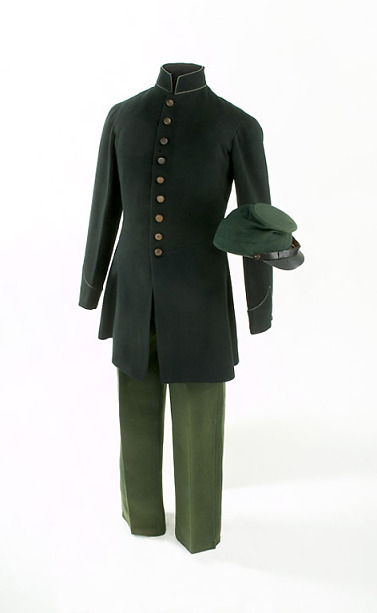
To enhance the uniqueness of this elite unit, Berdan would outfit the Sharpshooters in uniforms that were forest green in color, vs. the standard Union blue. This was most like a suggestion by Casper Trepp who would have knowledge of similar elite marksmen units in European armies were outfitted with forest green uniforms. The green uniforms also did not have any brass buttons, rather they were made of a dark brown leather. All of this was an attempt at some type of camouflage.The Sharpshooters would become famous for their exploits on many battlefields in the Eastern field of operations during the Civil War. One of the legends attributed to the Sharpshooters occurred during the battle of Yorktown during the Peninsula Campaign in 1862. The story is told that the Sharpshooters, by aiming at the embrasures for Confederate artillery pieces and causing dirt to accumulate in the cannon barrels caused them to prematurely explode and rupture the tubes. It is more likely that their skills resulted in a large number of Confederate artillery men becoming casualties.

Although a reputable inventor and engineer, Hiram Berdan’s exploits as a leader were dubious at best. His Civil War exploits are most remembered for the Gettysburg battle where he shouted the command “Advance, firing” to the Sharpshooters, given their type of weapons was something that that could do with ease. Much of the success of the 1st and 2nd U.S. Sharpshooters can be attributed to Casper Trepp. Sadly he was killed in early 1864. However, the Sharpshooters would pass into history being known as Berdan’s Sharpshooters, one of the legendary Union organizations of the Civil War.

Colonel Hiram Berdan, commander Berdan’s Sharpshooters.
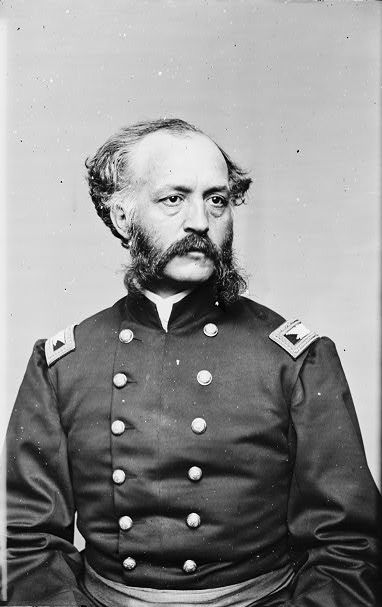
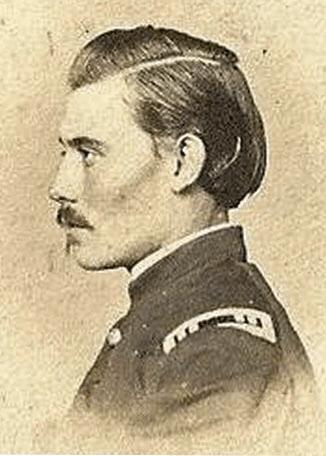
Lt. Colonel Casper Trepp (photo taken when he was Captain, prior to promotion).
Uniform of 1st & 2nd United States Sharpshooters
Uniform, sharpshooter. From Smithsonian Institution collection.
Sharp’s Breechloading Rifle, preferred weapon of 1st & 2nd U.S. Sharpshooters
One of the privately owned Sharpshooter rifles with early telescopic sight.
From my library.

Sources: Coddington, Edwin: “The Gettysburg Campaign”, Catton, Bruce “The Army of the Potomac Trilogy: Mr. Lincoln’s Army, Glory Road, A Stillness At Appomattox”, Stevens, Captain C.A. (Historian 1st & 2nd U.S. Sharpshooters): “Berdan’s Sharpshooters in the Army of the Potomac”

Chatham Tornado 7/23/19

Somehow, and we are at a loss as to how, Alabama weather was packed away with our belongings when we moved to Massachusetts back in January. Since the official start of summer, the weather has been more “Alabama-Lite” than typical Cape Cod summer.

I say Alabama-Lite because we have never encountered the combination of heat and humidity that was common to the Huntsville area. True, for two weeks temperatures on the Cape were in the upper 80’s to low 90’s, but the breezes from Nantucket Sound, the Atlantic coast and Cape Cod Bay kept the temperatures lower than they were further inland. The humidity was high also, again almost like Alabama where the simple act of standing outside and talking to someone left you drenched in sweat as though you had just played 5 sets at Wimbledon.

The final act in the attempt to emulate Alabama weather came in the form of a tornado, which not uncommon for Alabama, is extremely rare for Cape Cod. It has been a week now since the tornado danced along the Nantucket Sound coast, wreaking havoc and damage from Yarmouth to Chatham. There were water spouts spotted just off shore from Hyannis, then landfall in Yarmouth, back out to sea where water spouts were seen off West Dennis and Dennisport, back on land at Harwichport, than back out to sea just off Chatham, finally tracking out into the Atlantic. Fortunately there were no fatalities. There were a few injuries, sadly from elderly Cape residents falling as they scrambled to get into their basements and tripped on stairs. There was some property damage, but not extensive, no buildings or homes were obliterated.

The storm did come quickly. I saw one warning posted on Facebook by a friend so we turned on the TV to see what that was all about. We were shocked to see that the tornado was approaching Chatham and we had about 10 minutes to get to safety. At about the same time my brother-in-law, who lives about 2 miles from us, texted that he and his wife were going into their basement and we should to. We were in our basement by 12:20 PM, within a minute we heard the howling of the wind through the trees in our yard. As quickly as the storm came, it passed through just as quickly. We were very fortunate, just a few branches down in the yard and we were without power for 30 hours.

Repair crews swarmed over the Cape during the next few days and by last Friday, power was restored to all consumers. I am certain that, given Cape Cod is such a tourist destination and it is the height of the summer tourist season, that the lost revenue and tax dollars to Commonwealth of Massachusetts had something to do with quick response. But the area affected was quite small, so resources could be gathered and concentrated for recovery actions.

Extent of storm damage in our yard, very lucky!
High winds flipped plane upside down at Chatham Airport. Very strange, 12 other planes nearby did not suffer same fate.
Trees & branches down in downtown Chatham park, 3 hours after storm.
What a difference a day makes. Same spot 24 hours later!
Downtown Chatham sidewalk, 3 hours after storm.
24 hours later, same view as above.
Tree on roof top, side street downtown Chatham.
Entrepreneurial spirit in downtown Chatham.

Deadly Rivals

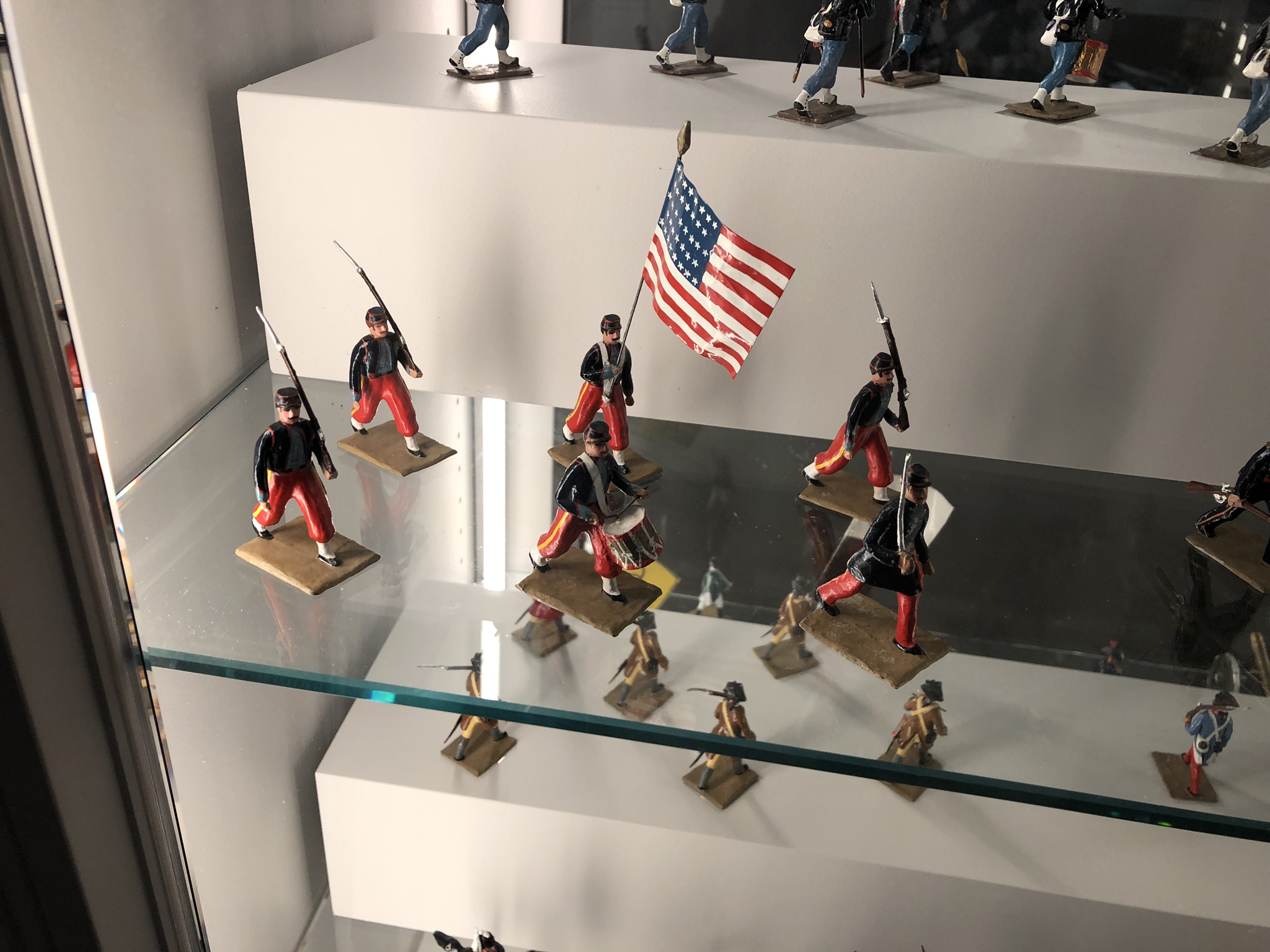
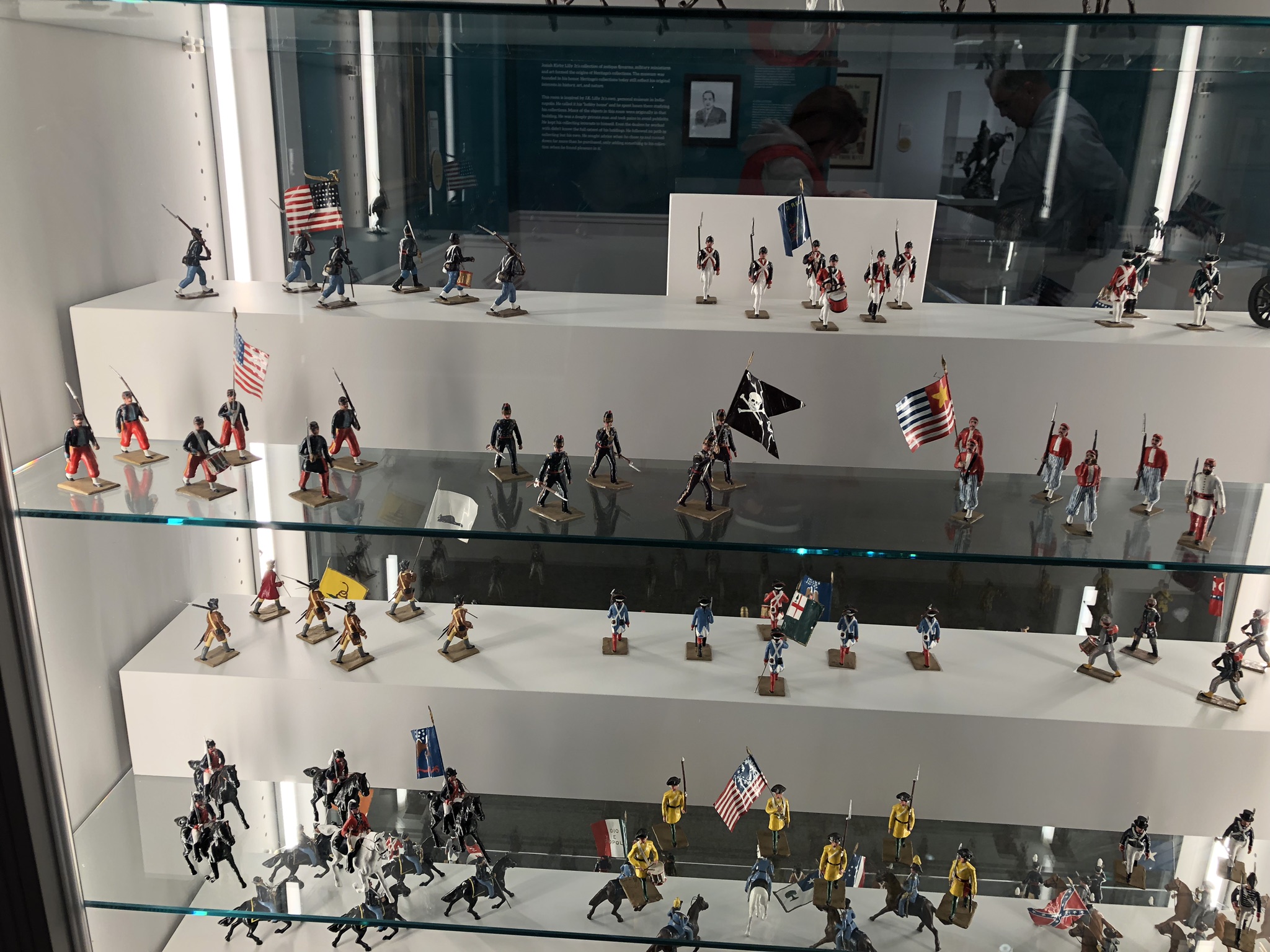
One of the Special Exhibits on display at The Heritage Museums & Gardens is a collection of intricately detailed military miniatures representing historical military organizations from the Revolutionary War through the Spanish-American War. On the same shelf in one of the display cases are two Civil War regiments that would become well known for their colorful uniforms and their bravery. The two regiments are the 14th Brooklyn Chasseurs (nickname “Red Legged Devils” – Union) and Wheat’s Louisiana Tiger Battalion (or Wheat’s Tigers – Confederate).  The 14th Brooklyn and Wheat’s Tigers would be “introduced” to each other at the first major land battle of the Civil War, First Bull Run, fought 158 years ago on 21 July 1861.

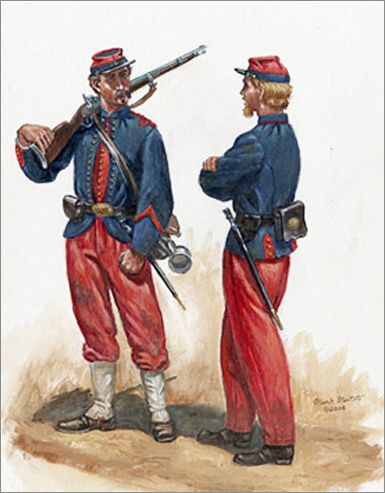
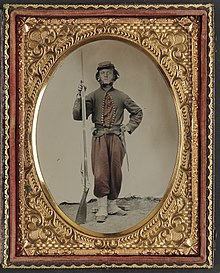
As their name indicates, the 14th Brooklyn was recruited mainly from the borough of Brooklyn in New York City and its ranks consisted of members of high standing in the Brooklyn community, largely businessmen, tradesmen and firemen. For a uniform the regiment adopted the “Zouave” type uniform worn by the French troops in Algeria at the time. The Zouave style was very popular with several Union and Confederate regiments early in the Civil War. The 14th Brooklyn Zouave style consisted of a navy blue jacket with red trim and bright red pantaloons. Tan leather gaiters covered covered their boots and gathered the cuffs of their pants. For head gear either a bright red cap with blue trim or a blue cap with red trim. Unlike other Zouave regiments, who switched to the standard blue jacket and sky blue pants worn by most Union regiments, the 14th Brooklyn maintained their colorful outfits for the entire conflict.

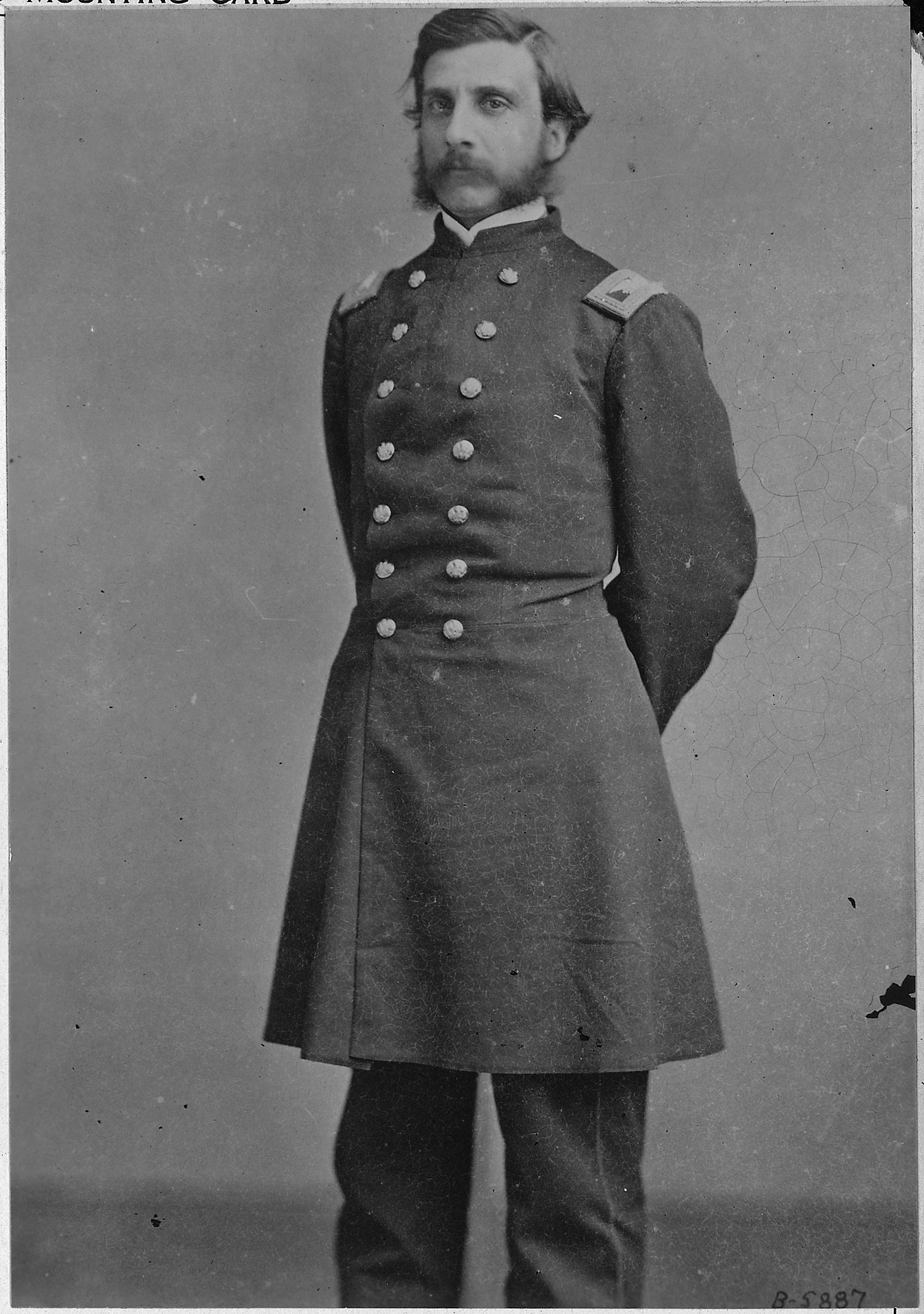
The 14th Brooklyn departed New York City for Washington D.C. on 18 May 1861 under the command of Colonel Alfred M. Wood.

Uniform of the 14th Brooklyn
Carte de Visite of member of 14th Brooklyn
Colonel Alfred M. Wood, first commander of the 14th Brooklyn

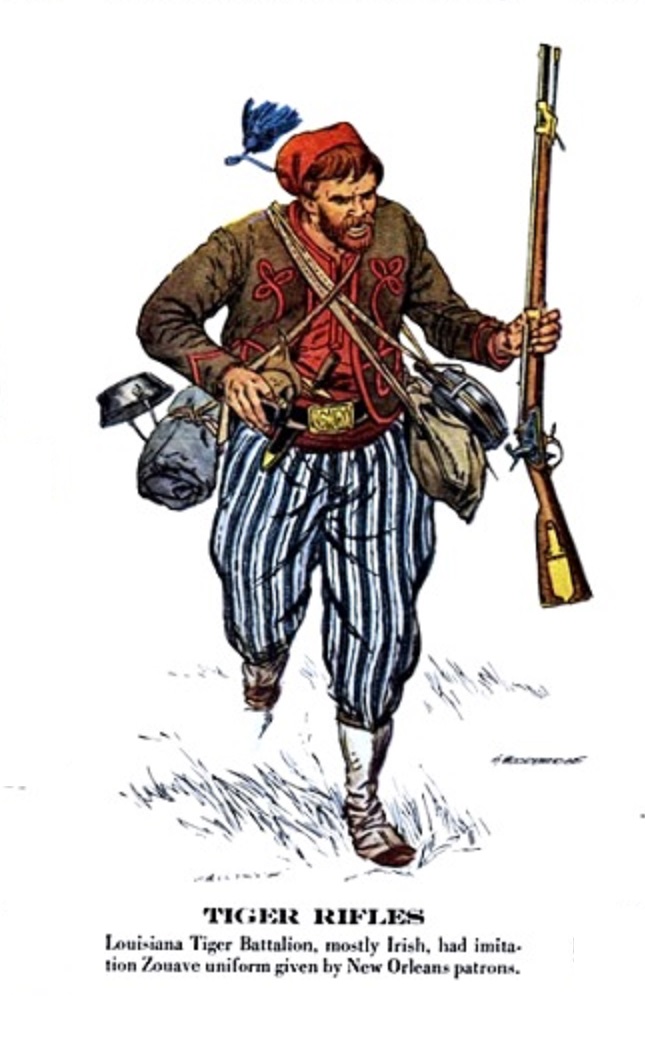
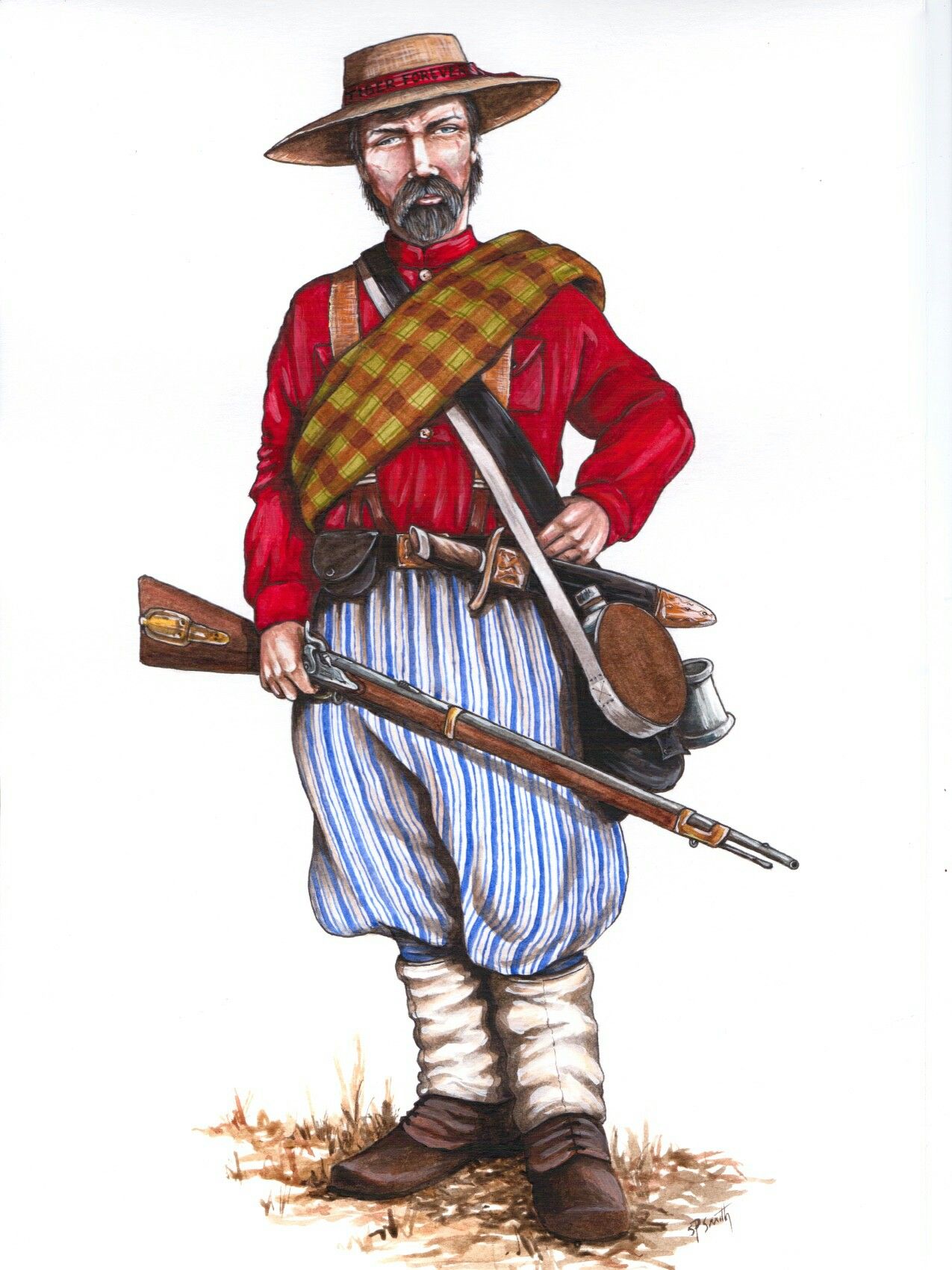
The background of the men who made up Wheat’s Tiger Battalion was the extreme polar opposite of that of the 14th Brooklyn. The Battalion took their name from their commander, Major Chatham Roberdeau Wheat, who went by “Rob” Wheat. Organized in New Orleans, the men of the Battalion were predominantly Irish immigrants recruited from the docks, wharves and warehouses lining the Mississippi waterfront. Such a band of scamps, scalawags, spalpeens, rascals and rapscallions had never been organized under one flag before. They fought with each other, and with anyone who ventured into their camps. Other Confederate regiments were terrified of them. The only person who was able to control them was Rob Wheat. Wheat was, for the time, a behemoth standing 6’4” and weighing 250 pounds. A New Orleans lawyer, Wheat spent more time practicing military arts than law. Wheat was a “filibuster”, or soldier of fortune. By the time the Civil War started he had been a General in two foreign armies and a Colonel in a 3rd. His “Tigers” were terrified of him because of his immense size and his ferocity. He kept his men in line by maintaining strict discipline, and threatening to dismember them with his sword if they got out of hand. It is probably a good thing that Wheat’s Tigers were so feared, nobody was going to make fun of them because of their uniforms. A Zouave style uniform also, the companies of the Tiger Battalion wore a different color jacket, either blue, brown or red. Head gear varied too, but they were issued red fez with a red tassel. The one uniform article that all the men of the Battalion wore were pantaloons with vertical white and blue stripes. Being the band of cut throats that they were, the Tigers all carried Bowie knives or short swords that were not of military issue. Wheat and his Tigers departed New Orleans for far away Manassas Junction, VA, on 13 June 1861.

Two variations of the uniforms worn by Wheat’s Tigers
Major Chatham Roberdeau “Rob” Wheat, Tiger Battalion Commander

On 21 July 1861, 158 years ago, the 14th Brooklyn and Wheat’s Tigers would come face to face on the battlefield at Manassas, Virginia, known as the First Battle of Bull Run. What initially began as a day of promise for the Union Army turned into confusion and indecision. Confusion because rookie troops were expected to perform complicated maneuvers under fire, compounded by the fact that there were Confederate regiments clothed in blue and Union regiments wearing gray.

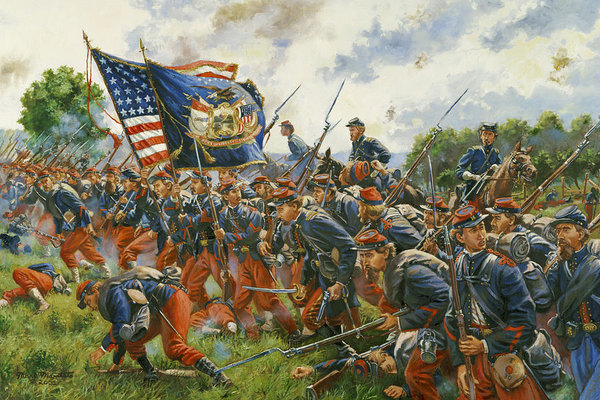
A case of mistaken identity led to the confrontation between the 14th Brooklyn and Wheat’s Tigers. Two excellent Union artillery batteries (United States regulars led by Captains Griffin and Ricketts) were wreaking havoc on the Confederates. Rebel troops were ordered by General Stonewall Jackson to charge and capture the battery cannons. As the Rebels emerged from the smoke and woods, Griffin & Ricketts stopped firing because the troops were wearing blue. A gust of wind unfurled the flags of the approaching troops to reveal their true identity. It was too late for Griffin & Ricketts to fire on the fast approaching troops. The Rebels unleashed a volley that wounded both Ricketts and Griffin, as well as killing and wounding several artillery men and horses. The Rebels were among the cannons and the surviving Yankees fled. A counterattack by the New York Fire Zouaves, 14th Brooklyn and the 1st Minnesota Union regiments recaptured the guns. Fighting swirled around the guns as both armies attacked and counter attacked the position. The 14th Brooklyn would make four attacks to try and re-take the cannons. As they made their 4th attack Stonewall Jackson tried to steady his troops and said “look out boys, here come those red legged devils again”. From then until the end of the Civil War both Union and Confederate armies would refer to the 14th Brooklyn as “The Red Legged Devils”.
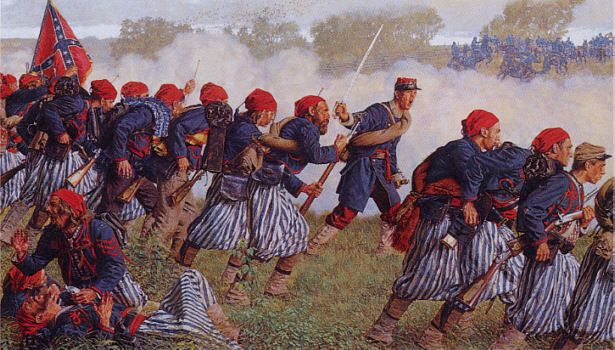
Confederate General Stonewall Jackson would order another counter-attack to try and re-capture Griffin’s & Ricketts’ batteries. In this attack he sent Rob Wheat and the Louisiana Tigers. The Tigers ran right into the 14th Brooklyn and a wild melee occurred. The fighting became hand to hand, clubbed muskets, bayonets and the Tigers putting their Bowie knives to use. In the attack, Colonel Wood and Rob Wheat would fall wounded, Wood severely and Wheat’s wound was thought to be fatal. The 14th Brooklyn was able to cause Wheat’s Tigers to retreat. However, a strong Confederate counter-attack from another location, this time with enough troops that outnumbered the 14th Brooklyn and their supporting 11th New York and 1st Minnesota. The Union regiments slowly withdrew, firing as they went, maintaining their cool as they did so. This was significant because most of the other Union regiments began to flee the battlefield.

After the maelstrom of battle around the batteries of Ricketts and Griffin, and because the 14th Brooklyn got the upper hand of Wheat’s Tigers, the two units would become bitter, deadly rivals and would encounter each other for the next 4 years, on many battlefields. The wounds suffered by Colonel Alfred Wood of the 14th Brooklyn were so severe that he was discharged a few months after the battle because he could no longer perform his duties. The bullet that felled Rob Wheat traveled through his body, through both lungs. In 1861 medical practice, the wound was considered fatal. Doctors told Rob Wheat that there was no history of anyone ever surviving such a wound. Rob Wheat said “Well, put my name down for the first to survive then”. Which he did. He would not be able to survive wounds suffered the following May during the 7 Days battles near Richmond.

After Colonel Wood’s resignation, the second in command of the 14th Brooklyn, Lt. Colonel Edward Fowler would take over the regiment and command it until the regiment completed its 3 year enlistment terms in 1864. After the death of Rob Wheat in 1862, there was no commander who could control the Tigers. The battalion was broken up and distributed among other regiments in Confederate General Harry Hays Louisiana Brigade. The whole Brigade became known as “The Louisiana Tiger Brigade”.

In the display of the military miniatures at the Heritage Museum and Gardens, a Revolutionary War militia unit from South Carolina was put between the Red Legged Devils and Wheat’s Tigers. If I were setting up the display, I would probably have done that. Had they been placed next to each other, I believe that within short order, the toy soldiers of the 14th Brooklyn and Wheat’s Tigers would be at each others throats.

14th Brooklyn in action.
14th Brooklyn and 11th New York (Fire Zouaves) re-taking guns of Griffin & Ricketts batteries.
Wheat’s Tigers counter-attack 14th Brooklyn to try and capture Griffin’s & Ricketts’ guns.
14th Brooklyn Chaussuers military miniatures at Heritage Museum & Gardens
Wheat’s Tigers military miniatures at Heritage Museum & Gardens
Top glass shelf with Red Legged Devils & Wheat’s Tigers separated by militia unit with pirate flag.

Sources: William C. Davis: “Battle At Bull Run: The First Major Campaign of the Civil War” & Time Life Books Volume II: “First Blood, Fort Sumter to Bull Run”, Shelby Foote: “The Civil War: A Narrative. Volume I, Fort Sumter to Perryville”, Harry W. Pfanz: “Gettysburg: The First Day” (for more info on 14th Brooklyn), Clifford Downey: “The 7 Days: The Emergence of Robert E. Lee and the Dawn of a Legend” (for more info on Rob Wheat & Wheat’s Tiger Battalion), Blue & Gray Magazine issues related to First Battle of Bull Run, Civil War Times Illustrated issues relating to First Battle of Bull Run, Mark Boatner: “The Civil War Encyclopedia”.

I did not include pages, chapters, paragraphs in my references, these are the books that I remember reading and learning about the subject material.

An April Fool

I joined a creative writing group at the Eldredge Library in Chatham when we moved here in February. This is one of the prompts we had to write about:

An April Fool

Wow! What a loaded prompt!  Have I ever acted like a fool myself?  What are SOME foolish things I may have done?  In only a thousand words no less?  I could end this story right here and right now by saying just four words: I AM A GUY!  I rest my case.

The Official Records of the War of the Rebellion consumes 128 volumes.  The Civil War lasted four years, on average, 32 volumes for each year of the war.  If I were to compile a similar catalog of my dubious achievements, taking a mulligan for my pre-teen years, beginning when I turned 13, and devoting the average 32 volumes per year, I would be at volume 1,664 now.  I am expecting to be honored with a Life Time Achievement Award in the near future.

Starting with the letter “A”, I will relate an incident that occurred on an airplane on April 1, 2000.  I was in Pittsburgh, awaiting a commuter flight that would take me to Knoxville, Tennessee.  The plane was one of those regional turbo prop jobs that sat about 70 people.  I had flown it many times before and it was a nice short flight.  I boarded the plane and took my window seat, pulled a folder of notes from my briefcase, stowed it under the seat and began to watch as others boarded the flight.  A woman working her way down the aisle caught my eye because she looked almost ill, her complexion the color of oatmeal.  She took the aisle seat next to me, I said hello and she nodded briefly.  My thoughts were that I am going to be sick before I return from this trip.  I surreptitiously looked to see if there were barf bags in the seat backs, there were.  But, my word, when did they get that small?  I hoped for the best and began looking at my notes for the meetings I would be involved in. 

The 30 or so passengers on the flight were all soon seated, pre-flight announcements made and the pilots began to start the engines.  The right engine sputtered to life and then the left engine.  After a very short time, the pilot shut off the left engine, which was odd.  When the prop stopped spinning, the pilot started the engine again, stopping it again after a short time.  Some men came to look at the engine.  The pilot started a 3rd time, then stopped the engine yet again.  The ashen faced woman sitting next to me asked if I could see what was happening.  Being April Fools Day, I thought I would answer with a cute joke: “There is a guy banging on the engine with a broom handle, after he hits it about 3 or 4 times, he yells to the pilot “Try it now””.  The ashen face turned to a brilliant white, as bright as sunlight on a glacier.  I had to squint because of the brightness.  In the middle of this glacier where two deep, blue pools like lakes, but they kept getting darker until they were almost violet.  Out of these violet lakes, a cloud of daggers began to fly towards my face.  Soon a crevasse opened in the middle of this glacier.  Sounds began to pour from the crevasse.  Speaking in a very clipped manner, as though there were periods after each word, the woman said: “This.is.my.first.flight.ever.I.am.terrified.If.that.is.supposed.to.be.a.joke.it.is.not.funny.and.has.only.added.to.my.anxiety.”  I began to apologize, the glacier was replaced with a forest of soft gray and silver curls, the apology being addressed to the back of the poor woman’s head.

We were soon informed that we would have to leave the plane.  We were going to be placed on another plane within the half hour, when the boarding began we would be able to return to our original assigned seats.  Except for me.  Back in the gate area, I was asked to report to the gate agent.  I approached the agent, the flight attendant was standing next to him.  I was asked if I would mind being moved to a seat farther back, that weight adjustments needed to be made to balance the luggage placements.  I was startled and as I fumbled to question why, I noticed the flight attendant’s eyes shift in the direction of the person I offended.  I understood and answered “Of Course”. 

The new plane arrived we boarded, me earlier than most because my seat was in the back of the plane, last row before the bathroom.  The flight attendant came back to thank me for being understanding.  I said no problem, but I guess I am lucky that there are not seat belts on the toilets, or that was probably where I would be spending the flight.  My former aisle mate may have heard that exchange, because I noticed her head shaking.  I vowed to speak no more for fear that my next seat assignment would involve bucking and gagging and being situated in the luggage compartment.

Ernie Stricsek – Creative Writing 4/1/19

Assault on Fort Wagner, 18 July 1863

Back on May 28, I entered a post about the anniversary of the departure of the 54th Massachusetts Volunteer Infantry from Boston to action in South Carolina. The 54th Massachusetts was one of the first regiments of black soldiers to be organized to fight for the Union in the Civil War.

On this day in 1863, the 54th Massachusetts would take part in its first major action of the Civil War, the attack on Fort Wagner, located on Morris Island, South Carolina. As part of General George C. Strong’s Brigade, the 54th was selected to lead the assault. They would be supported by the four remaining regiments in their Brigade, as well as the four regiments in Col. Haldimend Putnam’s Brigade.

Led by Colonel Robert Gould Shaw, the the 600 men of 54th began their advance on the West face of Fort Wagner, about 240 yards away. When they got within about 150 yards of their objective, Confederate artillery and small arms opened fire on the 54th, tearing holes in their formation. The 54th broke into a charge and briefly carried a portion of the works, but could not maintain their position and a Confederate counter attack drove them from the fort.

Casualties were heavy from the attack. General Strong would took a wound in the thigh from a grape shot round and would die two weeks later from sepsis. Colonel Putnam was killed during the assault. The 54th suffered 247 casualties, about 40% of their strength. Among the killed was Col. Shaw.

Word of the gallant charge and bravery displayed by the 54th Massachusetts convinced President Lincoln to create more black regiments. The movie “Glory” chronicals the 54th Massachusetts through recruiting, training and Fort Wagner assault.

Wartime photo of a company of men from the 54th Massachusetts Volunteer Infantry
Colonel Robert Gould Shaw, commander of the 54th Massachusetts. Shaw’s Parents were staunch abolitionists and friends of Frederick Douglass. Shaw was killed just outside Fort Wagner. The Rebel commander of the fort said that Shaw was found with 7 bullet wounds in his body. He was buried in a mass grave with 20 other members of the 54th Massachusetts.

Painting of assault on Fort Wagner, depicting the 54th Massachusetts as it climbs parapet of Fort. Officer clutching his ches in painting is supposed to be Colonel Shaw.
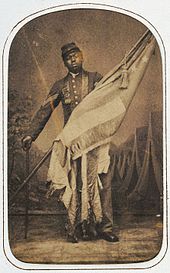
Sergeant William Harvey Carney received the Medal of Honor for grabbing the flag of the 54th Massachusetts from the hands of the dying color sergeant, carrying it to the parapet of the fort and back during the retreat, shouting “Boys, these colors never touched the ground!”.
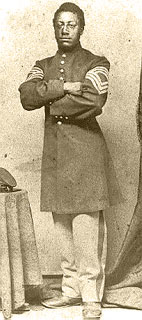
Both of Frederick Douglass’ sons were members of the 54th Massachusetts. His son Lewis, a Master Sergeant, is pictured above.
Monument to the 54th Massachusetts on Boston Common. Col. Shaw is on horseback.
Re-enactors and descendants of soldiers of the 54th Massachusetts. I took this photo at the 150th Anniversary of Lincoln’s Gettysburg Address at the National Cemetary in Gettysburg.

Sources:

Boatner, Mark: “ The Civil War Encyclopedia

The Official Records of the War of the Rebellion

Foote, Shelby: The Civil War, from Fredericksburg to Meridien

Assorted articles from Blue & Gray Magazine and Civil War Times Illustrated among others.

General Fitz-John Porter

On a drive back from Maine a couple of weeks ago, Barb and her brother were kind enough to indulge my desire to make a side trip to Portsmouth, New Hampshire, so I could snap a couple of photos of the equestrian statue of Civil War General Fitz-John Porter. Fitz-who? You ask? I believe that Fitz-John Porter would have been as recognizable a name as Grant, Sherman, Sheridan, or Custer. However Porter was relegated to the scrap heap of obscurity after being court-martialed and cashiered for disobedience of orders. His trial was the sensation of late 1862 through the end of January 1863. It was conducted in an open court with every major newspaper having reporters on hand to witness it. The Official Records of the War of The Rebellion consists of 128 volumes covering all 4 years of the war and they contain pretty much every order, every report, every correspondence, etc. that were written. The Fitz-John Porter court-martial was so significant that one single volume of that 128 book opus covers the trial.
After being cashiered, Porter spent the next 20 years trying to clear his name. He finally was successful.
His is a fascinating story. He was a brave and highly capable soldier, but had an arrogant streak and suffered fools lightly. His intemperate and derogatory comments against an officer (John Pope) who was a close friend of both Lincoln and Secretary of War Edwin Stanton were used to support the claim that he disobeyed orders and contributed to Pope’s debacle at the battle of 2nd Bull Run. I have been laboring over the court martial tome and need to find a few more out of date sources, but basically the trial was rigged. Because of Pope’s political relationships, the members of the court were Officers who were Republicans and supporters of Lincoln. There is only one author that I know of (Kenneth P. Williams) who claims that Porter was guilty as charged, but I have to find the book he wrote to see why he felt that way. I think that there may have been some things that Porter could have done better, but the orders he was given by Pope were confusing and contradictory, and clearly indicated that Pope did not have an adequate understanding of the tactical situation at The 2nd Battle of Bull Run. Porter’s photo is in the center below, John Pope’s photo to the right of Porter. Last picture is a sketch of the trial.

Image may contain: tree, sky, grass and outdoor

Equestrian Statue of Major General Fitz-John Porter in Portsmouth, NH

No photo description available.

Members of court martial included future President James A. Garfield

No photo description available.

A single volume of the the Official Records of the War of the Rebellion dedicated to Fitz-John Porter trial.

Image may contain: 1 person, beard

Photo of Fitz-John Porter as Major General, US Volunteers

Image may contain: 1 person, standing and beard

Inept commander of Union Army of Virginia and Porter nemesis, Major General John Pope.

Image may contain: 2 people

Trial was open to public.  War correspondent and artist Alfred Waud captured proceedings.

Corinth, Missisippi

Corinth Trip

I had been wanting to visit Corinth, Mississippi, since moving to Alabama two years ago. The 156th Anniversary of the Civil War Battle of Corinth was on October 3 – 4, but I avoided going at that time due to the influx of re-enactors and large number of spectators expected to be there. I chose to go last weekend instead.

In 1862, the town of Corinth had about 1500 residents, 400 of which were slaves. Corinth possessed a keen strategic interest to both the Union and Confederate armies as two key railroads intersected in the center of town. From the Gulf of Mexico, heading north, was the Mobile & Ohio Railroad. Coming from west to east, starting at the Mississippi River was the Memphis & Charleston Railroad. These were the two longest railroads in the South and provided supplies to all of the armies of the Confederacy. Union General Henry Halleck stated that “Richmond & Corinth are now the great strategical points of the war”, and the Confederate Secretary of War, Leroy Pope Walker called the rail lines “the vertebrae of the Confederacy”.

In early 1862, Corinth was serving as a base for the Confederate Army of the Mississippi, while it trained and collected supplies to face the advance of the Union army under Ulysses Grant, which was closing in on the vicinity of a small country church named Shiloh Church.

After being defeated at Shiloh, the Confederates returned to Corinth. A reinforced Union Army was soon advancing on the Confederate camps at Corinth. Faced with confronting a now numerically superior foe, the Confederate Army slipped away from Corinth, leaving it for the Union Army to occupy.

The bulk of the Union Army soon moved on from Corinth to fight in other actions. An “army” of 23,000 men, under the command of William Rosecrans, was left to occupy Corinth. Anxious to recapture Corinth, a Confederate “Army” of similar size, led by General Earl Van Dorn, was closing in on the town, arriving in the vicinity in early October 1862.

Van Dorn attacked Rosecrans’ Yankees on October 3, 1862. The fighting raged around Corinth. On October 4th, the Rebels broke through two Union forts – Powell & Robinette – and advanced into the center of town. There was fierce fighting around the train station and the Tishimingo Hotel.
The Yankees regrouped, counter-attacked and drove the Rebels from the town and surrounding fields.

Corinth would remain under Union control until 1864. Union successes on other fronts rendered the rail junction inconsequential. Today the National Park at Corinth is part of the overall Shiloh National Battlefield Park. There are several homes in town that survive from the Civil War.

References for this post are:
The War of the Rebellion – The Official Records of the Union and Confederate Armies.
Blue & Gray Magazine: The General Series – Battles at Corinth & Iuka
The Darkest Days of the Civil War, the Battles at Iuka & Corinth by Peter Cozzens.

image.png

The rail crossing in Corinth today. Running from lower right to upper left would have been the Mobile & Ohio. Running from left to right would have been the Memphis & Charleston. I had to wait for a long freight train to pass before I could take this photo.

image.png
Corinth at time of the battle. Tishimingo Hotel and railyard
  
image.png
Fighting in town in front of hotel.
image.png
Fort Robinette today is part of the Park Office.
 
image.png
Confederate dead in front of Fort Robinette after the end of the battle.
 
image.png
The Verandah House served as headquarters for Confederate generals before Battle of Shiloh and for Union officers during occupation of Corinth.
image.png
The Oak House served same purpose as Verandah House. Headquarters for officers from both armies.
 
image.png
Another home that had served as officers quarters and then a hospital.
image.png
General William Rosecrans. A brilliant man, he had several patented inventions by the time of the Civil War. He conducted a brilliant campaign later in the war, consisting largely of flanking maneuvers which forced the Confederates out of Eastern Tennessee without a single battle. He was prone to excitability during battles which would sometimes cause him to ignore the bigger picture of a battle and focus on smaller unit details. He was also an insomniac, his lack of sleep would lead to him making bad decisions ending in the rout of his army at Chickamauga.
 
image.png
General Earl Van Dorn, leader of Confederate forces at Corinth. Personally brave, he had been wounded twice fighting Indians on the Western Plains. He had difficulty managing larger military units – Army size – but proved adept as a leader of cavalry after the battle of Corinth. He was quite the rake, becoming notorious for his womanizing. His philandering would prove to be his downfall. Van Dorn would be killed by a jealous husband after being caught kissing his wife.
image.png
This painting of the Confederate encampment at Corinth before the battle of Shiloh is very misleading. Conditions in Corinth were not quite so pleasant. Many soldiers died of disease. As one Confederate General remarked, “Corinth is fit for only snakes and alligators”.